
For many, a trip to Morocco conjures up images of vibrant spice markets, stunning riads, and the vast dunes of the Sahara. But once you start looking at a map and researching your trip, reality sets in. The distances are vast, the roads can range from modern highways to nail-biting mountain switchbacks, guides to navigate the maze-like souks seem mandatory, and it is hard to tell one riad from another.
While it is possible to navigate Morocco on your own, it is a destination that truly unfolds when you have a key to the kingdom. I can help you experience Morocco without the stress of logistics, language barriers, or the overwhelming bustle of the souks with a custom trip itinerary and all the details managed.
While it is tempting to fly into Marrakech for a quick immersion getaway, those who only see the Red City miss the true soul of the country. I’d recommend that you take the time to see more of Morocco, from authentic Fes to the windswept beauty of desert and the uniqueness of the Blue City of Chefchaouen (if time permits). To kick start the planning process, this sample itinerary walks you through a 2-week Morocco itinerary.
Morocco Itinerary at a Glance
This two-week itinerary is designed to hit the essential highlights at a pace that is reasonable. I’m not going to lie, two weeks in Morocco is a tiring trip and the drives between destinations feel longer than you expect. If you can take more time, I’d encourage it, but you can still see Morocco’s top destinations in a two week trip.
- Day 1: Casablanca and Rabat
- Day 2-3: The Blue City (Chefchaouen)
- Days 4–6: Fes: The Imperial Intellectual Heart
- Days 7-8: The Middle Atlas & The Sahara Desert
- Days 9-10: Skoura: The Valley of a Thousand Kasbahs
- Days 11–13: Marrakech: The Red City & Beyond
- Day 14: Departure
Day 1: Arrival in Casablanca / Rabat
For your two-week Morocco itinerary, I would try to fly into Casablanca and out of Marrakech, or into/out of Casablanca (unless you are connecting through Europe, then it would be ideal to start in Tangier if you could.)
Upon arrival in Casablanca, you could either spend your first night there (visit the Hassan II Mosque and Rick’s Cafe) or head up to Rabat, Morocco’s capital city.
In Rabat, you can hit a few of the city’s highlights: Hassan Tower, Kasbah des Oudaias, Chellah, and the Medina before the four to five-hour drive to Chefchaouen the next day.
Day 2-3: Chefchaouen

Most of the first day will be spent traveling to Chefchaouen as unfortunately, there isn’t any easy way to get there. Many people have asked me, “is Chefchaouen worth it?” And if you have less than two weeks in Morocco, then it is definitely not worth all the travel to get there. However, if you do have two weeks or more, I absolutely loved this little gem. But spend two nights to give yourself a full day to see the city.
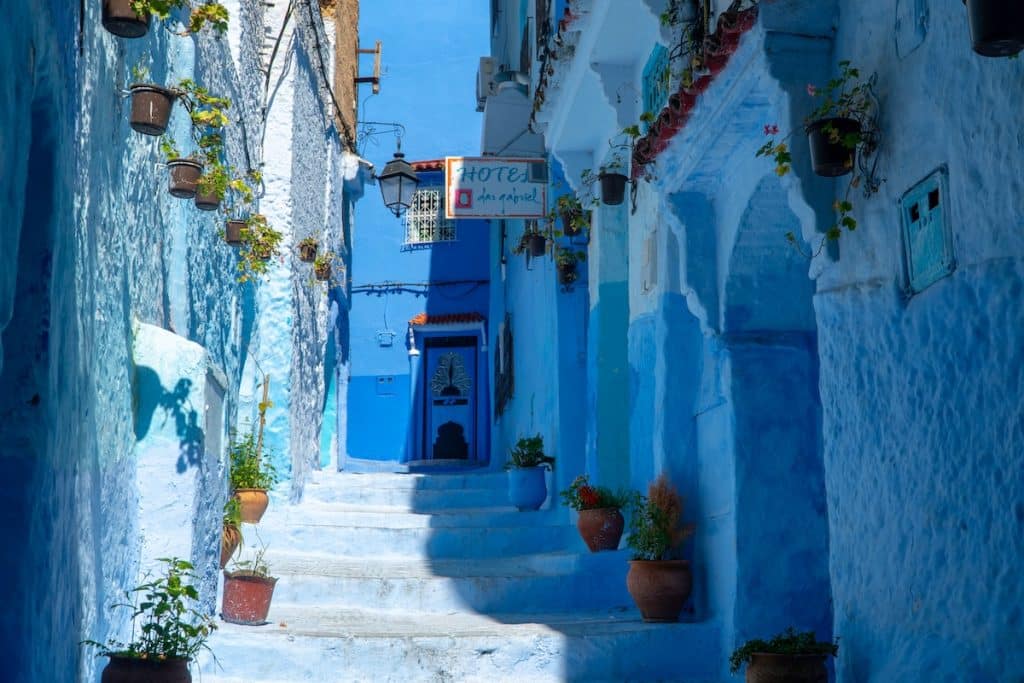
Chefchaouen is known as the “Blue Pearl” because every door, staircase, and wall here is washed in shades of indigo and azure. It may have been done as a tourism gimmick, but the result is quite special. Beyond the iconic photos, the town is charming and nothing like the bigger, bustling cities you will experience later in the trip. It is the perfect introduction to Morocco.
You will have a full day to explore the winding alleyways and markets of Chefchaouen. Discover the old Jewish quarter, and visit the Ras El Ma spring, where local women wash their clothes.
If you are feeling adventurous, you can take a hike to the old Spanish Mosque/fort on a hill outside the medina. From here you can see beautiful views of the valley and if you are lucky, catch a beautiful sunset.
Where to Stay: Lina Ryad & Spa offers a serene, upscale retreat with a traditional hammam.
Days 4-6: Fes
From Chefchaouen it is a four-hour drive to Fes. If you want, you can plan a side visit to Meknes to see the partly excavated Berber-Roman ruins of Volubilis on the way.
The old town of Fes is a UNESCO World Heritage Site and is known as the intellectual and spiritual heart of Morocco, whereas Marrakech is more touristy. Its medina, Fes el-Bali, is a 9,000-alley maze that has remained largely unchanged for a millennium. Because cars cannot enter, you will share the narrow passages with donkeys and artisans, adding to the feeling of stepping back in time. Because it is so easy to get lost in those alleys and since it is the true heart of the city, I’d recommend staying within the medina.
The best introduction to the medina is with an evening food tour. Trust me that what you see and try might surprise you but it is a helpful introduction to Moroccan food that will serve you well for the rest of your journey.
You should also take a full day guided tour of Fes. Not only will you need a guide to see the most interesting parts of the medina, but you will need a car and driver to get to some of the viewpoints and city highlights. Some of the sights include:
- Ancient Medina – so much more authentic than Marrakech, it is easy to get lost in this labyrinth but also fun to discover the different sections, such as fancy dresses, metal working, spices and food, etc. Just keep in mind that some of the more generic souvenir types of shops near the Blue Gate sell goods that are made in Asia, not Morocco. Look for shops where you can see the artisans at work and be prepared to bargain! It is a sport that Moroccans enjoy. Within the medina, you should check out the Chouara Tannery, where leather is still dyed in stone vats using 12th-century methods. You can also visit the Al-Attarine Madrasa to see the world’s finest examples of zellij tilework.
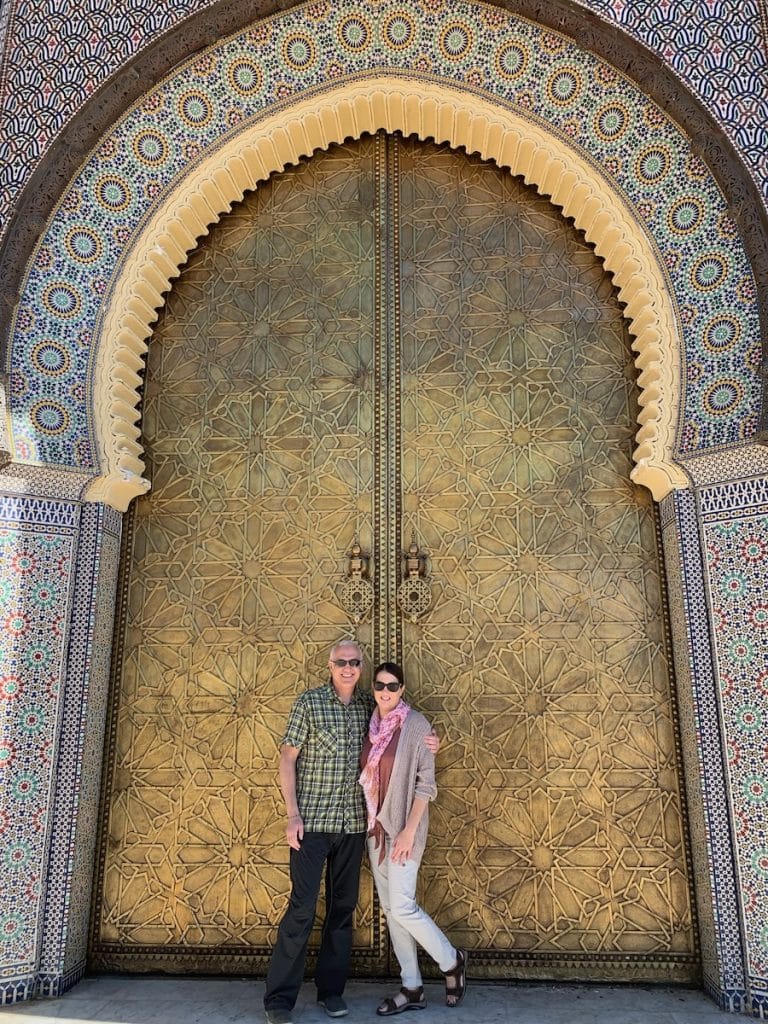
- Royal Palace (Fes Palais Royal Dar El Makhzen) with its golden gates – you cannot go inside but it is fun to take photos in front of the beautiful golden doors
- Old Jewish Quarter (or Mellah) – located near the Royal Palace you can walk through a gate into the quarter, visit the synagogue and Jewish cemetery, and visit the shops (this is a big jewelry district.)
- Pottery quarter – you can visit a cooperative to see each step of the pottery making process. This is a great spot to buy authentic souvenirs.
- Nearby fortresses of Borj Sud and Borj Nord – these forts were built in 1582 and offer great views over Fes.
This itinerary also gives you some downtime in Fes to relax or explore and just soak in the culture before your next long drive.
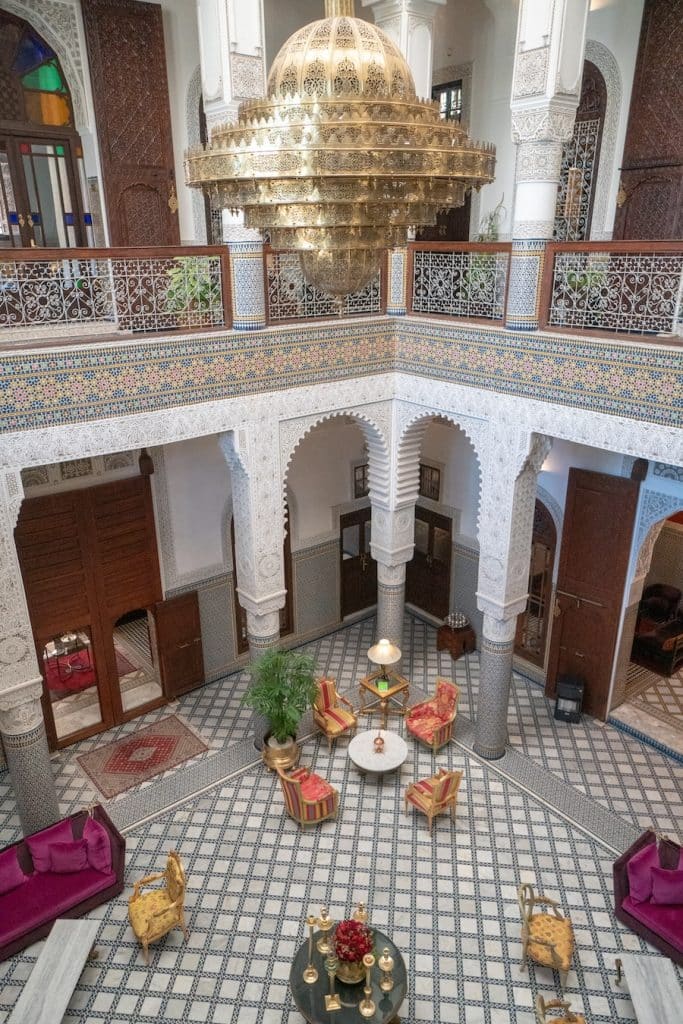
Where to Stay: Riad Fès (Relais & Châteaux) is the gold standard for luxury, blending Andalusian opulence with modern design.
Days 7-8: The Sahara Desert
Since you have time, I would recommend spending two nights in the desert because your first day is spent driving to Merzouga. Staying an extra night will allow you to have more time to do activities like sand boarding and dune busting, as well as the sunset camel ride.
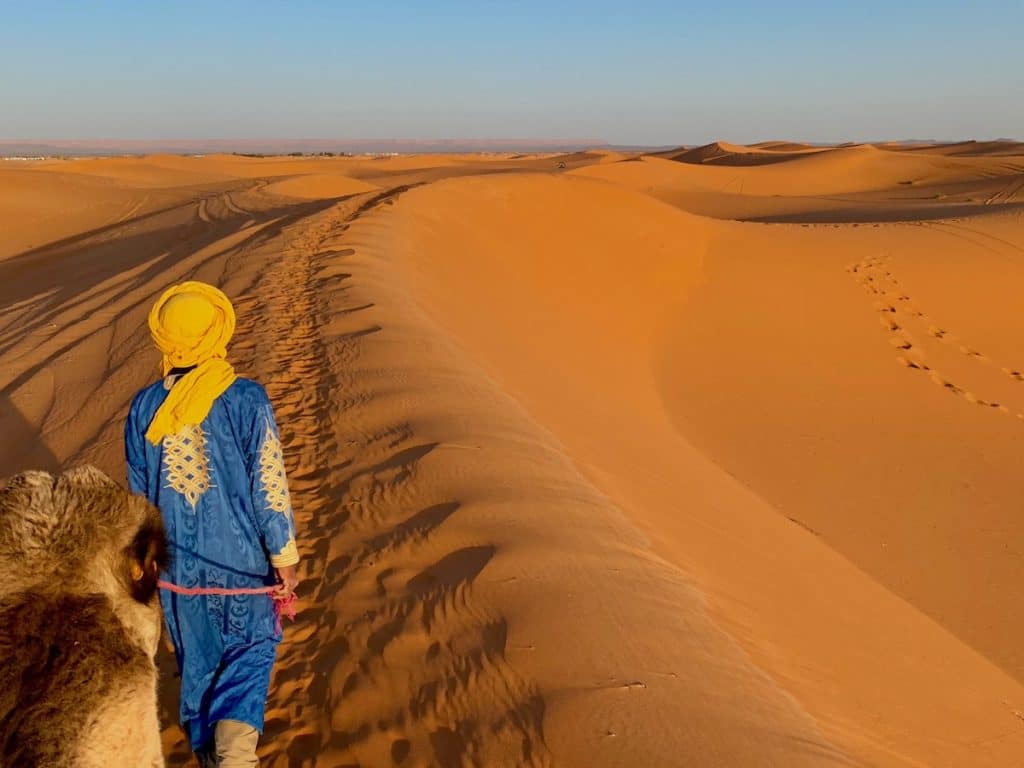
Along the way, you’ll cross the Middle Atlas, passing through the “Little Switzerland” of Ifrane and the cedar forests of Azrou, where Barbary macaques often linger by the roadside. Having a driver here is a game-changer; they know the best roadside stops and can handle the long, dusty stretches leading to the desert gateway of Merzouga.
Once you reach the edge of the Erg Chebbi dunes, you’ll swap your vehicle for a 4×4 or a camel trek to reach a luxury tented camp. This is “glamping” at its peak—imagine a private tent with plush king beds, oriental rugs, and en-suite hot showers. Your evening consists of a multi-course dinner followed by live Gnaoua music around a campfire. Afterwards, you can do some star gazing far from any light pollution.
Days 9-10: Skoura
The drive from Merzouga to Marrakech is long and tedious, so it is best to break it up with a day or two at a palm oasis. Along the way, you will pass through Todra Gorge, which is a sandstone ravine with 300-meter cliffs on either side of a very narrow passage. You will also go through the Dades Valley and Kelaa M’Gouna (which sits at the head of the “Rose Valley”). If you have time, stop at one of the woman’s rose cooperatives to purchase rose oil, rose water, and other locally-made products.
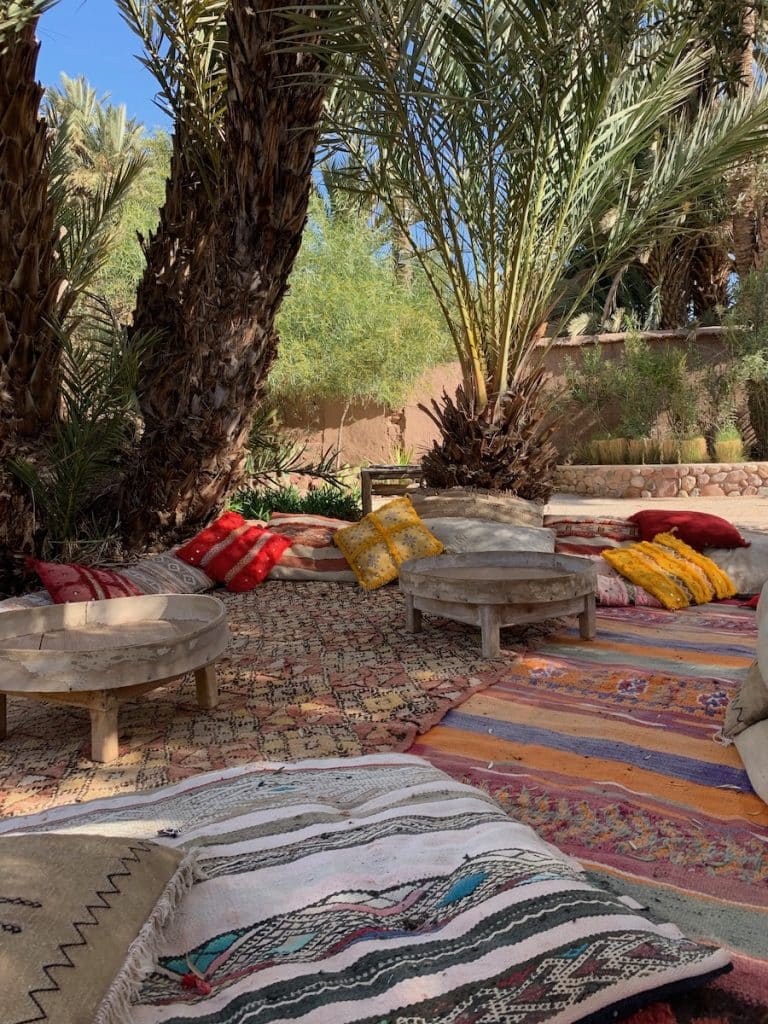
At the end of the day, you will arrive in Skoura, a palm oasis, where you can spend a couple of nights. L’ma Lodge is a perfect spot to relax and chill out, with a large garden of palms and fruit trees with a pool and welcoming relaxation areas. If you time it right, you may even get to visit the town on market day, which is truly an authentic local experience.
Days 11-13: Marrakech
Your drive to Marrakech will take the greater part of the day, especially if you decide on making a few stops. The first would be Ouarzazate. This ex-French foreign legion outpost is a bit touristy and the center of the movie industry for Morocco. You can stop and visit the film studio but I’m not sure if it is worth it.
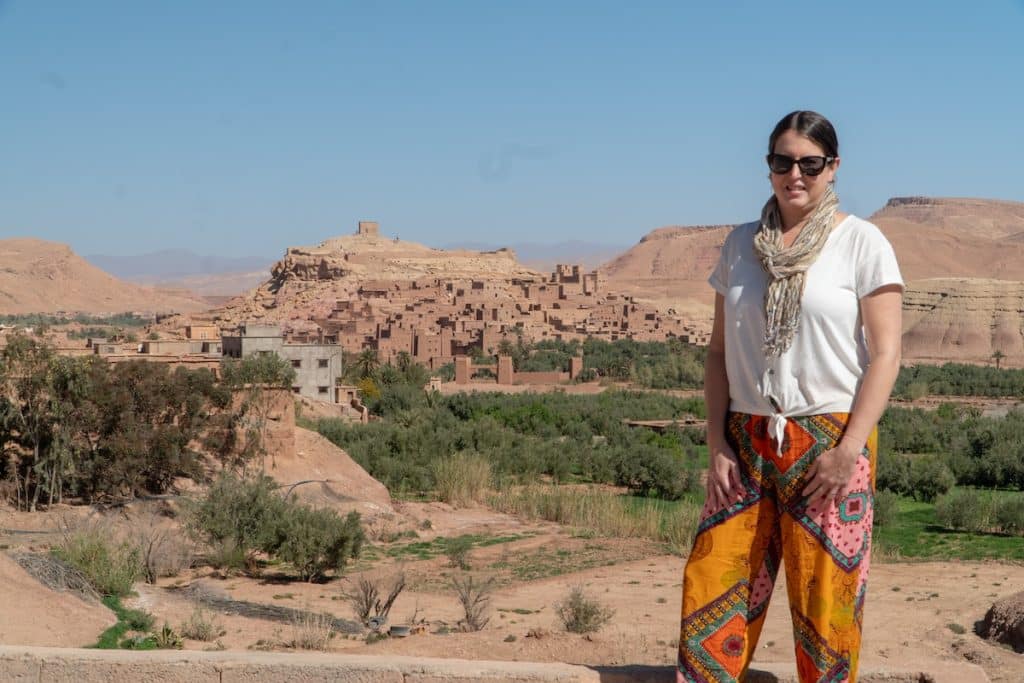
One stop that is a must is Ait Ben Haddou, which is the best preserved kasbah in Morocco. The village is an 11th-century collection of kasbahs that are still inhabited by a handful of families. It will look familiar because it has been used as the backdrop to many movies and TV shows, like Game of Thrones. You can explore on your own but I’d suggest getting a guide as there is very little signage to otherwise describe the cultural significance.
Depending on time, you may also plan to stop at the ancient kasbah of Telouet. By late afternoon, you will make your way through the High Atlas Mountains to the winding turns of the Tichka Pass, eventually arriving in Marrakech.
If you have stayed in riads up until this point, you may want to consider one of the resort hotels, such as the Four Seasons, when you arrive in Marrakech. At this point in the trip, you will likely be getting tired and you may enjoy a little pampering, as well as some more familiar food.
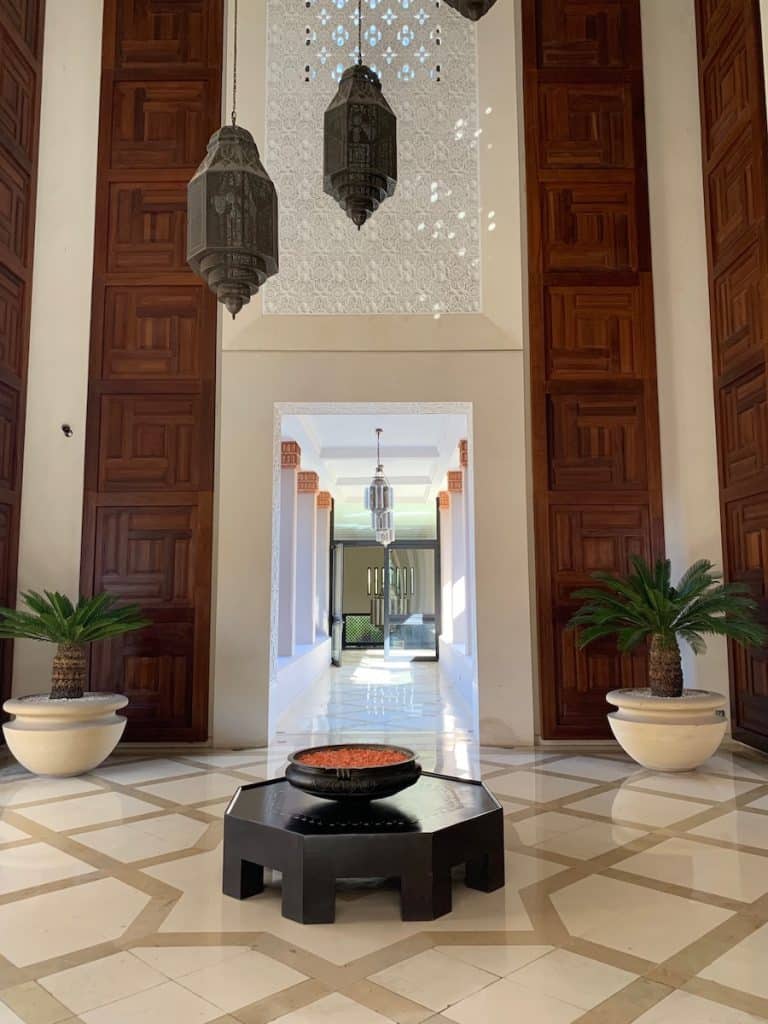
On your first full day in Marrakech, I’d suggest soaking in the city with a half-day tour of Marrakech souk. This will leave you plenty of time to wander through the medina and shop after the tour. You will be able to see places where they hand-dye textiles, do metal working, and other handicrafts. Just keep in mind that many shopkeepers do not want you to photograph the merchandise without permission or monetary compensation. (Also, it is offensive in the Islamic culture to photograph people’s faces.)
While exploring the souk, you may want to stop into one of the pharmacies for herbal remedies and products like rose water, argan oil, or Moroccan tea. A visit to one of the spice vendors is also a visual delight, just be careful when purchasing items like saffron as there are many fakes in the medina too. It helps to ask a local where to shop.
Take the afternoon to relax by the pool (weather permitting) or try a fun side-car tour of the city. In the evening, be sure to take a walk through Jemaa-el-Fna Square. It can be quite the spectacle, with snake charmers, food vendors, and all sorts of goods on display. Just keep a close eye on your valuables and if you stop to take a picture of the snake charmers, you are going to have to tip them. You will learn that tipping is expected in Morocco, even if someone gives you directions or helps you in any way. Near the square, you can walk by the Kutubiyya or Koutoubia Mosque and Minaret, which is the largest mosque in Marrakesh.
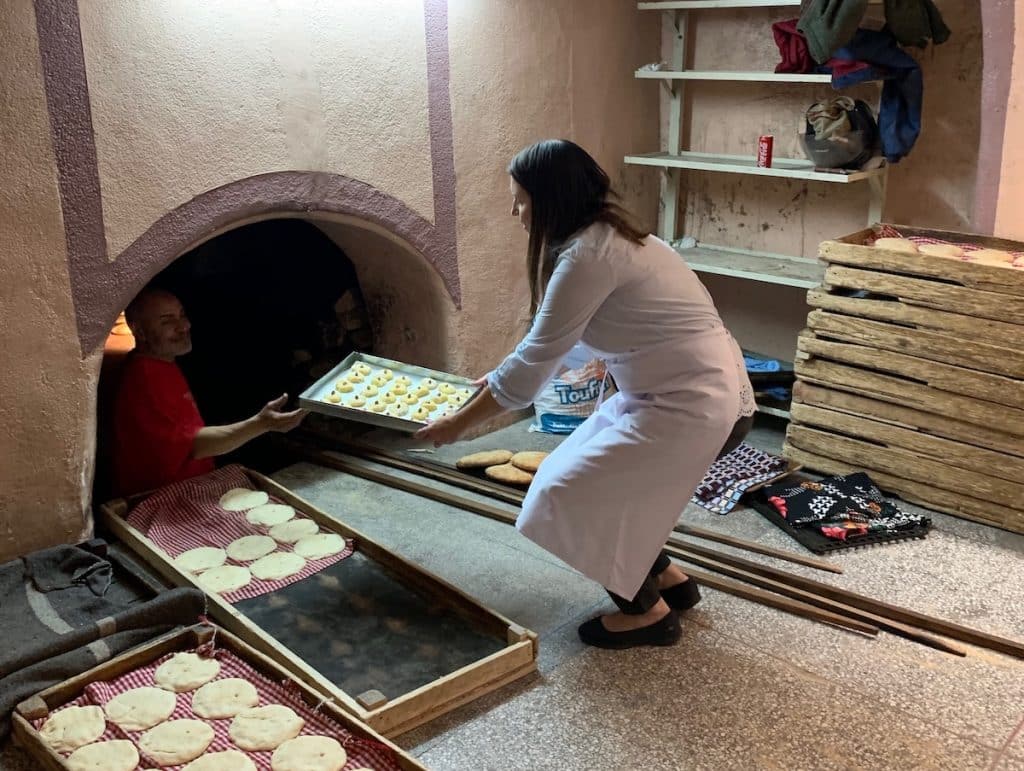
On your second full day, I would suggest that you dig deeper into the cuisine with a cooking class & market visit or food tour with Marrakech Food Tours. We took a cooking class with Souk Cuisine, which was awesome. It started with a visit to the market where our guide gave us each a shopping list and money and helped us purchase what we would need to prepare a meal. We then went to a local’s home to prepare the meal, with their help, including walking our bread to the local bakery oven. Then we enjoyed an authentic Moroccan meal prepared with our own hands.
There is still so much to see but two attractions you shouldn’t miss include the Dar El Bacha Museum and the Bahia Palace. Located near the entrance of the medina, the Dar El Bacha was once the home of Thami El Glaoui, the pacha of Marrakech.
The architecture of the museum is the main attraction, although there are interesting artifacts inside that represent the various cultures of Morocco including Berber, Arabic, and Jewish. The museum has incredible wooden carvings, beautiful tilework, and a gorgeous courtyard with fragrant orange trees.
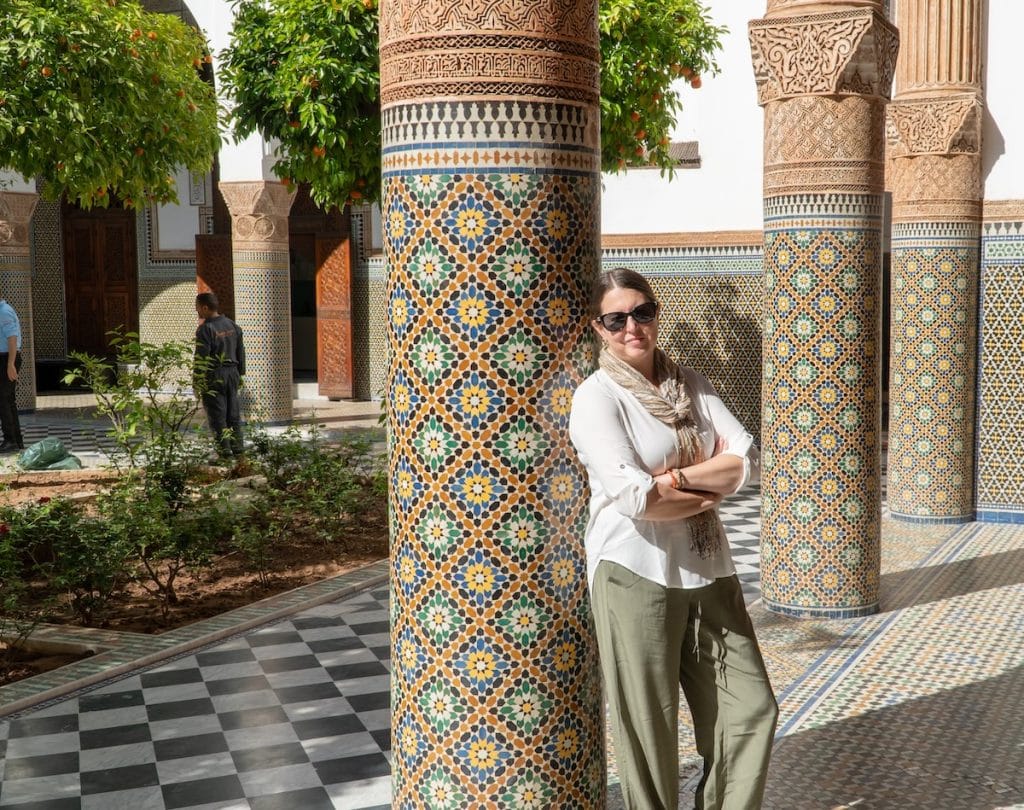
Bahia Palace is a beautiful mid to late 19th-century palace that was first built by Si Musa, grand vizier of Alaouite sultan Muhammad ibn Abd al-Rahman, in 1859 and then continued and expanded by his son Si Ba Ahmed ibn Musa, grand vizier of Sultan Moulay Abdelaziz between 1894 and 1900. There are beautiful mosaics, carvings, and tilework that provide an excellent backdrop for photos.
If you have more time, you may want to visit some of the major attractions such as:
- Les Jardins Majorelle botanical gardens and YSL Museum
- Museum of Marrakech
- Dar Si Said
- Saadian Tombs
Day 14: Departure
Ideally, you can fly out of Marrakech but if a round trip ticket to Casablanca is more economical, don’t worry, it is a pretty easy drive from Marrakech to Casablanca (or you could book a connecting flight.)
Morocco is a “sensory overload” destination. It is vibrant and rewarding, but it can also be exhausting if you are managing the logistics yourself. Whether it’s finding the right riad or securing a guide who is a true historian rather than just a shop-navigator, the difference lies in the planning.
Are you ready to experience Morocco without the guesswork? Reach out to me to turn this itinerary into your own perfectly curated journey.
Top Tips for Visiting Morocco
- The local currency is the Moroccan Dirham. It is very difficult to get Dirham outside of the country and you can’t bring it home. Therefore you should plan on exchanging currency at the airport, or visiting the airport ATM upon arrival or in major cities.
- Not all restaurants accept credit cards, therefore you need to exchange enough money to get you through as it can be hard to find ATMs outside of the big cities.
- Most riads and restaurants only accept Visa or Mastercard. You don’t need to leave your American Express at home, but make sure you have a back up.
- When getting money at the ATM, you can withdraw a maximum of 2000 Dirham at a time (about $200), with a maximum of 4000 Dirham per day (you can do two back-to-back withdrawals of 2000 each.)
- When exchanging money at the airport, they may try to convince you to put some of the balance onto a debit card. I wouldn’t recommend this as most places still won’t take it (unless they also take credit cards.) Plus there is a fee so it really isn’t a good deal.
- Make sure you get as many small bills (20, 50, and 100 Dirham bills) as you can and try to get coins when purchasing tea, coffee, etc. as you will need them for tipping.
- At gas stations and some restaurants you will often find there is a bathroom attendant keeping it clean and possibly handing out toilet tissue. Drop 1-2 dirham per person into the dish as you go in.
- Tipping is an important part of the culture. Plan on adding about 10% on restaurants. Check the bill first to see if service is included (it usually isn’t). If they accept credit cards and you want to add a gratuity using your card, you need to tell them the amount before they run the card. Otherwise you need to leave cash.
- Guides and drivers should be tipped 200+ dirhams per full day (at the end of the service.)
- If someone in the souk allows you to take photos of their shop or goods it is polite to give them a small tip (especially if you aren’t buying something.) Just be sure to ask BEFORE taking pictures.
- Don’t drink tap water (only bottled water) and be careful about eating uncooked produce, salads, or unpeeled fruits.
- Moroccans typically eat dinner late, usually after nine, although it is easy enough to get an earlier reservation. In between lunch and dinner, many people may stop by the souk for a sandwich of grilled turkey, kefta, or sausage, to tide them over.
- Morocco is a Muslim, conservative country and you should dress modestly. Women should cover their shoulders, knees, and cleavage (a scarf works well.) Knees should also be covered and clothing should be loose. So flowy pants or long skirts. If you wear tighter pants, make sure your bottom is covered. Men should wear long pants and short or long-sleeve shirts. You may see women in skimpier clothing in Marrakech, but they are tourists and I would still encourage visitors to be respectful of the local culture and dress accordingly.
- Keep in mind that Morocco is an Islamic country where homosexuality is illegal and punishable by law. If you choose to travel to Morocco, it is recommended to keep public displays of affection to a minimum and be alert, especially for transgender travelers.
- Bargaining is what they call the “national sport” of Morocco. When shopping in the souk, be prepared to haggle. Start around 50-60% of asking price (unless marked fixed price), end around 60-80% depending on how much you want it. If you really want it, tell them your final best price. Don’t act too eager, be ready to walk away. Often if you buy a lot, they will throw in a gift. Some places like the pottery cooperative will ship.
- Visas are not currently required for U.S. citizens for stays less than 90 days, however you will need a valid passport with at least six months of validity from your date of exit from Morocco.
- Fill out the visitor card they give you on the plane before you arrive. If they don’t give you one, make sure you get one before you get into the immigration line.
- Expect a long line at immigration upon arrival into Morocco. To speed things up, you can pay for expedited entry. You will be greeted at the jetway upon exiting the plane and walked to the Diplomat entry line of immigration, which is much shorter. (We paid for this service on arrival because we had such a long travel day.)
- Electricity is 220V, 50Hz, so U.S. visitors will need a European adaptor with two-round pin plugs.
- The best time to visit would be from March through May or September and October. April is when the roses will be blooming in Rose Valley. Keep in mind that it can still be cool at night, especially in the north, so bring layers. It will be very hot in the summer. There is a big difference between the temperature in the sun versus the shade. Keep in mind that it is much cooler in the medina when you are out of the sun.

Tamara Gruber is an award-winning travel writer and the founder of Your Time to Fly. With more than a decade of professional writing experience across two travel publications and hundreds of destination guides, she specializes in crafting practical, detailed itineraries that help travelers explore the world with confidence. Her work reflects years of on-the-ground research across the globe. Tamara is a member of SATW and serves on the Board of Directors of the Family Travel Association.
