
Traveling to the Galapagos was a dream come true and an amazing way to spend my 55th birthday. I was ready to document every part of this epic trip, so after waiting in line for nearly an hour to pay my entrance fee I didn’t think twice when the agent offered to stamp my passport. Who wouldn’t want a Galapagos stamp? BIG MISTAKE!!
It honestly never crossed my mind that this wasn’t an official stamp and could invalidate my entire passport. This could be a very costly error and one that I hope to help others avoid.
That wasn’t the only lesson I learned on my Galapagos cruise so before you head to Ecuador, read these Galapagos travel tips.
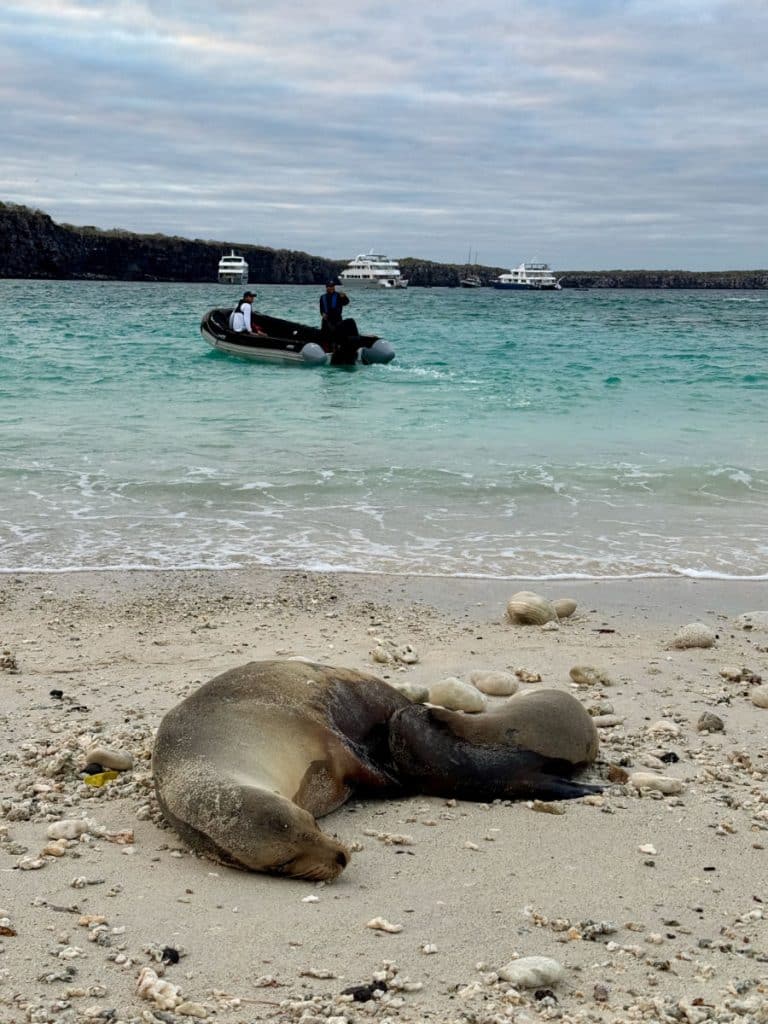
Galapagos Travel Tips
- Work with a Galapagos travel planner. Whether you are considering a cruise or a land-based Galapagos trip, there are many options to choose from and it helps to work with someone that really knows the islands and can help you find the right fit.
- Bring enough cash. You will need to pay a $200 National Park entrance fee per adult ($100 for children) upon arrival. This must be paid in cash in US dollars. Beyond that, you will need cash to tip your naturalist guide and, if you are taking a cruise, you will tip the rest of the crew as well. Since you are visiting remote islands, it isn’t like there are ATMs on every beach.
- Plan on plenty of time at the airport (on both ends of the trip.) Visiting the Galapagos is highly regulated and they take special care to make sure no one is bringing anything in or out that could harm the ecosystem. Your luggage will need to be scanned for organic materials (seeds, fruit, nuts, or soil) through a specialized biosecurity scanner. I observed the security staff closely scrutinizing all carry on bags. Also, before you arrive at the airport in Quito or Guayaquil on the Mainland, you must purchase your $20 Transit Control Card through a new digital platform.
- Be careful to leave no trace. You need to be careful not to pick up and bring home any shells, rocks, or other organic material. Stick to ethical souvenirs like handicrafts, artwork, coffee, or chocolate. If you are caught with small natural items like a piece of coral, a volcanic rock, or a bottle of sand, you will face confiscation and fines starting at $200. In some cases, fines can escalate quickly depending on the quantity and the specific island of origin. Also, removing any living animal (like a baby tortoise or iguana) or animal parts is punishable by 1 to 3 years in prison and massive fines that can reach tens of thousands of dollars.
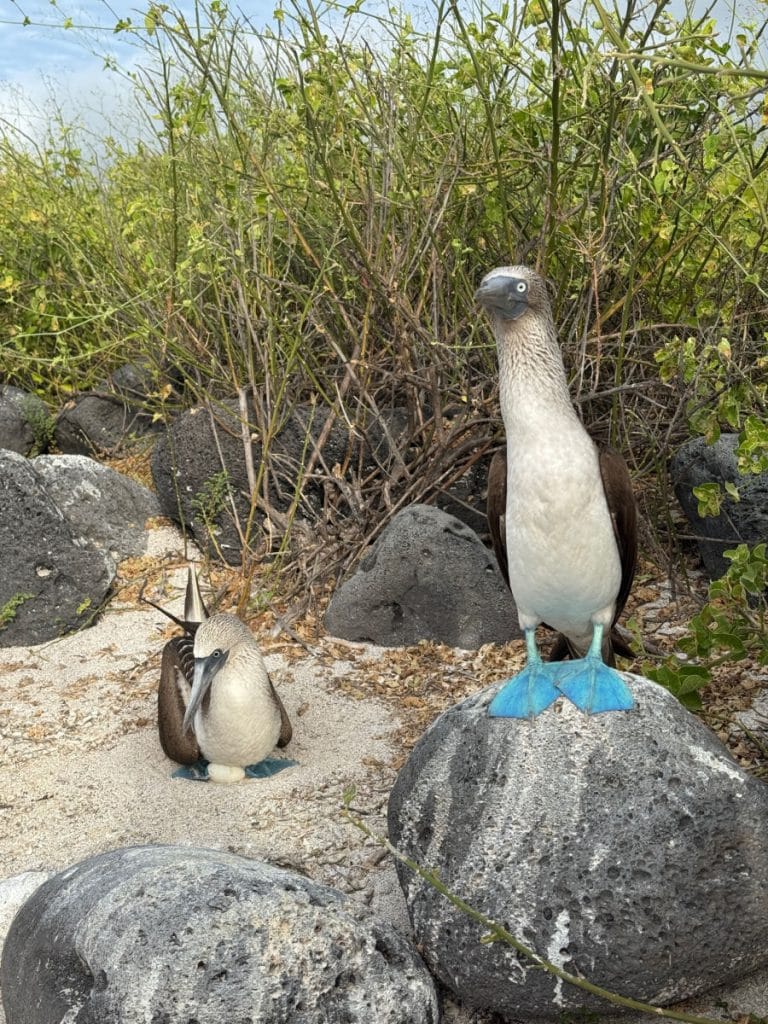
- Small ship pros. If you are taking a Galapagos cruise, there are many advantages of a small ship, primarily more time on land. Groups are limited to 16 passengers per naturalist guide so with a small yacht cruise, everyone can go ashore in the same group. With larger ships, they either need multiple groups and guides (which takes more time to load/unload), or guests have to take turns going ashore. With a small group, it is easy to get to know everyone and enjoy family-style dining.
- Small ship cons. While a small ship can be great, it also has some cons. You will be spending every meal and every activity with these people, which could get tiring. Smaller ships aren’t going to have some of the amenities (think hot tub/pool) as a larger ship. Just keep in mind that even a “big” ship in the Galapagos is only 100 passengers. But the difference between 100 people and 16 passengers feels huge. The other thing about small ships is that you feel and hear the movement more.
- It isn’t just about seasickness. Cruises allow you to reach remote islands (like Genovesa or Fernandina) that day-trippers cannot access. It sounds great to travel at night and wake up in a new spot. But, the crossings between islands can be rough, especially from July to December. Be sure to bring your preferred seasickness remedy (patches, bands, or medication). And one thing I never thought about is that it isn’t just the motion keeping you awake at night. The engines on a small yacht can be REALLY loud, making it hard to sleep. I’d recommend ear plugs and permitted sleep aids.
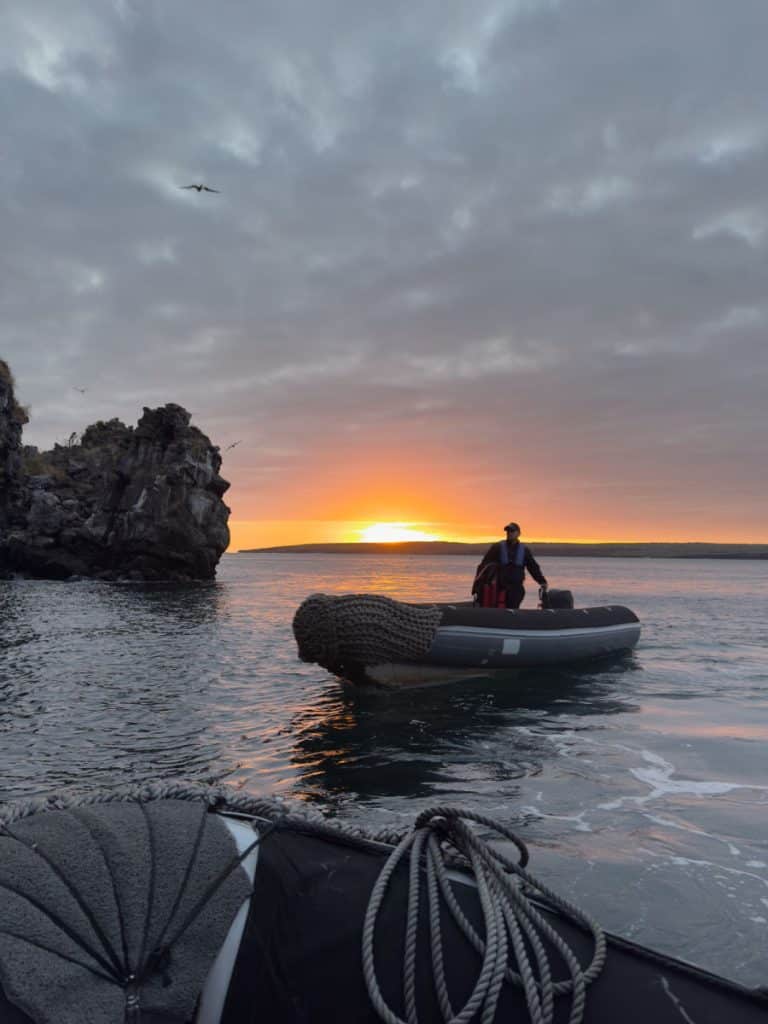
- You need two pairs of shoes. Life in the Galapagos is very casual, making it easy to pack light. One of the most important things is making sure you have the right footwear. You will mostly need sturdy closed-toe walking shoes with good, grippy tread that are used for dry landings and scrambling over sharp lava rock and steep inclines with loose gravel. I have a pair of Merrell hiking shoes that were perfect. You will also need water shoes/sandals with straps for wet landings where you jump from a panga (Zodiac) into knee-deep water. Something like Keens or Jambu water shoes are ideal.
- Pack light. I have written a whole Galapagos packing list, but in summary, you will want a couple of swimsuits (in case you snorkel twice a day), rash guards/sun protection shirts, t-shirts, athletic or hiking shorts, hiking pants, a good rain jacket, a sweatshirt or fleece, a good sunhat, sunglasses, and reef-safe sunscreen.

- You should really like snorkeling and hiking. The Galapagos is an active vacation. If you are taking a small ship cruise, you will likely have an opportunity to snorkel once or twice a day. Personally, I’m not the best swimmer and get a little freaked out under water so while I enjoyed snorkeling some, there were other times when I sat it out and just relaxed.
- Don’t feel like you have to see every island. A lot of people ask me what the right length of time is for a Galapagos trip and I honestly feel like 5 days was my sweet spot. As I mentioned, it is an active vacation. You are up early (sometimes before dawn) and you are swimming and hiking most of the day and possibly not sleeping the best either. By day five, I was done. And I had an opportunity to see so many different animals and ecosystems. I thought we would have to really seek out the animals, like you would on an African safari. So I was surprised to discover from day one that the animals are RIGHT THERE. In fact, sometimes you need to move away to keep the required distance between yourself and the wildlife. If you are a big bird watcher or wildlife photographer, then you will probably want to take a longer trip (or return to see different islands), but for most of us, don’t feel like you need to see every island to “do” the Galapagos.
The other myth that I want to bust about the Galapagos is that it is a bucket list trip because it is so expensive. Yes, there are many tour operators that are better known in the U.S. market that are on the pricey side, but there are actually plenty of other choices for planning a Galapagos trip. Don’t let budget scare you away from planning a trip to the Galapagos.
Getting there is easier than you think. Planning it doesn’t need to be hard. The wildlife is better than you can even imagine. And there is so much more to do in Ecuador too.

Tamara Gruber is an award-winning travel writer and the founder of Your Time to Fly. With more than a decade of professional writing experience across two travel publications and hundreds of destination guides, she specializes in crafting practical, detailed itineraries that help travelers explore the world with confidence. Her work reflects years of on-the-ground research across the globe. Tamara is a member of SATW and serves on the Board of Directors of the Family Travel Association.
