
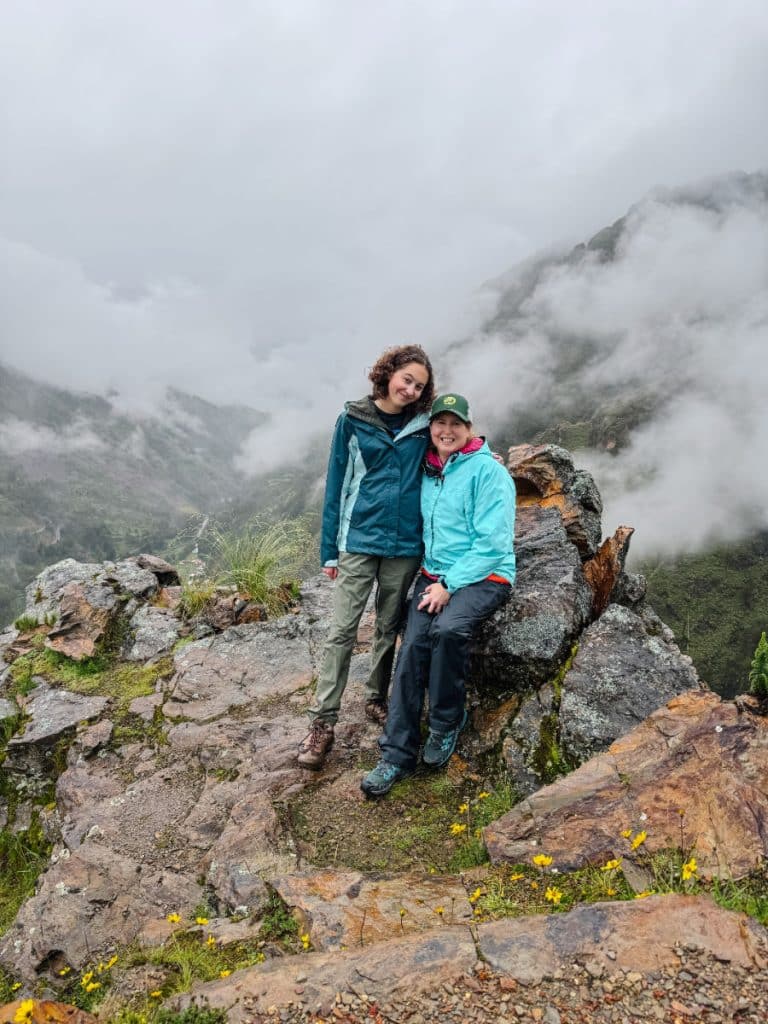
“I can’t believe I’m actually hiking past alpacas in the Andes with my daughter beside me.”
It was a pinch-me moment on a journey that had been on my bucket list for over a decade. Peru had always held a certain mystique, but between family obligations, the pandemic, and timing never quite aligning, this trip remained a dream—until now. What made it even more special? Experiencing it side-by-side with my daughter, sharing a meaningful adventure neither of us will ever forget.
We joined a small group trek with Mountain Lodges of Peru on their Sacred Valley and Lares Adventure, blending cultural immersion, community visits, and epic Andean hikes while staying in cozy, comfortable lodges. This post shares our full experience, from planning to day-by-day itinerary, what to expect, and why this was more than just a trip—it was a once-in-a-lifetime bonding experience.
Peru Trip Overview
We took part in the 5-day Sacred Valley and Lares Adventure with Mountain Lodges of Peru, a guided experience that combines trekking with cultural exploration, visiting remote villages and archaeological sites while enjoying the comfort of warm beds and good meals each night. I “won” the trip through Adventure Travel Conservation Fund‘s annual auction and it was the perfect amount of time to squeeze into my daughter’s college spring break. This gave us a unique opportunity to experience this trip while supporting a good cause. Even without the auction, their treks are well-priced considering the accommodations, food, and guiding.
Trip Highlights Include:
- Staying in boutique lodges with stunning views
- Trekking past mountain lakes and grazing alpacas
- Visiting a Quechua weaving community
- Blessings from an Incan priest
- Visiting local markets
- Exploring the ruins of Pisaq and Ollantaytambo
- Experiencing the iconic views at Machu Picchu
This type of guided trip was ideal for us because:
- a) we like to hike but we don’t like to camp (boutique or luxury lodges sounded just right);
- b) I knew I wanted someone else to handle all the logistics of driving, guiding, and booking in Peru (have you heard how challenging it can be to get Machu Picchu tickets?);
- c) the trip offered a great mix of cultural activities and outdoor adventures;
- d) we knew we could opt out of any of the hikes and just relax at the lodge if we preferred, and
- e) this itinerary got us beyond just the typical tourists stops in Ollantaytambo and Machu Picchu Pueblo to see more of the countryside and have a more authentic and impactful experience.
If you are dreaming of a mother-daughter or girls’ trip to Peru, read on, because this might be just what you are looking for. And remember, as a travel advisor I can also help you design and book a custom trip to Peru.

Peru Trip Logistics
The lodge-to-lodge trek begins and ends in Cusco, which is considered the gateway to the Sacred Valley and a popular tourist destination.
Getting to Cusco
Note: This post contains affiliate links. If you click a link and make a purchase, I may receive a small commission at no cost to you.
We both flew from our respective cities and met up in Atlanta, where we boarded a direct Delta flight to Lima. If you’re connecting in Lima, try to give yourself a long layover. Getting through passport control was a bit chaotic and extremely slow.
Also, even though I was told my bag would be checked through, I ended up having to pick it up in Lima and there wasn’t an easy transfer process. I had to bring it out to the check in desk to recheck it for the flight to Cusco. I wanted to mention this because after picking up your bag there aren’t any signs on where to go. Going back through security was fairly easy and it is after the main food court area. So if you need something to eat before heading on to a domestic flight, get it before you go through security.
The flight from Lima to Cusco is about one hour and twenty minutes and we landed right around midnight. Our tour package included a transfer to our hotel. You will need to meet your driver outside of the airport terminal after retrieving your luggage.
Acclimating to Altitude
Cusco sits at 11,000 feet, and altitude sickness is no joke. We arrived two days early to acclimate, stayed hydrated, and took Diamox (altitude medication) with my doctor’s guidance. We still experienced mild symptoms but were able to manage. If you can give yourselves more time to adjust, that would be ideal.
What to Pack & Prepare
- Altitude and stomach meds
- Layers for changing weather: base layer, fleece, rain jacket, rain pants
- Comfortable hiking boots (well broken-in!)
- Walking poles (not provided)
- Sunscreen, sunglasses and a hat (the sun is intense at altitude)
- Refillable water bottle
- Motion sickness medicine (especially for winding drives)
- Daypack for daily treks (luggage is transferred between lodges)
- Bug spray (this is needed for Machu Picchu and you can buy some in Ollantaytambo)
- Knit hat and thin gloves (it can get cold in the mountains)
- Flip flops and bathing suit (for the hot tubs!)
- Toilet paper, sanitizer and ziplocs in case you need to use the Inca toilet or there isn’t any available in restrooms along the way
- Camera, phone, portable power pack, charging cords
- Peruvian Soles and small USD bills
Mother-Daughter Peru Trip Itinerary
Before I dig into our itinerary details, let me preface this by saying that I wish we had more time in Peru. I really loved the bits that we experienced and would love to go back and see more. However, we were working within a one week spring break schedule, which gave us a maximum of eight nights in country.
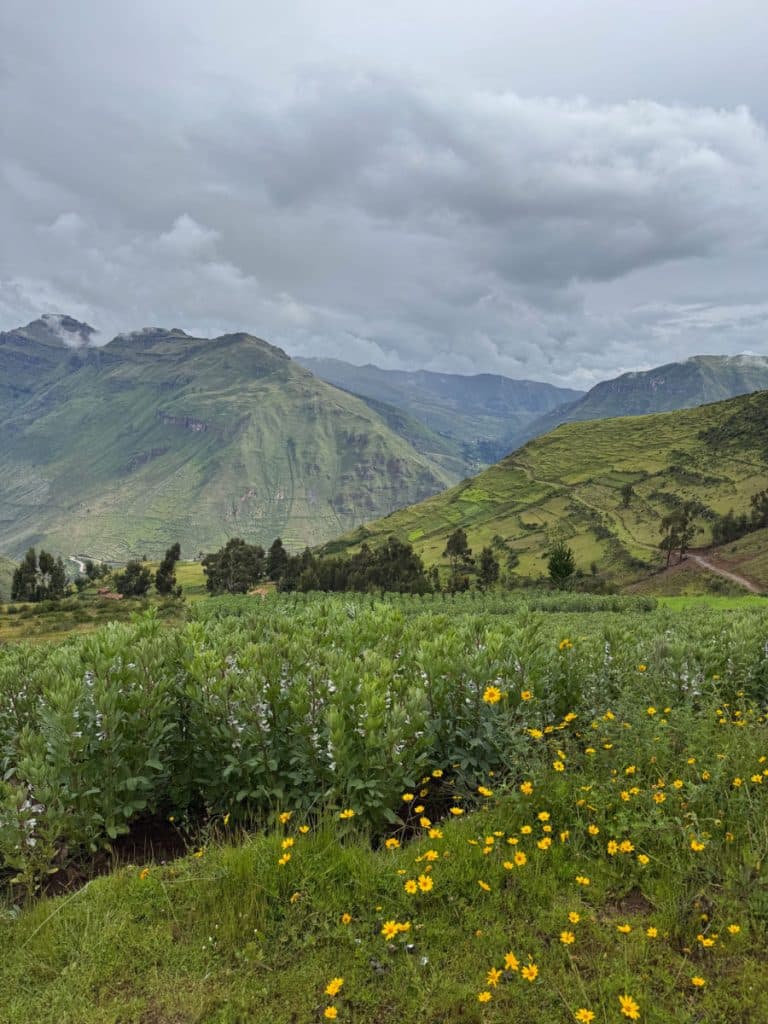
We visited in early March, which is still part of Peru’s rainy season. The benefit: the mountains are lush and green and the fields are filled with wildflowers. The downside: it rained a good amount, some roads were a mess, one lodge lost power for a night, and the entire Inca Trail was still closed for the season due to mudslides.
Watch This Podcast About Our Trip
Cusco: Pre-Trip
We spent our first two nights at the Andenes Hotel, which is a small boutique hotel owned by Mountain Lodges of Peru in the artistic San Blas neighborhood. This 16 room hotel is located in a colonial-style home centered on an open air courtyard. The rooms are small and simple, but comfortable and a lovely welcome to Peruvian style.
The neighborhood is well-positioned for exploring the top attractions in Cusco, with plenty of good restaurants within a five to ten-minute walk. We picked this hotel for our first couple of nights because it also is where the tour group meets the night before departure for a kick off meeting and where the van picked us up the next morning, so it made our lives easy.
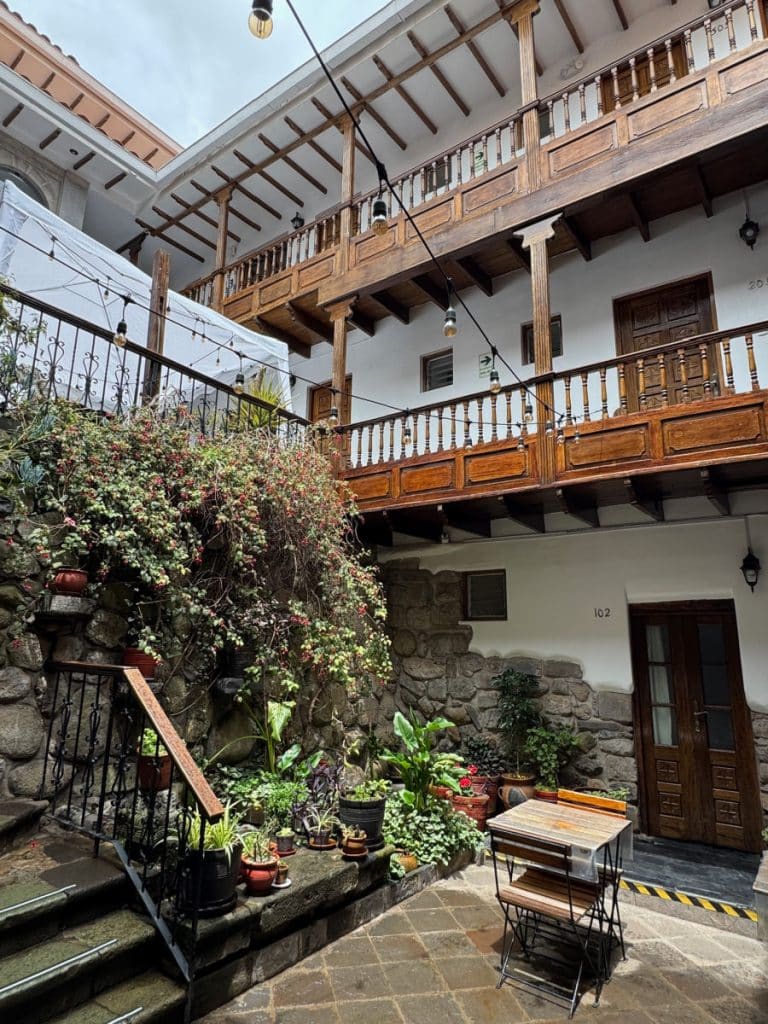


Since we got in so late, we slept in but in the afternoon, we explored a bit of the city and I just loved the old stone walls that date back to Incan times, the lively plazas, and the colorful textiles. We had an excellent lunch at Kusykay Peruvian Craft Food with giant portions and very friendly and helpful service.
After our meet and greet with Carla, our guide from Mountain Lodges of Peru, we headed back out into the rain for a lovely dinner at Green Point, a beautiful vegetarian restaurant just a short walk away. Overall, I was so impressed with the quality of the food in Cusco and the range of restaurant options and cuisines.
Day 1: Pisaq
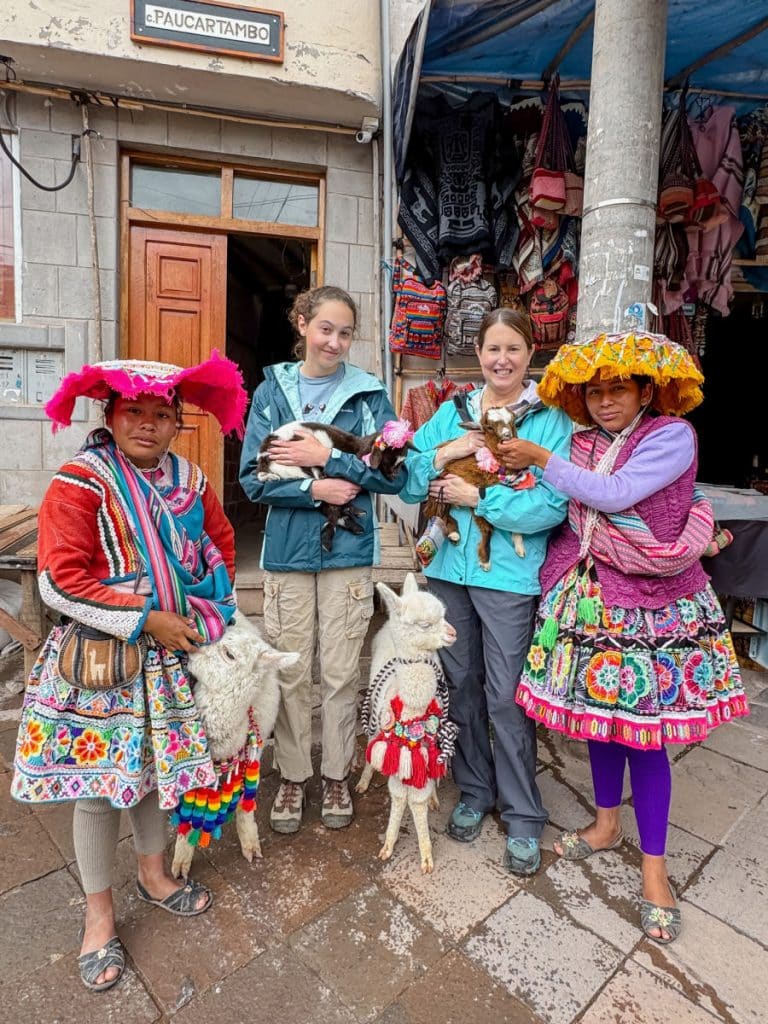
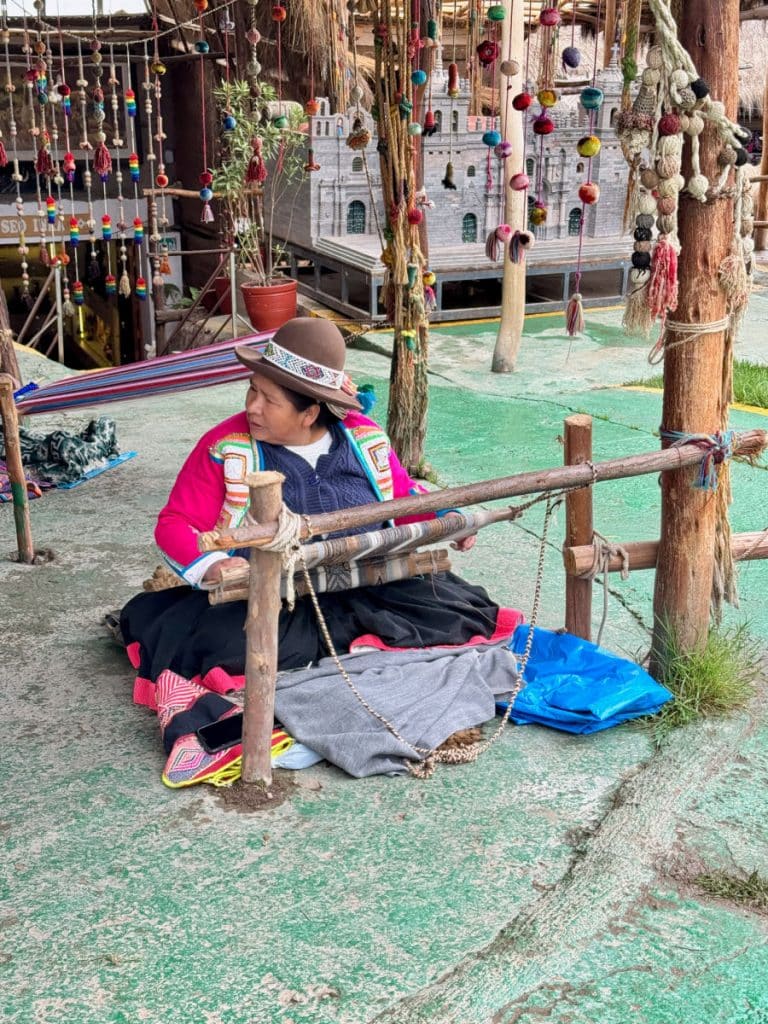
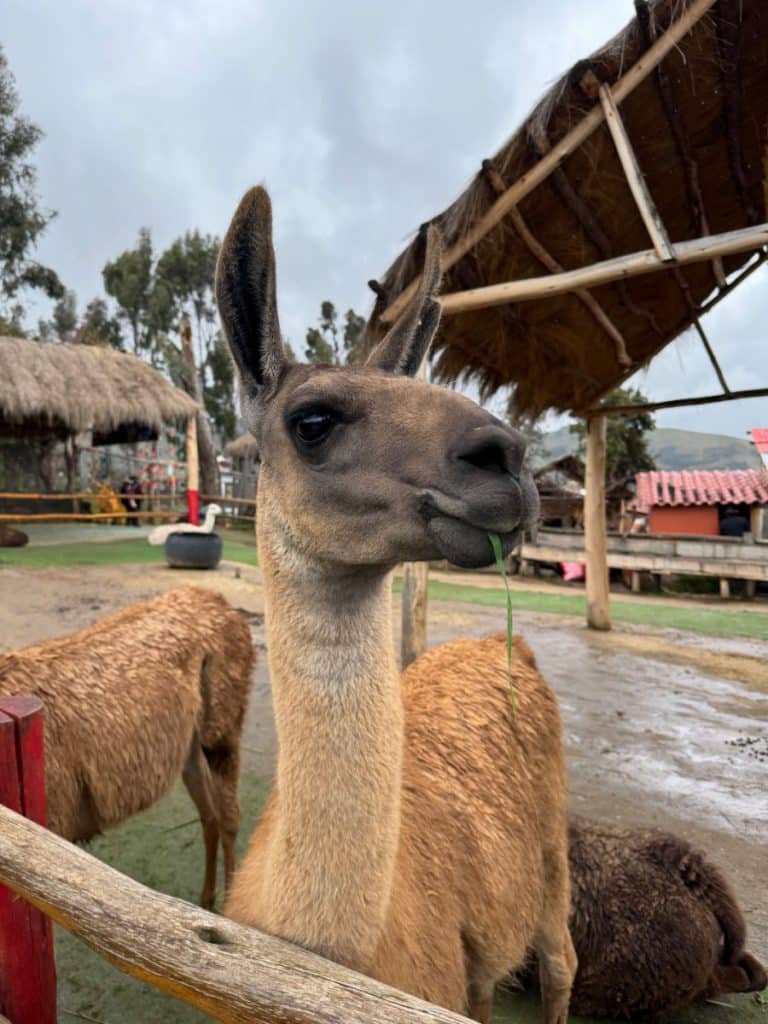
We departed Cusco to begin our trip into the Sacred Valley with a short visit to Awana Kancha, a beautiful textile and South American camelid exhibition center just outside of town. Here we learned the differences between vicuñas, alpacas, llamas and guanacos and saw how this community-driven center uses traditional Andean textile weaving techniques. I also learned how to tell real alpaca wool versus synthetics and started my shopping here with some beautiful sweaters.
One of the things that I love about Mountain Lodges of Peru is how they support local communities with jobs, healthcare, and tourism. I felt really good about making purchases from the women weavers that we met throughout our journey because I knew they had personally made the products and the money was going to them and the community. While this center has a substantial store and accepts credit cards, you will want to also bring Peruvian Soles to make purchases at other times.
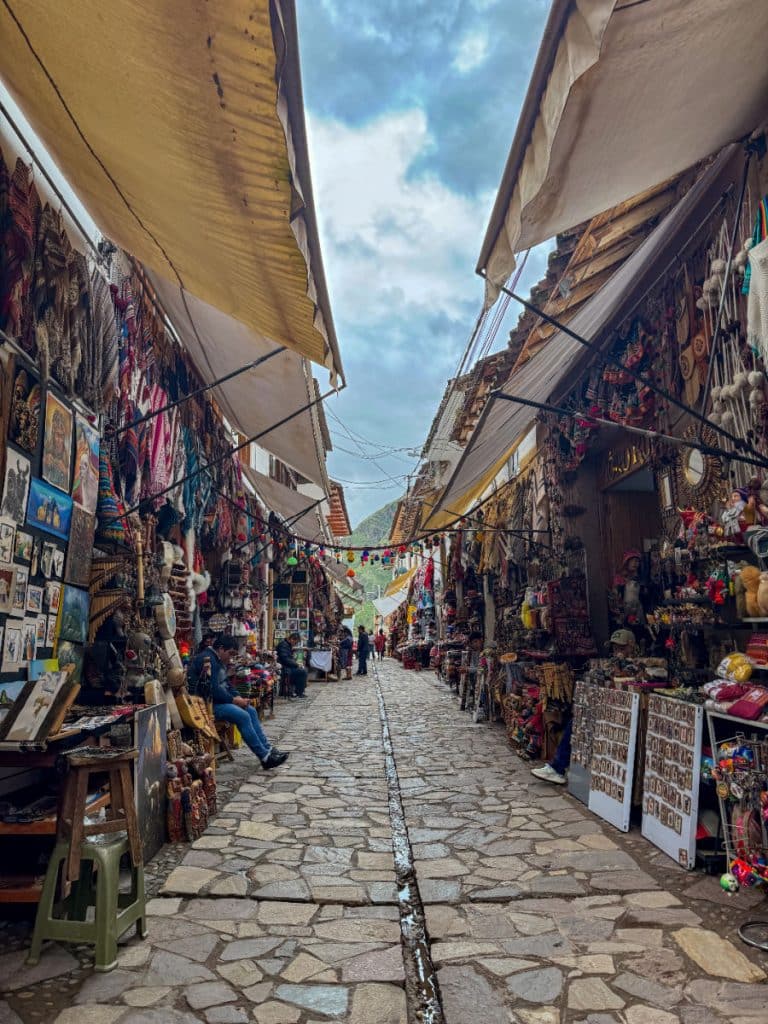
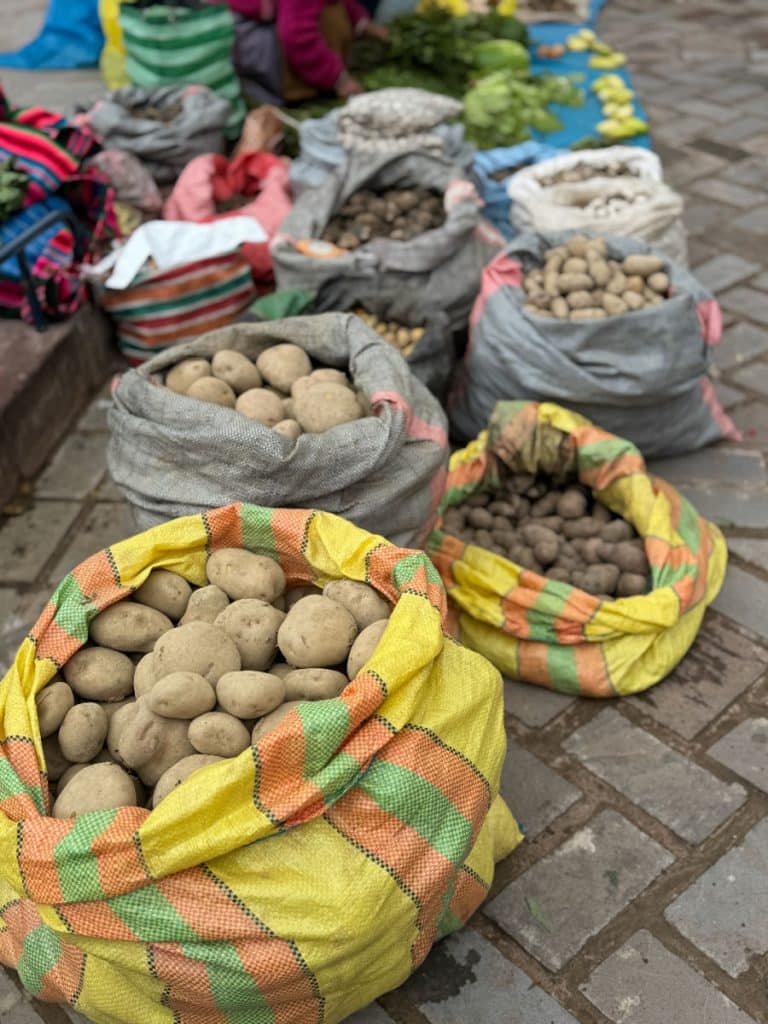
Our next stop was the town of Pisaq, which I found utterly charming. We were there on a Sunday and the town square was filled with produce vendors for the local farmer’s market. We wandered through the artisan market street, which is lined with shops selling goods and souvenirs, although here it was harder to discern which were authentic and which were imports.
We detoured down a small alley for a snack of an empanada cooked in a brick oven and finished our time in town with a stop in a silversmith shop, where yes, I made a couple of more purchases.

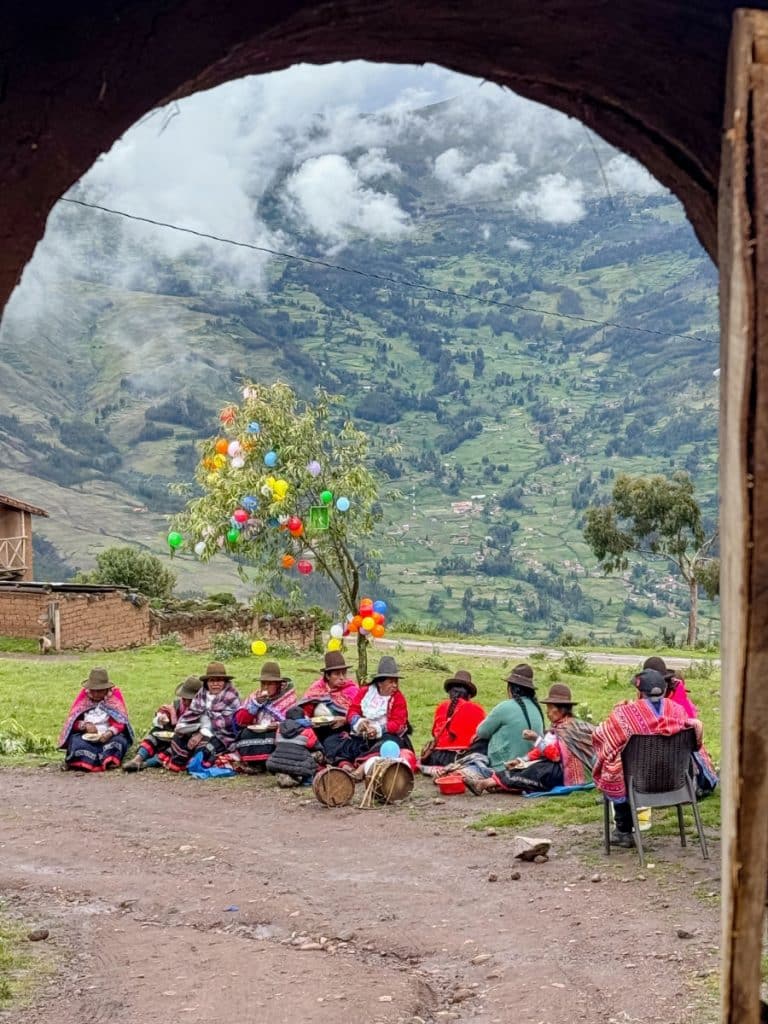
Soon we were winding our way through the mountains to our lunch spot in a local’s home in the village of Viacha. Getting there was an adventure because the recent rains left the road quite muddy and we had to get out and walk a bit while our driver maneuvered around. Throughout our journey we saw roads that were washed out, road and mudslides, rivers and streams flooding the road, and plenty of narrow tracks along steep drop offs. Let’s just say that I was very happy that I wasn’t driving and that I brought along some things to help with motion sickness.
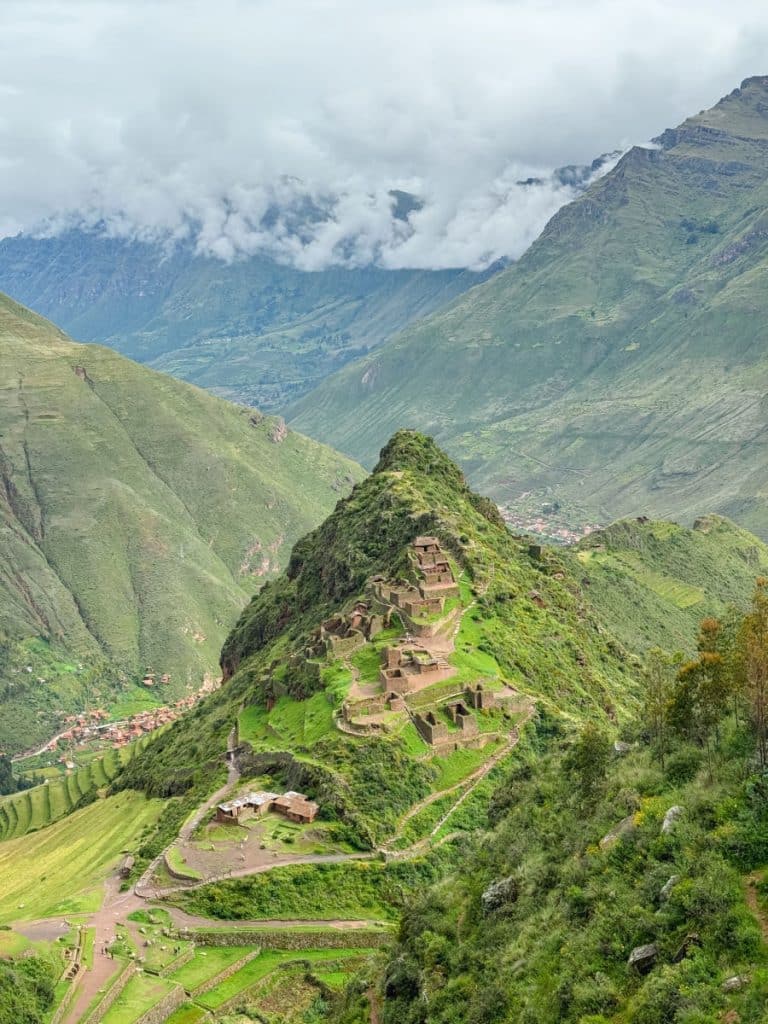
After lunch we hiked down to the Pisaq archaeological site. It was a gorgeous hike, and luckily the rain held out, as we crossed through fields of wildflowers and along rushing streams. The downhill section was a bit tough on my old knees so I highly, highly recommend packing hiking poles (and maybe a knee brace if you have bad knees.)
The Pisac (or Pisaq) archaeological ruins features a vast complex of agricultural terraces, ceremonial baths, temples, and residential structures. The mountainside surrounding the site is home to many ancient burial sites. The views of the Incan terraces and the mountains is truly spectacular from this spot. It was a beautiful end to a fabulous first day of our trek.


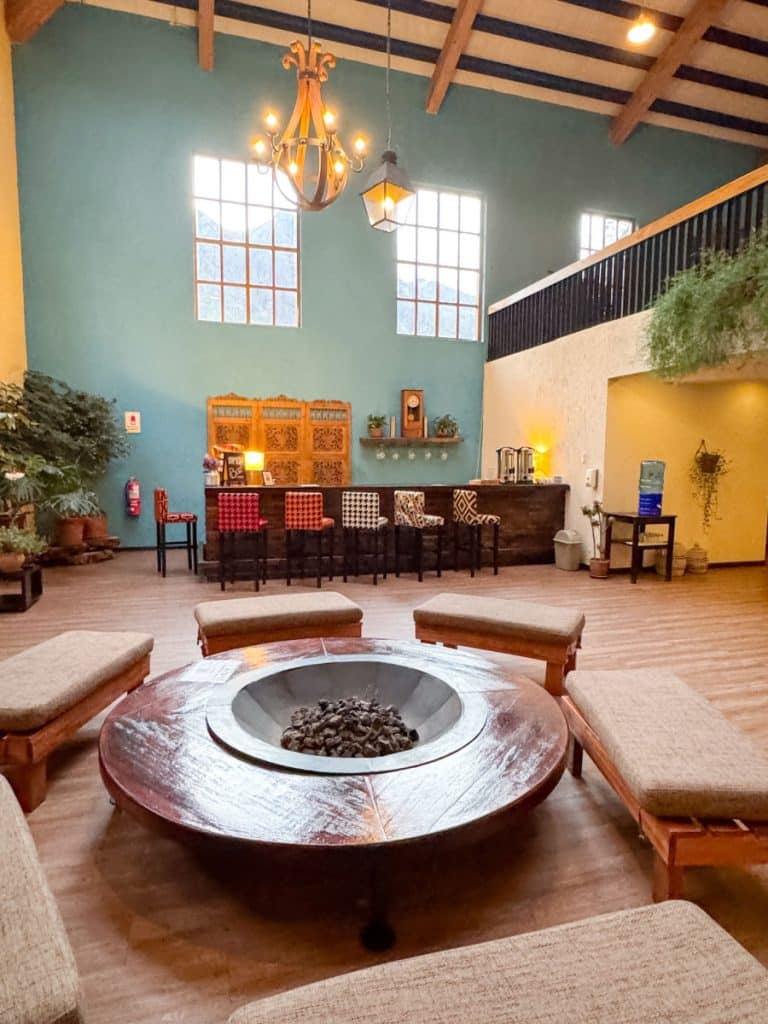
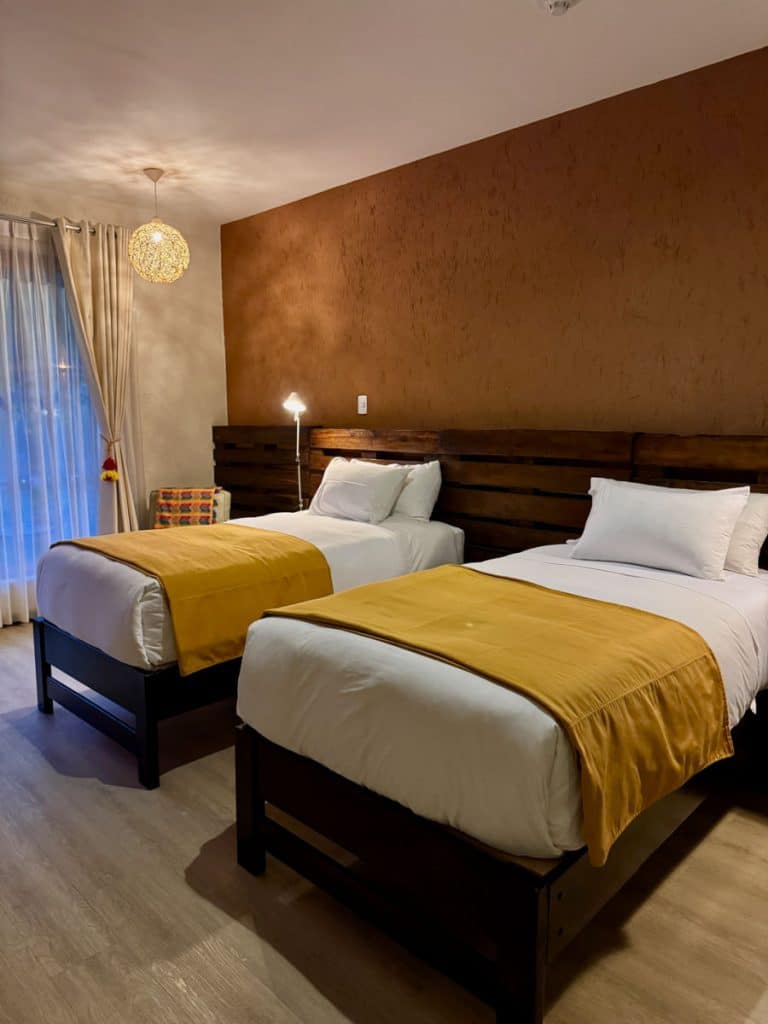
Our home for the night was Lamay Lodge, one of Mountain Lodges of Peru’s properties. I wish we had more time just to relax and enjoy the property because it was lovely! The MLP lodges offered a few amenities that made the stay so enjoyable. First, you leave your shoes at the door and they clean them for you by the next morning. Next, drinks are included (although at the higher altitude, I avoided alcohol.) Also, they give you a hot water bottle to bring to bed, which made it so cozy. Lastly, before leaving the next morning, they set out a selection of candies and snacks with little canvas bags that you can bring along to have snacks throughout the day or to give out to the children that we would run across along the journey.
Dinner that night was a buffet of traditional dishes, including guinea pig. I can’t tell you what it tastes like because the altitude really impacted my appetite and I felt just off enough to not want to try something new.

Day 2: Lares Valley
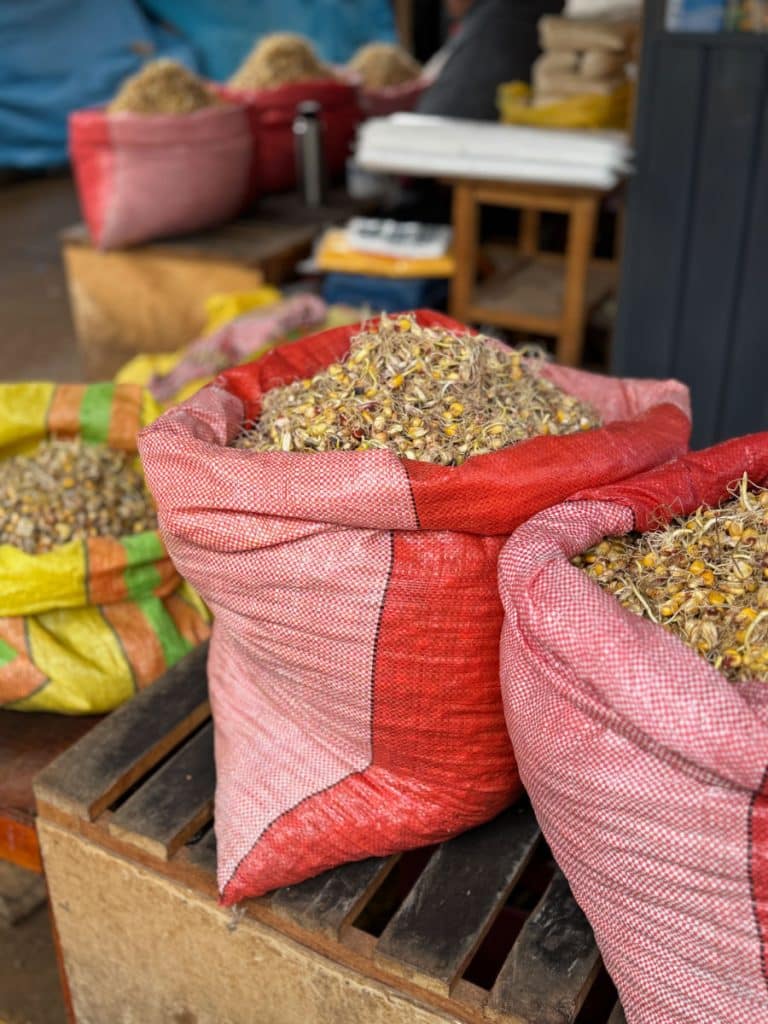
Our second day was the most challenging, at least for me, but also the most rewarding and special. We started off with a visit to a local market that sold everything from cow tongue to guinea pig to fresh produce, cooked foods, and household goods. It was an authentic glimpse into everyday life in Peru that I very much enjoyed.
From town, we headed into the mountains, winding our way up to the high point in Lares. On the way, we stopped to see the ancient Incan storehouses at the Ancasmarca archaeological site. At the entrance, I didn’t expect much from this visit but as we climbed up a short hike, I was mesmerized by the view and the fog blanketing the misty mountains around us.
Located on a mountainside near the town of Calca, this site features hundreds of circular stone structures believed to be storehouses or dwellings, spread across terraced slopes with sweeping views of the valley below. Ancasmarca is thought to have been an important center for food storage and possibly astronomical observations. I loved its remote setting and lack of crowds, as well as the beautiful views. Everyone knows about Machu Picchu but this trek with Mountain Lodges of Peru opened my eyes to the wealth of cultural sites in the Sacred Valley.



After a boxed picnic lunch, it was time to begin the biggest hike of the trip. I’ll be honest, I was pretty nervous starting out because I was still wheezing going up hills between the elevation and post-Covid lingering congestion, but I also didn’t want to miss out on this experience. I am really glad that I decided to participate, even though there was an option to skip it and return to the lodge early to relax. Because while this was a very challenging afternoon for me because I felt badly that I was the slowest in the group, it was also one of the most amazing experiences on the trip.
During our 3.5 hour hike on the Cuncani Trail, we saw only a few local farmers and children, but plenty of alpacas as we wound our way up and then down into a valley past remote stone homes where the only modern amenity was a small solar panel which generates just enough energy to power a radio.
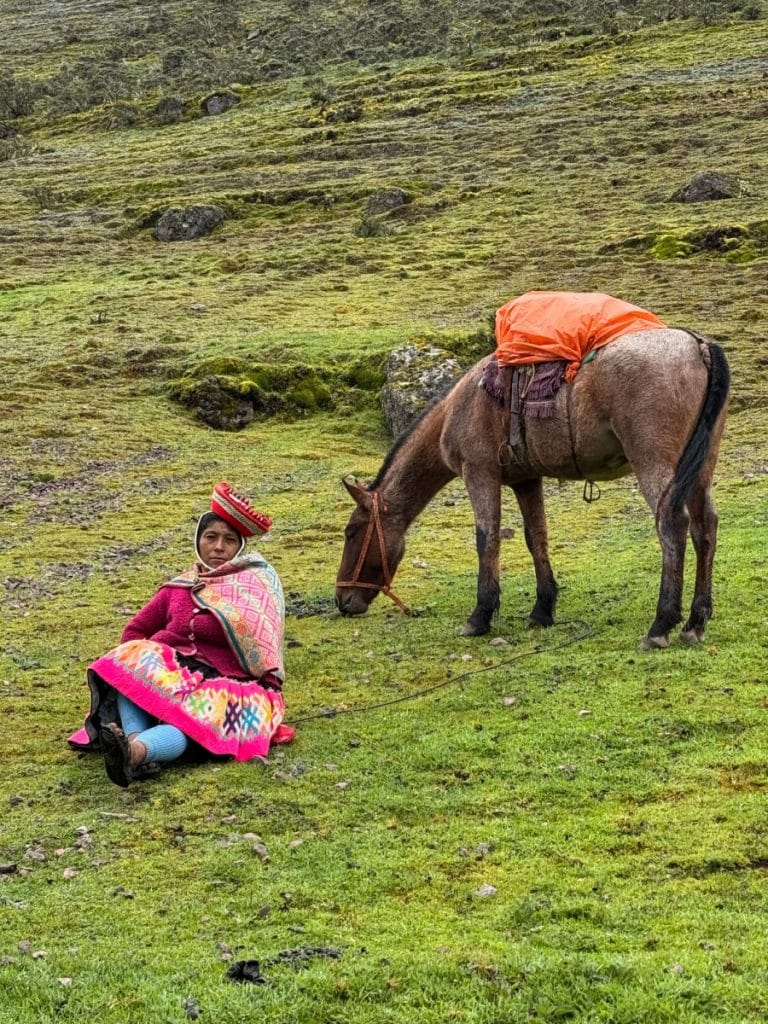
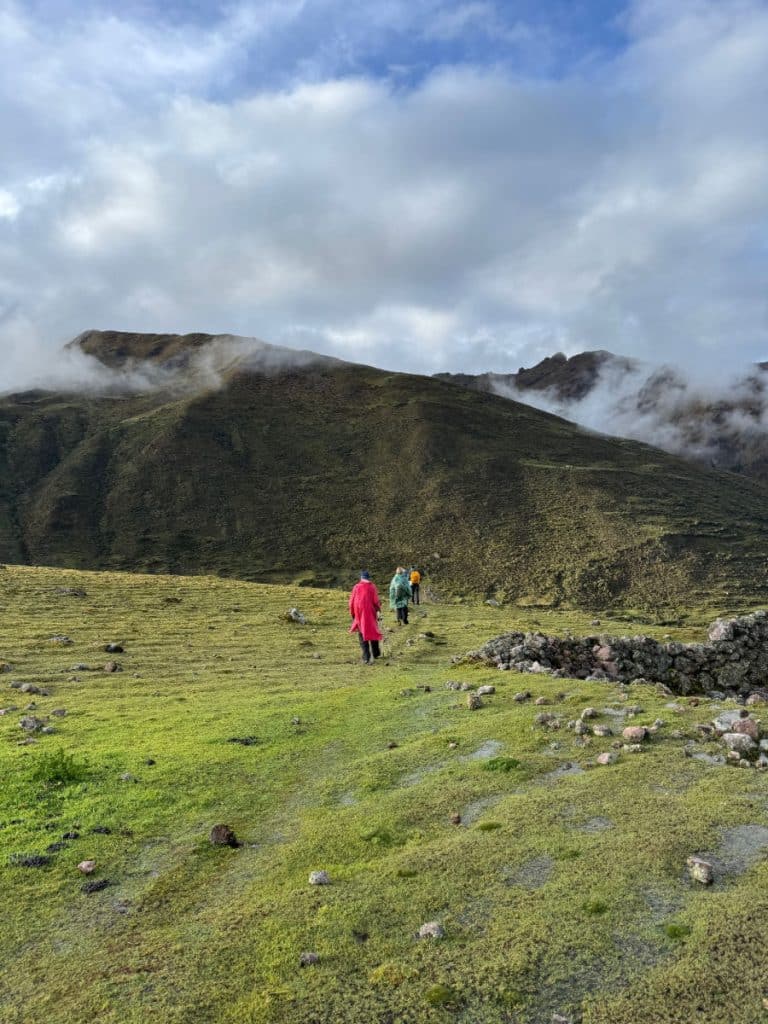
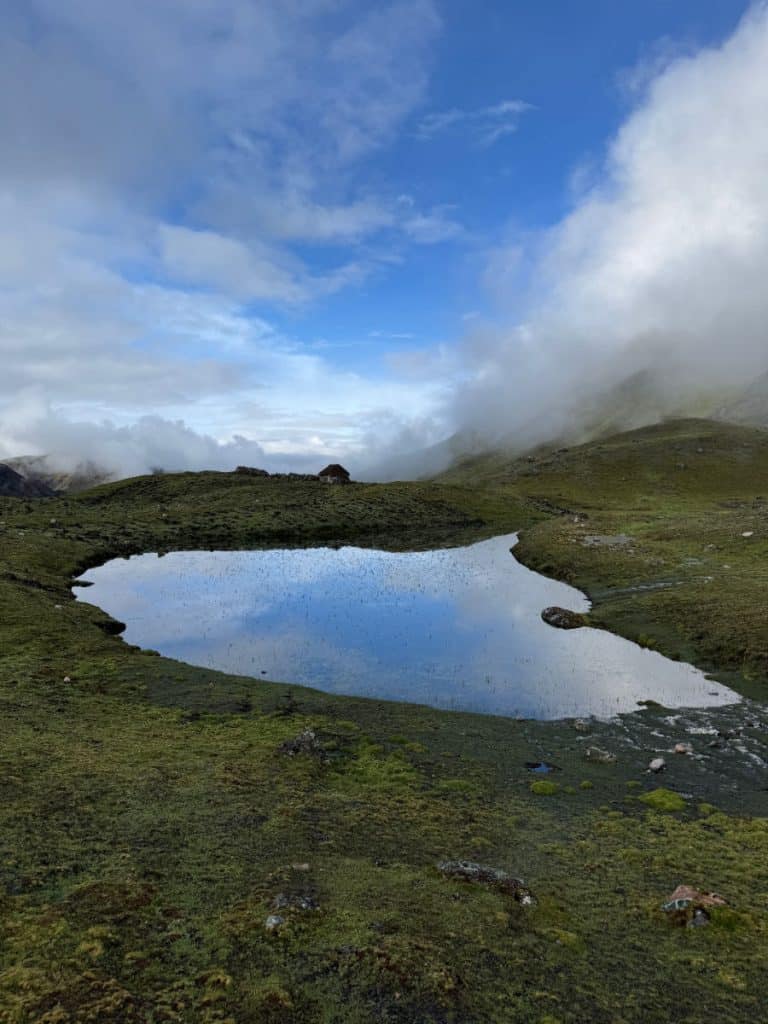

This section of the trail starts at 12,600 feet and goes up to 14,000 feet, the highest elevation of the trip. It was a little rainy during the uphill portion, but by the time we crested a hill and wound our way past a mountaintop lake to begin our descent to our lodge for the night, the sun began to make an appearance. Along the way, we were accompanied by a local woman with her mule, which I used at one point to help carry my pack and make the climb a tad easier. She also carried medical supplies and extra water. Mountain Lodges of Peru makes a point of using locals and rotate through those who want to work to spread the opportunity fairly throughout the community.
As much as I loved this hike, I was extremely happy to see the Huacahuasi Lodge, our home for the night, appear in the distance. The Huacahuasi Lodge is also owned by Mountain Lodges of Peru and has the same light and bright design and comfortable decor. One bonus for this lodge is that each room has a hot tub on the balcony. After this hike, a warm soak was just what I needed, even if it was still rainy and cold out.
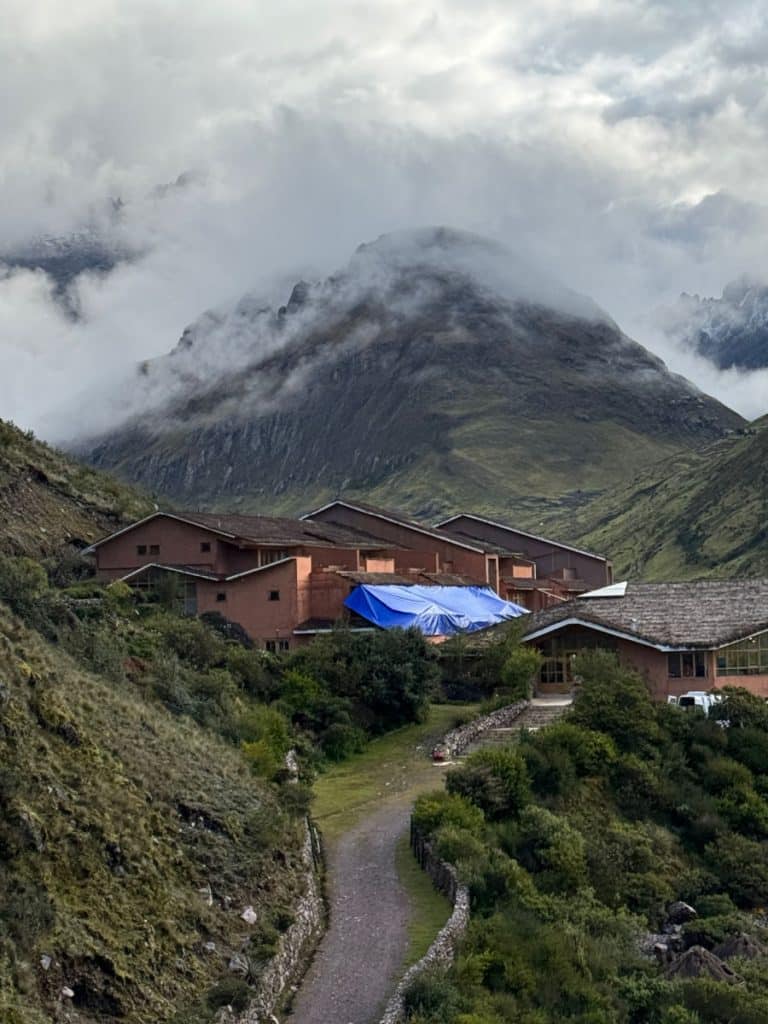


We had just finished a nice dinner with our group when the lights went out in the lodge. Soon we learned that the entire valley was without power. No one was stressed or freaking out, everyone just went with the flow and accepted it as part of the adventure. I loaded up on layers and curled up with my hot water bottle and we were fine.
Day 3: Ollantaytambo
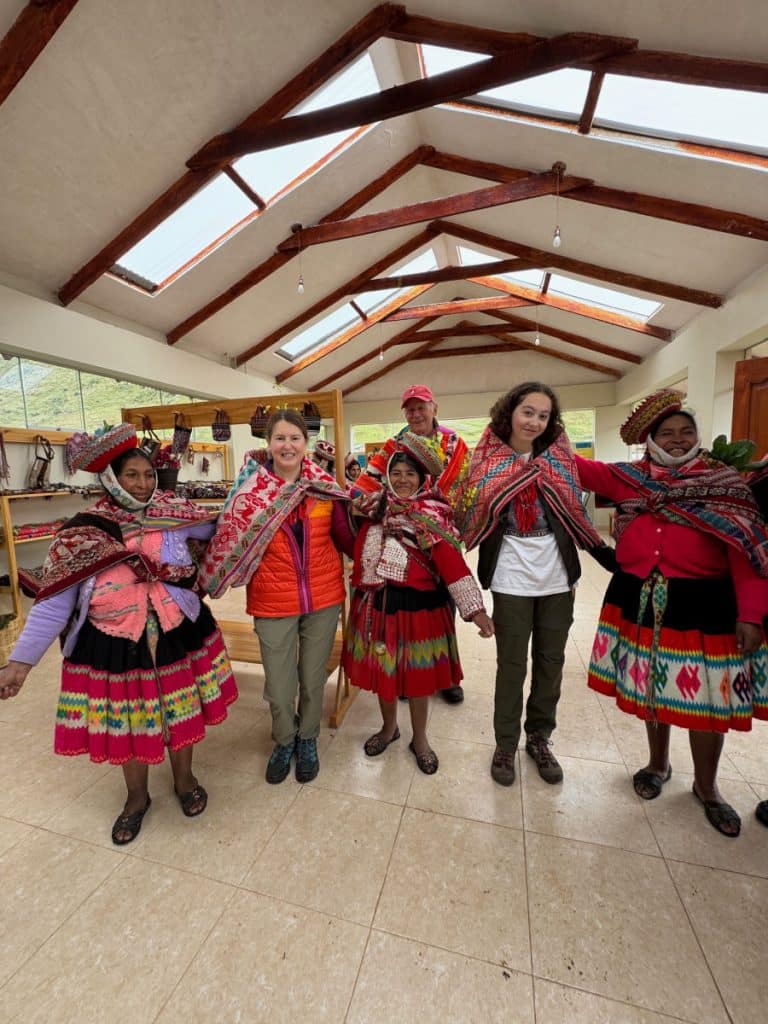
The next morning, the staff was still able to pull off a satisfying breakfast and we headed out on our next adventure. This was a day full of cultural richness. We visited a community center around the corner from our lodge and we were greeted by the local community with singing and dancing in traditional dress. After this warm greeting, we had the opportunity to see the textile handiwork of the local women and purchase handmade souvenirs where the proceeds goes directly to the locals.
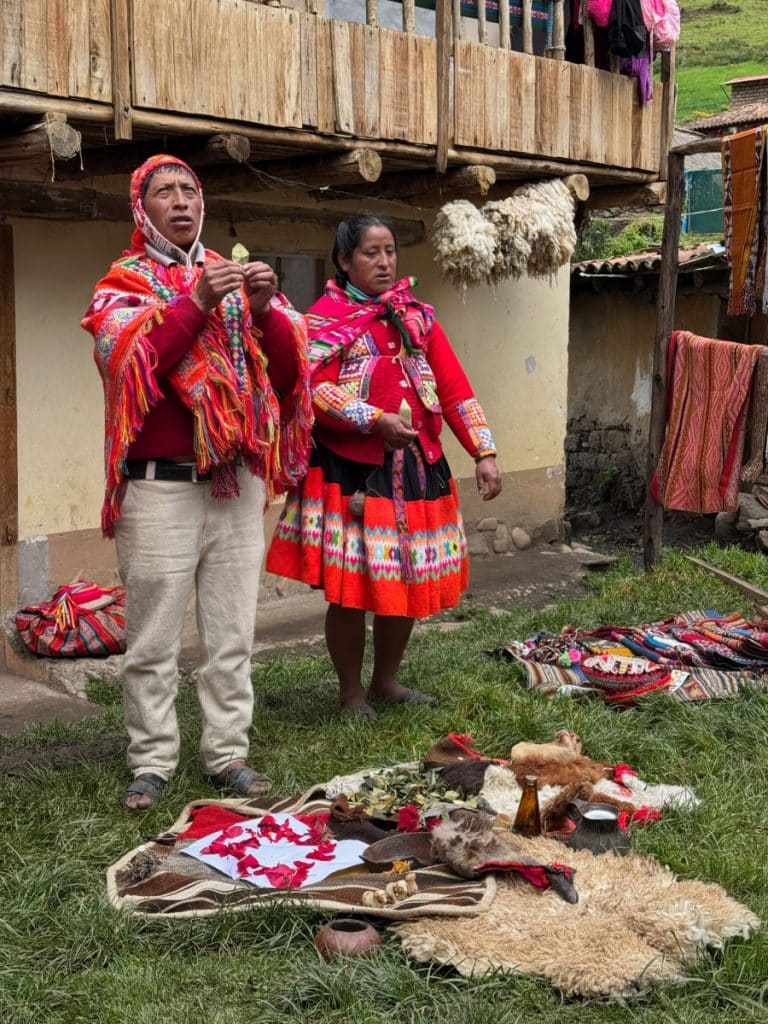
We piled back into the van for a beautiful drive to the village of Huilloc. Here we participated in a traditional Andean ceremony to honor Pachamama (Mother Earth) and her blessings for the health of the community livestock. Seated in the small backyard garden of the local Incan priest’s home, we were welcomed with tea and each received individual blessings in this traditional ceremony. This unique experience was representative of the cultural richness that we enjoyed in Peru, and not something every tourist can easily do on their own.
The plan for after lunch was a hike from Pumamarka to Ollantaytambo. However, since my knee was still hurting from the downhills the previous two days, and I needed to get some work done since we didn’t have any WiFi the night before, I opted to skip this hike. Hannah went though and said that they passed through some very pretty landscapes and it wasn’t very challenging.

Instead, the driver took me to our next hotel in the town of Ollantaytambo, El Albergue, which is right next to the train station where you take the train to Machu Picchu Pueblo. This is a lovely little hotel and the location couldn’t be more convenient. However, given the location, if you are a light sleeper, bring some ear plugs or a sound machine because the trains start EARLY and it is quite a contrast to the peaceful, sleepy lodges in the mountains.
The town of Ollantaytambo is a transit hub, as the train is the only way to get to Machu Picchu if you don’t want to hike the Inca Trail, so thousands of people are coming and going each day.
Day 4: Train to Machu Picchu Pueblo
The excitement mounts as the days go by and we get closer to our ultimate destination, Machu Picchu. We also got to know our small group well over the course of many meals and excursions together and I found it to be such a wonderful group of experienced travelers and kind people.
One the morning of our fourth day, we walked over to the Ollantaytambo archeological site. Ollantaytambo is one of the most well-preserved Incan archaeological sites in the Sacred Valley. It was once a royal estate of Emperor Pachacuti and later a strategic military fortress. The site played a crucial role during the Spanish conquest as the site of a rare Incan victory.

We climbed the stairs to see the massive agricultural terraces carved into the mountainside, ceremonial centers, and intricately crafted stonework. Site highlights include the Temple of the Sun, the Princess’ Bath, and the panoramic views from the top of the fortress that reveal the strategic layout of the original Incan town, which is still inhabited.
I could have spent more time at the site, but we had a train to catch! The train to Machu Picchu Pueblo (formerly Aguas Calientes) is a scenic ride along the Urubamba River. I’d recommend reserving seats on the left side of the train if possible for better views. There are multiple ticket classes, with some train cars offering glass-domed roofs for wider views, and others include some entertainment.
You can only bring a duffel bag on the train, so we separated out what we needed and left the rest of our luggage at the hotel. We borrowed duffle bags from the Mountain Lodges of Peru for this segment. There was some confusion in the initial communication which made it seem like we could only bring a 10 lb duffel bag for the entire trip, but luckily we were allowed to bring our suitcase on the trip (maybe because we were a smaller group?).
From the train station in Machu Picchu Pueblo, it was a short walk to our home for the night at the luxurious Inkaterra Machu Picchu Pueblo. Porters met us at the train station and transported our luggage directly to our rooms. We enjoyed a group lunch at the hotel restaurant (reservations needed!) before our rooms were ready for check in.


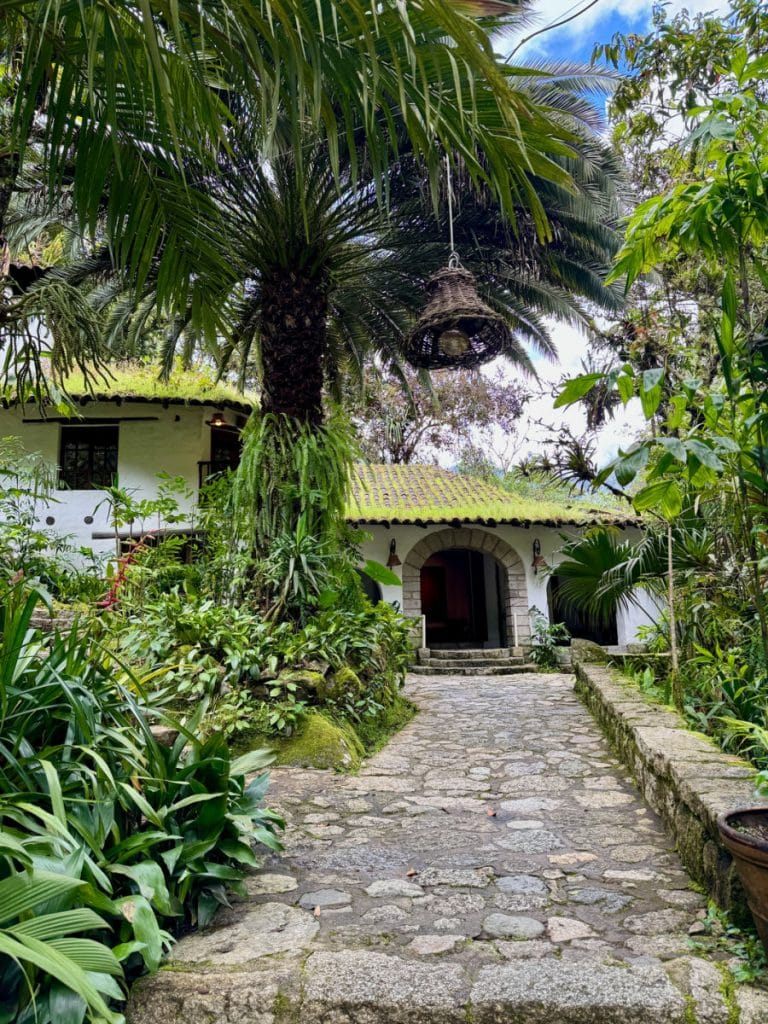

We had the afternoon free to relax and could use the hotel’s sauna, hot tub, or other facilities and daily activities. However, since it was raining pretty hard, we took the time to just relax in our room until dinner.
Day 5 – Machu Picchu to Cusco
With a 6:00 am wake up, we quickly packed up and left our bags at the front desk in time to line up for our 7:00 am bus to the Machu Picchu citadel by 6:45. The line was already two blocks long by the time we arrived, but a steady stream of busses chugging up the mountain on a constant loop meant that we didn’t need to wait long. It is a 20ish minute ride up the narrow switchbacks to the entrance.

If you don’t have bus tickets, you can hike up the mountain or the MLP trek also typically gives travellers a choice to hike the last section of the Inca Trail to the Sun Gate, but that needs to be booked in advance. Since the Inca Trail was closed during our visit, this wasn’t an option. Once you arrive, your tickets are for a designated route through the site. Between the timed entry tickets and various circuits, it never feels overcrowded and the guides do a great job of moving people along.
A few tips for visiting Machu Picchu:
- Use the restroom before entering the site as there aren’t any inside. You will need a few soles to pay for the restroom.
- You can’t bring large bags so keep a small daypack only.
- You need to get permission to bring walking sticks/trekking poles into the site.
- Make sure to wear sunscreen and a hat and bring along raingear just in case.
- Hiking boots are best but you can get by with sneakers.
With all the rain that we experienced over our five days in the Sacred Valley, I guess our blessing from the Incan priest worked because we ended up having a beautiful morning at Machu Picchu. It took some time for the fog to burn off and reveal those epic views but when it did, it was truly a wow moment.


Machu Picchu is a UNESCO World Heritage Site and often referred to as the “Lost City of the Incas.” It is one of the most iconic archaeological sites in the world and a symbol of the Incan Empire’s engineering and architectural brilliance. The city is believed to have been built in the mid-15th century under the reign of Emperor Pachacuti, and to have served as a royal estate or sacred religious site, hidden high in the Andes Mountains.
It was abandoned in the 16th century during the Spanish conquest and unknown to the outside world for centuries, but it was brought to international attention by American explorer Hiram Bingham in 1911. The site’s strategic location, with its dramatic terraces, ceremonial temples, and precise stonework, reflects the Incas’ deep connection to nature, astronomy, and spirituality.
Our guided tour through Machu Picchu took about two hours and we were heading back down the mountain by a little after 10:00 am. We then had some free time to spend in Machu Picchu Pueblo. To be honest, unless you want to get a massage or have lunch in town, there isn’t much to see and do. There is an artisan market, but it seemed like it carried a lot of imported souvenirs and the authenticity was dubious. As you would expect as the gateway to such a highly-visited site, the town is quite touristy.
My only complaint about the whole trek was that we had a bit too much time to kill before our train back to Ollantaytambo. This was exacerbated by train stoppages along the route due to rain, but we eventually made it back to Ollantaytambo, grabbed our bags that we stored at the hotel, and found our driver to bring us back to Cusco.
From Ollantaytambo it was about a two-hour drive back to Cusco, getting us into to our next hotel around 8:30 pm. We then said a heartfelt goodbye to our group and guide.
Cusco: Post-Trip
We decided to spend a bit more time in Cusco and I’m glad we did because I really fell in love with this small city. For a change of scene, I booked two night at the luxurious Palacio del Inka. The amenities included in my stay included a room upgrade to a one bedroom suite, a $100 USD spa credit, and free breakfast for two. We took full advantage of these perks! (Ask me about my travel planning services and how I can get you similar perks at many hotels around the world!)
If you are looking for a luxury stay, the Palacio del Inka combines history, art, and service with a convenient location for exploring the city. Plus, there is a baby alpaca and daily pisco sour making mixology classes. We utilized our spa credit for massages to work out the knots from the sore muscles after our busy few days of hiking and traveling.
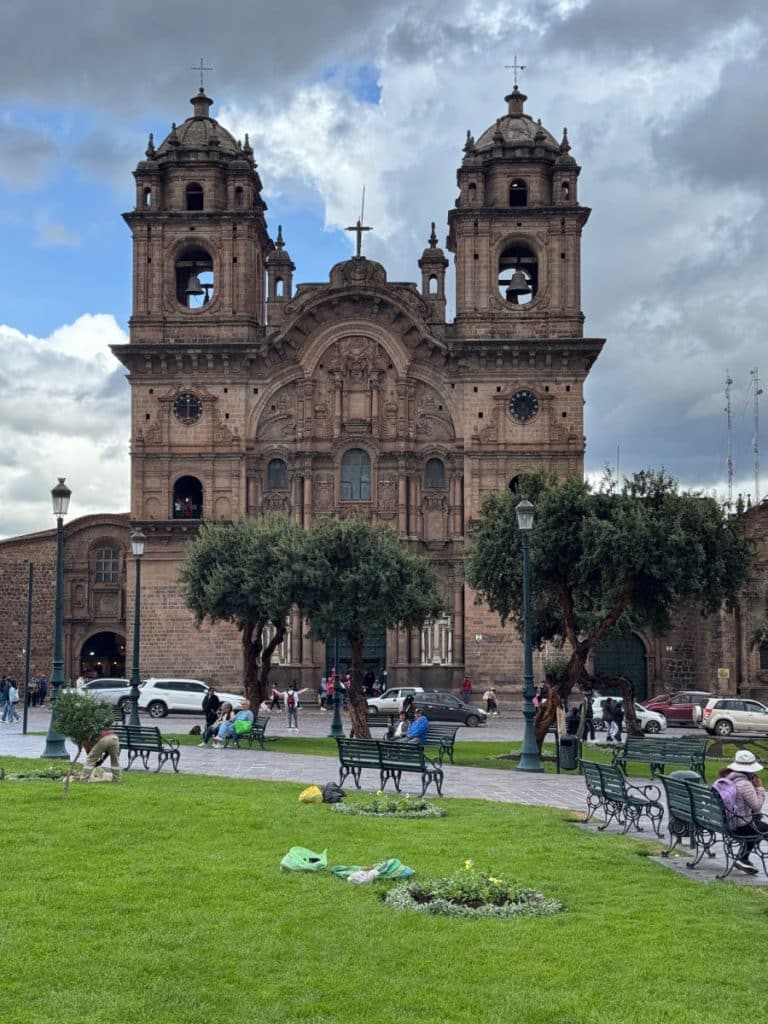
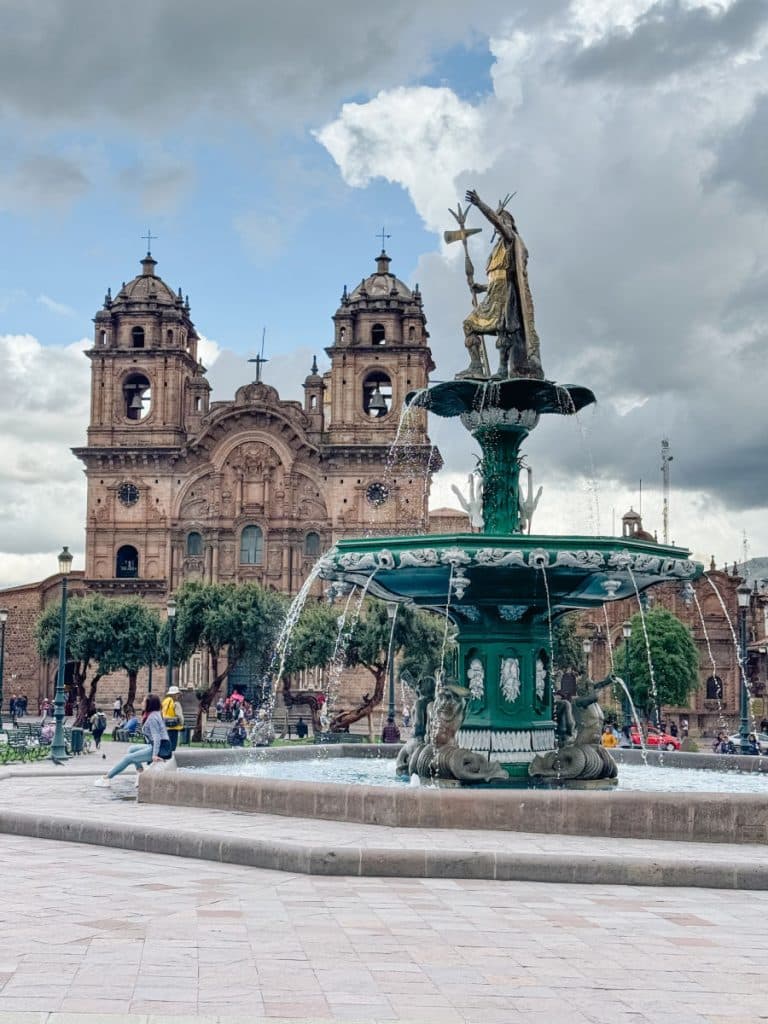
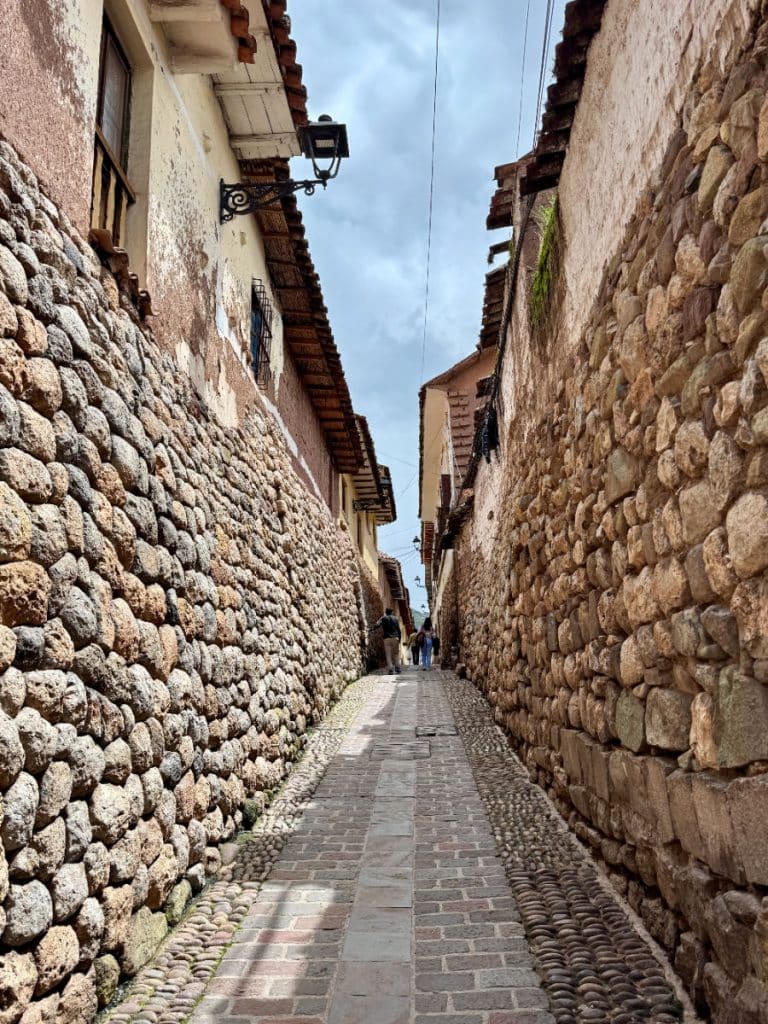


After refreshing at the spa, we spent the rest of the day relaxing and exploring the city’s sights such as the Museo Inka, Plaza del Armas, and the shops and restaurants downtown. The next day, we booked a chocolate making workshop at the Choco Museum, which was a lot of fun and we went home with some yummy creations.
Some other restaurants we enjoyed were:
- Jack’s Cafe – great for brunch and lunch with English-American-International options
- Kintaro – stylish Japanese restaurant with sushi, ramen, and entrees and a tea / matcha shop downstairs
Just a few notes about our trip home:
- Give yourselves about 2 hours at the Cusco airport. The airport is small but the check in process can be a bit chaotic. It helps to have your confirmation number readily available for checking in at the kiosks.
- If you are checking a bag, they can check it direct to the U.S., which was nice to not have to deal with that in Lima.
- If you connect through Lima, there are shops and restaurants in the main terminal but make sure to give yourself time to get through the security at the international terminal.
- We had to go through a TSA screening at the gate, as we were boarding, and had to dump all of the water we had bought for the flight. It was very frustrating and I spent the first hour of the flight in a panic about needing water because we know the service on an overnight flight is pretty limited.
This trip was more than a scenic trek—it was a chance to slow down, connect with local communities, and with each other. Traveling with Mountain Lodges of Peru allowed us to experience the Andes thoughtfully and comfortably, while still pushing ourselves physically and emotionally.
I’m so grateful for this shared adventure with my daughter—an experience I hope will live in her memory as a celebration of growth, strength, and connection.
If you’re dreaming of your own meaningful trip to Peru, I’d love to help you plan it!

Tamara Gruber is an award-winning travel writer and the founder of Your Time to Fly. With more than a decade of professional writing experience across two travel publications and hundreds of destination guides, she specializes in crafting practical, detailed itineraries that help travelers explore the world with confidence. Her work reflects years of on-the-ground research across the globe. Tamara is a member of SATW and serves on the Board of Directors of the Family Travel Association.
