
Petra, Jordan. Just the word conjures up images of grand, rose-red carved structures, whispers of ancient caravans, and that iconic first glimpse of the Treasury. It’s a bucket-list destination, a wonder of the world, and a place of immense beauty. But for solo female travelers, it is NOT an easy destination.
Let’s be real from the start. This didn’t turn out to be the trip to Jordan that I had imagined. I visited Petra just two days after the U.S. bombed Iran. The world felt uncertain and incredibly stressful, I was nervous about the frequent air sirens, and there were notably fewer tourists than usual. Emotions were high, and I was not feeling as confident as I typically am in my solo travel. I’m sure these circumstances influenced my feelings.
However, truth be told, my experience was primarily tarnished by aggressive vendor interactions. I say this not to scare you, but to prepare you. Other travelers I’ve spoken to had similar experiences. Some have reached out to me online to share very scary stories about being lured into Bedouin homes or caves for a cultural experience only to be drugged and assaulted. This post isn’t just about the magic of Petra or the Instagram-worthy photos; it’s about navigating the whole experience, particularly as a solo woman.

Petra Primer: Know Before You Go
Petra, often called the “Rose City” due to the color of the stone from which it is carved, was the capital of the Nabataean Kingdom starting as early as the 4th century BC. It was a vital crossroads for incense and spice trade routes, linking China and India with Egypt, Greece, and Rome. Its most striking feature isn’t just the architecture, but the sophisticated water conduit system that allowed a desert city to thrive. It became a UNESCO World Heritage site in 1985 and one of the “New Seven Wonders of the World” in 2007.
How to Get There
Most travelers arrive in Petra (the adjacent modern town is called Wadi Musa) from Amman. It is roughly a 3-hour drive via the Desert Highway or a more scenic 4.5-hour drive via the King’s Highway. If you aren’t self-driving or hiring a private driver, the JETT bus is a reliable and popular coach service that runs daily routes between Amman and Wadi Musa.
Buying Tickets: The Jordan Pass
Do not buy your ticket at the gate. Instead, purchase the Jordan Pass online before you arrive in the country. It is a government initiative that waives your tourist entry visa fee (worth 40 JOD) and includes entry to over 40 attractions, including Petra. You can choose between a one, two, or three-day pass for Petra. Given the sheer scale of the site (over 60 square kilometers), a two-day pass is highly recommended to see all the highlights without being completely exhausted.
Top Things to See and Do



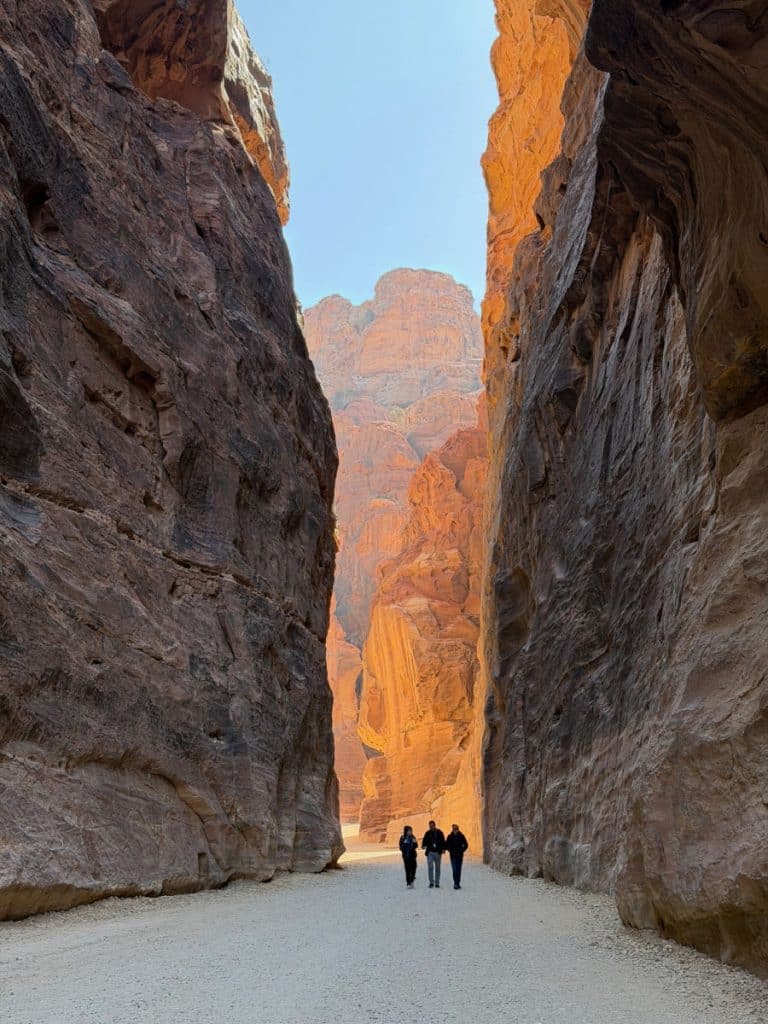
- The Siq: The main entrance to the city is a narrow gorge, roughly 1.2km long, flanked by high cliffs. Look for the ancient water channels and remains of Nabataean carvings along the walls.
- The Treasury (Al-Khazneh): The most famous sight in Petra. It appears suddenly as you exit the Siq. It was actually a tomb, not a treasury, despite its name.
- The Street of Facades & Theater: Beyond the Treasury, the canyon opens up to show a row of monumental Nabataean tombs and a massive theater carved into the side of the mountain.
- The Royal Tombs: A series of large, impressive facades carved into the cliffs of the Jebel al-Khubtha.
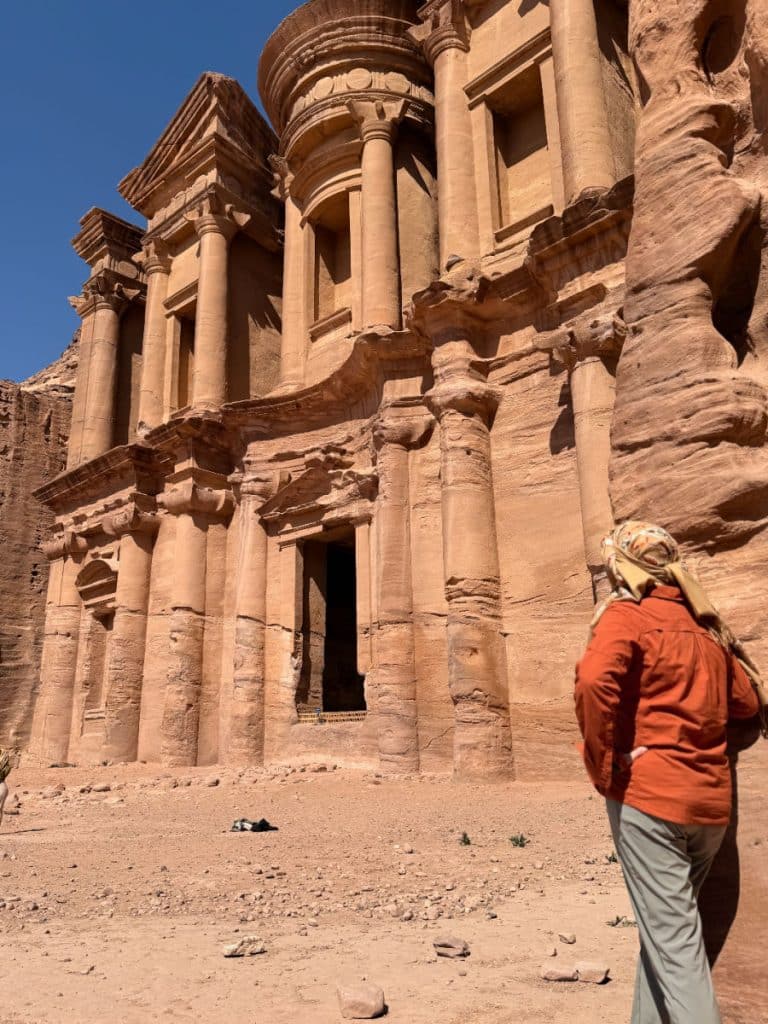
- The Monastery (Ad Deir): This is the furthest major monument. It is larger than the Treasury but requires a climb of approximately 800 steps. It is best visited in the late afternoon when the sun hits the facade.
Ways to Visit: Day vs. Night
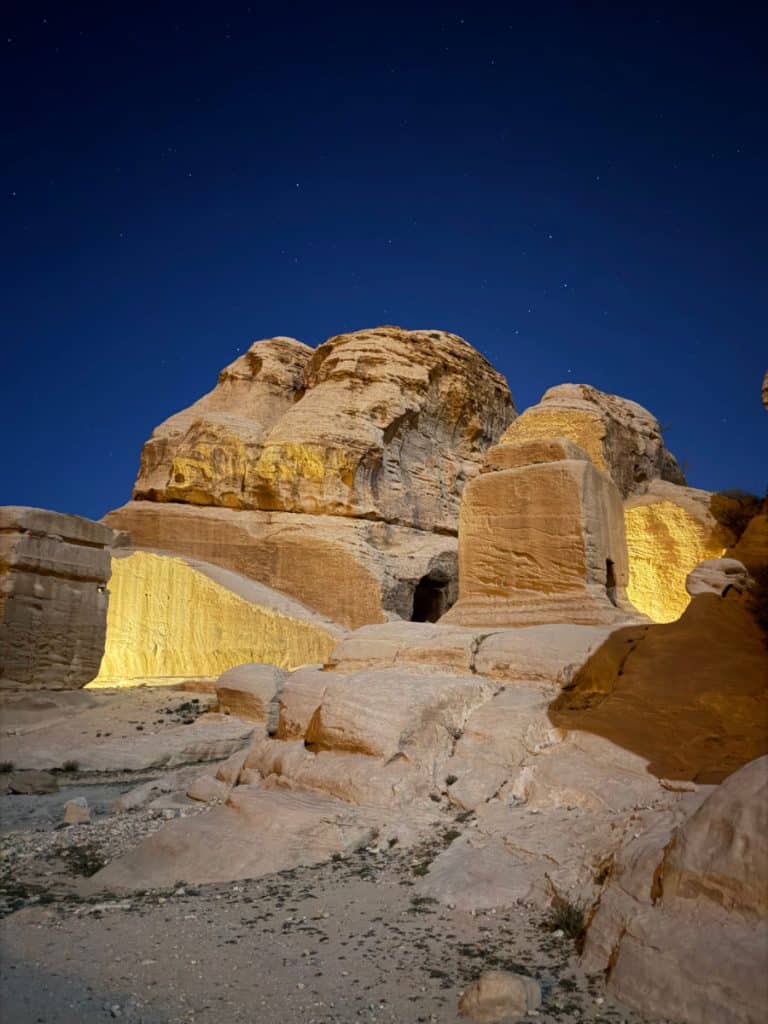


- Day Visit: This is when you do your heavy hiking. The site opens at 6:00 am, and getting there early is the only way to beat the crowds and the heat.
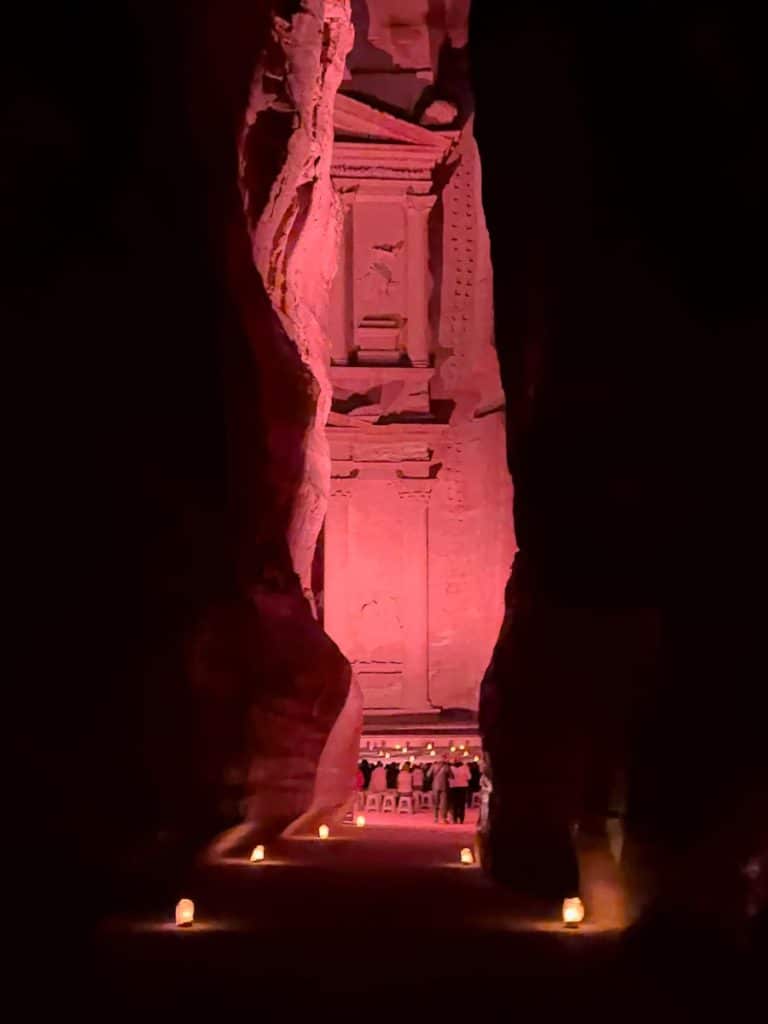
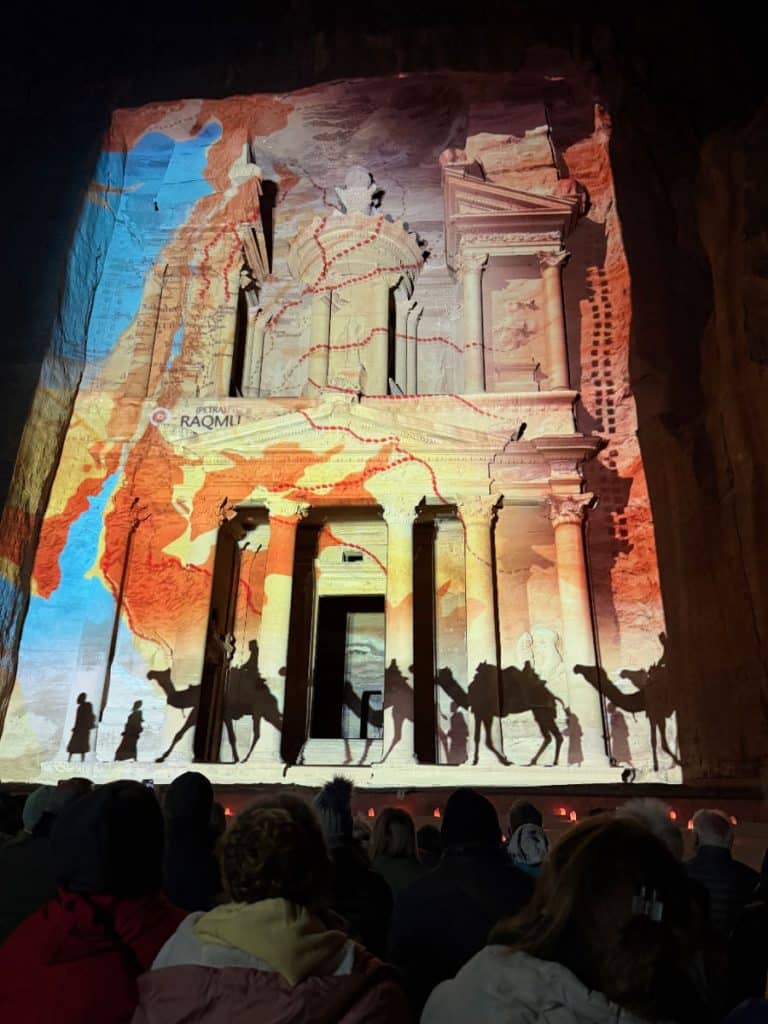
- Petra at Night: This is a separate ticketed event (usually held on Mondays, Wednesdays, and Thursdays). The path from the Visitor Center to the Treasury is lit by over 1,500 candles. It is a atmospheric experience involving a light and sound show telling the history of the site, but keep in mind that the walk is dark and the ground is uneven.
Tips For Visiting Petra as a Solo Female Traveler
The emotional part of the visit was what I was not prepared for, and it’s especially challenging for solo women who might be seen as “easier targets” for high-pressure sales. Here are some tips to help you prepare:
- Do you Need a Guide? No, not strictly. But they can offer excellent context. However, be incredibly firm about your boundaries. My guide, despite my clear statements that I was not there to shop, still brought over vendors and didn’t help me extract myself. You must be extremely direct. Tell them up front: “I have no space in my suitcase and zero budget for shopping. Do not introduce me to vendors, and if someone approaches me, please help me move on.” And hold them to it.
- Be Prepared for a Guilt Trip.The emotional pressure was immense. “Support a single mother,” “Help my family,” “Times are hard.” This is difficult to hear anywhere, but the relentless nature of it in Petra can wear you down. Remember, you are not responsible for solving the systemic economic issues. A polite but firm “La, Shukran” (No, thank you) is a start, but I often had to keep walking with purpose and avoid eye contact. Other times, I yielded to the pressure and then it was hard to extricate myself. The easiest way to deal with it is ignoring it and NOT stopping to engage.
- Avoid the “Free” Photo Pitfall: This was a painful one. A young man offered to take my photo even though I’d already agreed to pay a boy to accompany me to the monastery and take photos. Without being given a choice, I let him. Then, I felt indebted. I literally didn’t have any more money to spend on his overpriced items. When I tried to give him a 10 JD tip (as a thank you) instead of buying something, he became aggressive and yelled at me. I walked away in tears. Lesson: Do not accept “free” help from anyone trying to sell you something. Firmly say no. Take your own photos.
- Stunning Prices: The merchandise I saw was expensive by any standard, not just “travel budget” standard. Jewelry and perfume (sold by weight) were being sold for hundreds of dollars from tiny stalls or path side tables, which made it hard to believe it was really worth that much. Silver necklaces and bracelets: hundreds of JD. A small bottle of perfume: over $200 JD. Note: The Jordan Dinar (JOD or JD) is stronger than the US Dollar. For a quick (and currently generous) conversion, multiply JD by 1.4 to get USD. (e.g., 200 JD = ~ $280 USD!) Everything is negotiable, but even their “discounted” rates were far more than I’d pay, and they make it incredibly hard to just walk away. You stop thinking you can buy a little something to help them out and suddenly they expect you to drop a few hundred dollars when I’m thinking to spend maybe $20? I don’t think so.
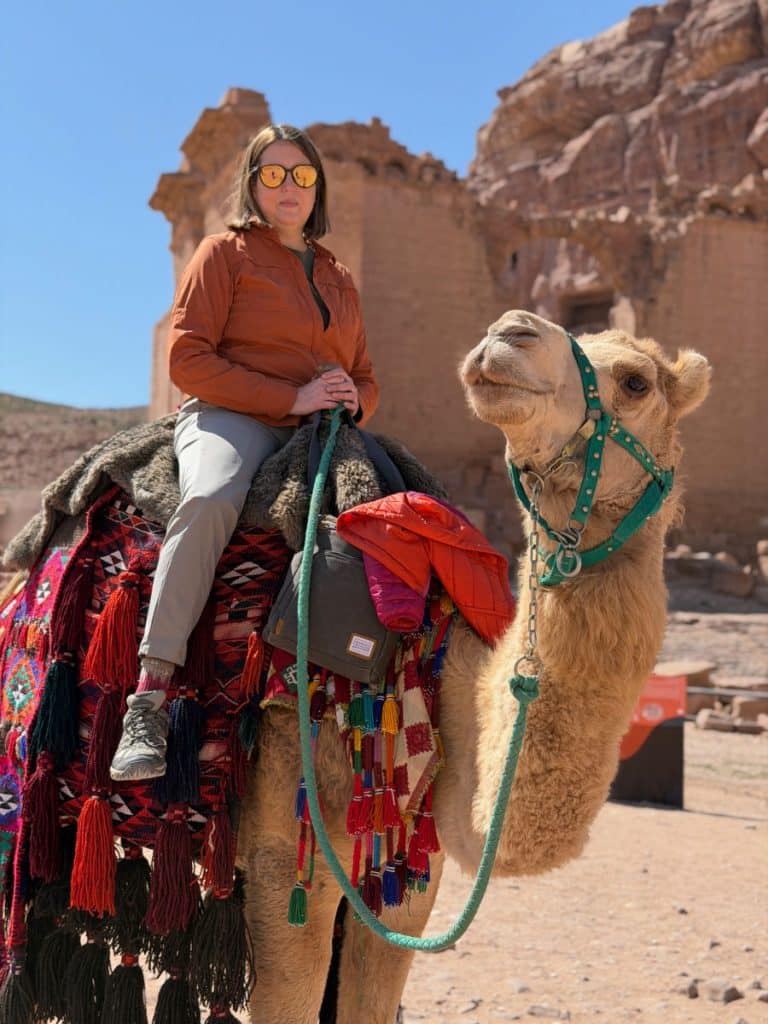
- Transport Pressure: Throughout the circuit, someone will push you for a horse ride (included in your ticket, but a tip is expected for a 10-minute walk), a camel ride (~30 JD), a golf cart ride, or a mule ride up the steep path to the Monastery (~30 JD). That’s $40+ USD each way! If you want to ride, go for it, but know that you are going to pay. If you don’t, be prepared to say “No” a hundred times.
- Firm, Unwavering “No”: You must have a steely determination. I told a mule driver three times that I preferred to walk. He and my guide kept pressuring me. You are your own best advocate. A firm “NO, I am walking” and a direct stare is often necessary.
- Viewpoints – for a Fee: There are amazing viewpoints above the Treasury (the Al-Khubtha Trail is a key one). Be aware that you have to pay to access these “secret” spots now. Petra is very focused on maximizing tourist dollars. Is it worth it? The photos are incredible, so budget for it if that’s a priority.
- Busiest Times: Avoid high summer if you can. Spring (April-May) and autumn (October-November) have the best weather. Mornings are the least crowded.
- Don’t go into caves or Bedouin homes: I love to connect with locals and believe in home visits, etc. However, from everything I’ve heard this is not a good idea in Petra. Read this if you need more info.
- Exiting Without the Walk: You will walk through the Siq to the Treasury and well beyond to the main city. If you’re too exhausted for the long walk back to the visitor center, there’s a shuttle that takes you to the local village and back to the visitor center or you can pay for a golf cart transport.
- Petra at Night: This is a separate ticket and a magical experience, but know what you’re getting into. The 30+ minute walk through the Siq to the Treasury is done in the dark, dimly lit by paper bag lanterns (luminaries). It can be easy to stumble on the uneven stone pathway. There are many people around, but the darkness is real. As a solo traveler, stick close to another group when walking in and out. And remember, the return walk is uphill and it gets very chilly at night.

While my Petra experience was tough, please, do not let it tarnish your view of all Jordanians. For the most part, in other towns, the people I met were incredibly warm, genuinely friendly, and exceptionally welcoming. This level of aggressive sales pressure seemed specific to Petra and was likely exacerbated by the challenging political climate I was in.
I’m still glad that I went to Petra, but this experience did leave a mark on the visit. That sudden view of the pink rock face through the narrowing canyon is a moment I’ll remember hopefully much longer than the aggressive sales tactics.
Where to Stay When Visiting Petra


If you are traveling without a car or a private driver, location is everything. For ultimate convenience, the Mövenpick Resort Petra is the premier choice; it sits directly across the street from the Visitor Center entrance. Staying here allows you to be among the first through the gates in the morning and, perhaps more importantly, provides a much-needed sanctuary the moment you finish the long walk back out of the Siq.
If you prefer a more luxury or atmospheric stay, the Old Village Resort is a beautiful option (this is where I stayed). It is a beautiful property built into the remains of a 19th-century Sahabi village, featuring stone walls and authentic architecture that feels deeply connected to the region’s history. The resort is lovely and offers a higher level of character than the standard hotels in town, but there is a major logistical trade-off: it is not walkable to the site.
What to Wear in Petra
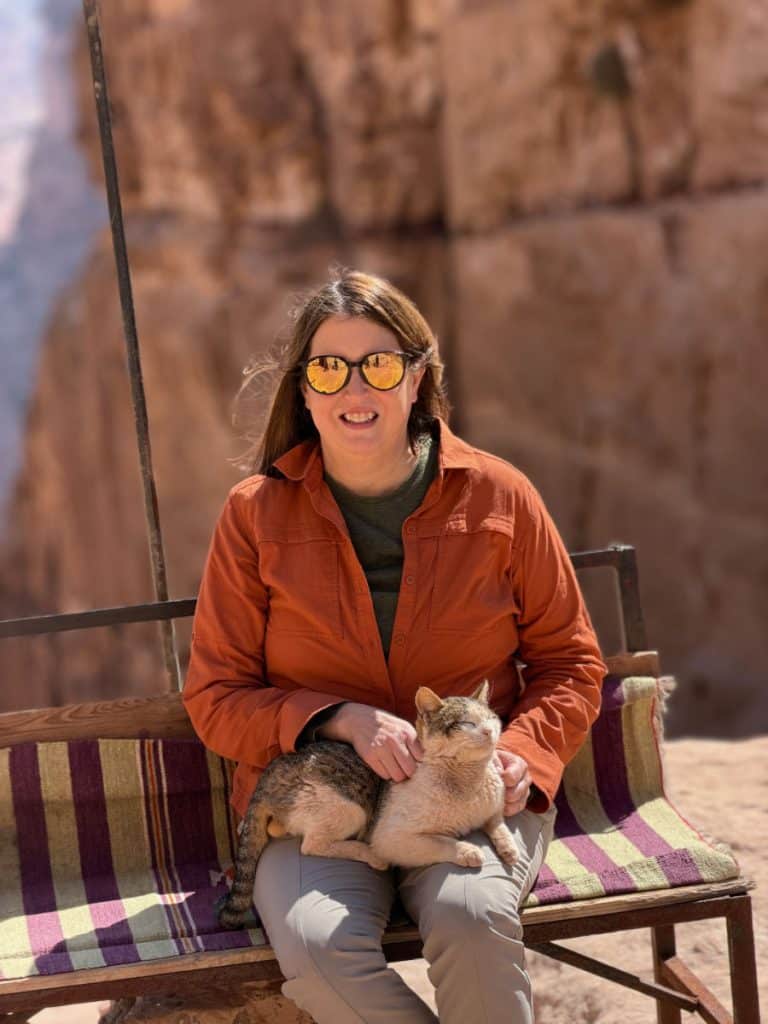
Dress for a Hike, Not an Instagram Photo Shoot. Seriously. Do not wear an impractical dress or flimsy sandals for a photo. You will be walking on dirt, rock, and climbing countless steps. Wear sturdy hiking boots or shoes, breathable layers (it can go from cold to hot quickly), a wide-brimmed hat, sunglasses, and high SPF sunscreen. Hiking pants or comfortable leggings are a must.
If you want good photos, wear a bright, warm color like yellow, orange, or pink. These colors pop beautifully against the rose-colored rock in photos. Don’t bother packing a scarf; you’ll have 50 people trying to sell you one within the first hour.
General Jordan Travel Tips
- Tipping Culture is Real. You will need lots of small bills (1, 5, 10 JD). Tip your guide, the baggage porter, your shuttle driver, your server—everyone expects a tip, and they will make it clear.
- Money: Bring more cash than you think you’ll need. Exchange some money into JD before you leave Amman.
- Water: Do not drink the tap water. Use only bottled water for drinking and brushing your teeth.
- Security: Carry your passport for random security checks, especially if traveling between cities. You will also need to scan bags and purses through machines at hotel entrances, just like at the airport.
- Transport: Use Uber instead of taxis. It avoids the fare negotiation and is safer. Note: Uber in Jordan currently only accepts Mastercard or Cash, not Visa or American Express.
Petra is a place of incredible ancient history and stunning natural beauty. It is also a place that can be challenging for a solo traveler. Go in with your eyes open, your boundaries firm, and your budget prepared. Enjoy the wonder, but be ready for the hustle. You’ve got this.
You may also be interested in…

Tamara Gruber is an award-winning travel writer and the founder of Your Time to Fly. With more than a decade of professional writing experience across two travel publications and hundreds of destination guides, she specializes in crafting practical, detailed itineraries that help travelers explore the world with confidence. Her work reflects years of on-the-ground research across the globe. Tamara is a member of SATW and serves on the Board of Directors of the Family Travel Association.
