
As a travel professional of 13+ years who spends about half a year in hotel rooms, you would think packing would be a breeze. But honestly, it is challenging every time. If I look through my wardrobe, I see a closetful of clothes purchased for various destinations and travel activities. I try hard not to overpack, so I tend to try on and plan out as many outfits as possible based on the weather forecast and my planned itinerary.
On the surface, packing for South Africa should be incredibly easy. You don’t need to get dressed up. Most lodges provide complimentary laundry service. And the days pretty much all look the same. However, there are some really important things to consider when you are packing for South Africa:
- Are you just going on safari or will you also be spending time in Capetown, Johannesburg, or the Winelands? Because if so, you are going to need more than just safari gear. You will need outfits for sophisticated dining, active tour, and posh wine tasting.
- How are you getting to your safari lodge? Will you be taking a “normal” plane from Capetown or Johannesburg or a smaller bush plane that has luggage restrictions on size, weight, and format (usually they prefer/require a small, soft-sided duffel bag around 50 liters).
- What season are you visiting in? If it is South Africa’s winter, it may be cold and wet in Capetown, requiring a puffer jacket, hat, and gloves, but much warmer inland. And while it can still be hot during the day, those early morning or nighttime game drives are still going to be chilly. Layers are key.
What to Wear on Safari?
Note: This post contains affiliate links. If you click a link and make a purchase, I may receive a small commission at no cost to you.
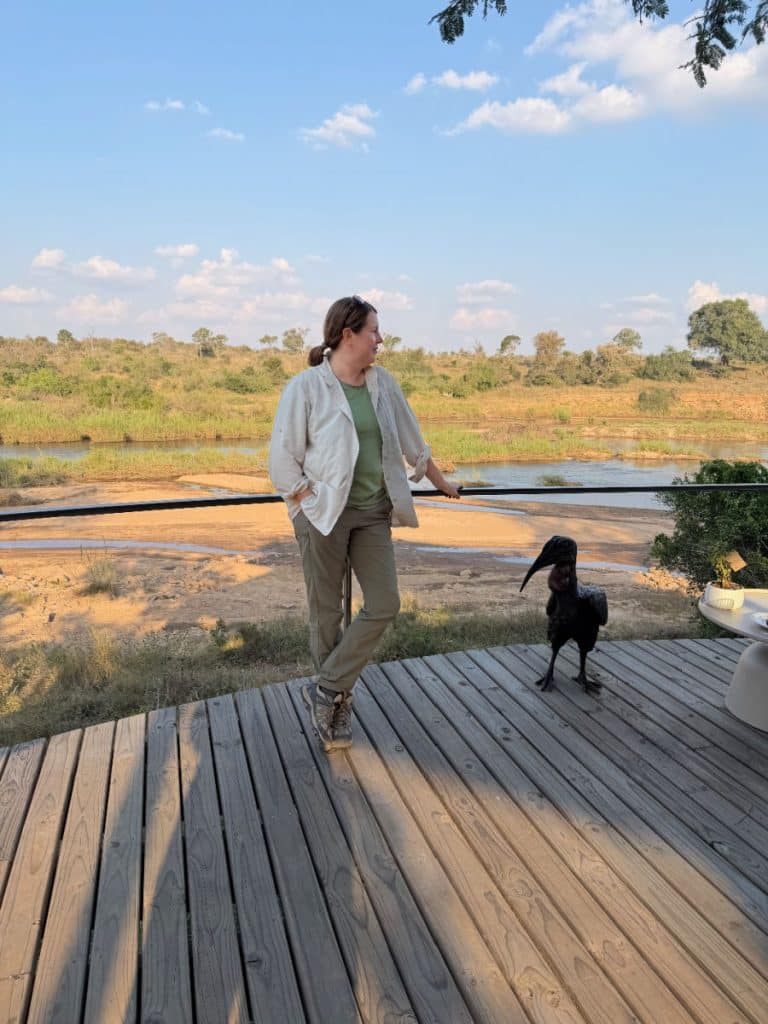
We have all seen the photos of guests in the traditional safari garb — khaki hiking pants, a neutral hiking shirt, maybe a vest with lots of pockets (still haven’t totally figured out the reason for those), and the wide-brimmed safari hat. There is a reason why all those photos look a like. Because there are some very strong guidelines on what to wear on safari for your safety and comfort.
When deciding what to wear on a safari, consider these tips:
- Stick to earthy tones like khaki, olive, and beige that blend in with the landscape.
- Also avoid black or dark blue clothing. Tsetse flies are drawn to dark blue and black, especially in tsetse-fly regions of East and Southern Africa and those colors can lead to bug bites.
- Bright colors stand out to animals and can be alarming.
- White clothing shows dirt and dust immediately (a real problem on dusty game drive roads).
- Camo prints are often illegal for civilians to wear in many African countries, since they’re reserved for military.
- You will need layers and breathable fabrics to accommodate for the various temperatures you will encounter throughout the day (see my guide on what a typical game drive day looks like on safari.)
- And those wide-brimmed hats are necessary to protect your skin from the strong African sun. But, make sure you get one with an adjustable strap, otherwise it is going to blow away during the game drive and no one can get out of the vehicle to go retrieve it! I like this style because the sun flap covers your neck too but doesn’t stick in the face of the person behind you in the safari vehicle.
Another thing you might want to consider is spraying your clothing with a Permethrin spray for clothes before you leave to help repel bugs and mosquitoes. Just make sure you do this outside and follow the directions carefully.
And don’t worry if you don’t have these items readily available in your wardrobe. You don’t need anything fancy, there are plenty of options on Amazon (and you could always donate them after if you won’t use them for hiking, etc after.) Or, you can do what I did and purchase via a resale site like ThredUp.
South Africa Safari Packing List
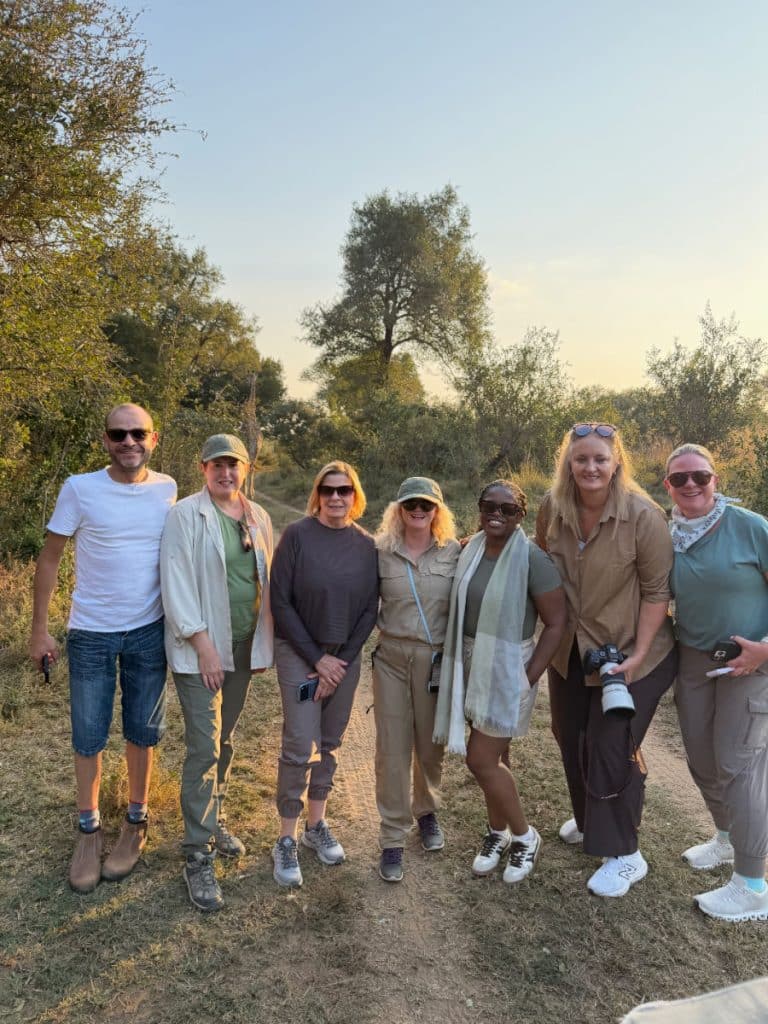
Based on my personal experience, here are some things that you need to put into your bag when planning a South Africa safari trip…including a few that I’m glad I remembered to bring but most people might forget!
- 2-3 pairs of lightweight safari / hiking pants in neutral colors like tan, olive, and beige
- 1 pair of shorts (unless you have those pants where the legs zip off)
- 2-3 long sleeve, lightweight button up shirts with SPF protection
- 2-3 quick dry t-shirts
- 2 cotton tank tops
- Underwear
- Pajamas
- Sneakers (that you don’t mind getting dirty) or hiking shoes/boots (I love my Merrell hiking shoes)
- A small back pack to bring on game drives that will fit a jacket/sweater, water bottle, tissues, sunscreen and other necessities)
- Softshell fleece-lined, waterproof jacket (or a fleece + light rain jacket)
- Wool hiking socks (Darn Tough are my favorite)
- Bathing suit (or swimming costume as they say in South Africa)
- Wide-brimmed hat with an adjustable strap
- Sunglasses
- Scarf or lightweight buff to put over your face during dusty drives
- Sandals (for going to the spa, pool, or wearing around the lodge/camp)
- Warm knit hat / beanie
- Thin gloves (ideally ones that work with a touchscreen if you are taking photos with your phone)
- Sunscreen
- Bug spray
- Headlamp
- Binoculars (if you need to save room/weight, check and see if the lodges you are visiting supply these in the vehicles)
- Camera (if you don’t have a fancy camera, don’t worry. I took some incredible pictures with my iPhone 17 Pro.) If you are just using a phone, you may want to consider a clip on zoom lens and case for distance shots.
- Charging cables and a portable battery pack (just check with airline regulations to see if these are allowed in your personal item)
- Universal or South Africa-specific power adapter (Type M plug)
- Glasses cleaner and lens cloth (for sunglasses, glasses, and camera lenses that get dusty on drives).
- Reusable water bottle (your lodge may provide one of these but I never travel without it anyway)
- Medicine (including Malaria prophylaxis if using)
- Lip balm and moisturizer for face and hands with SPF — don’t underestimate how drive and dusty you might get. Bring these along on your game drives too!
- Ear plugs and an eye mask (again, your lodge may provide these but it helps block out animal noises and sunlight).
- Cash for tips (South African Rand)
- Passport
- Yellow Fever vaccination certificate (if needed)
- Travel insurance (you may also want to consider MedJet for medical evacuation)
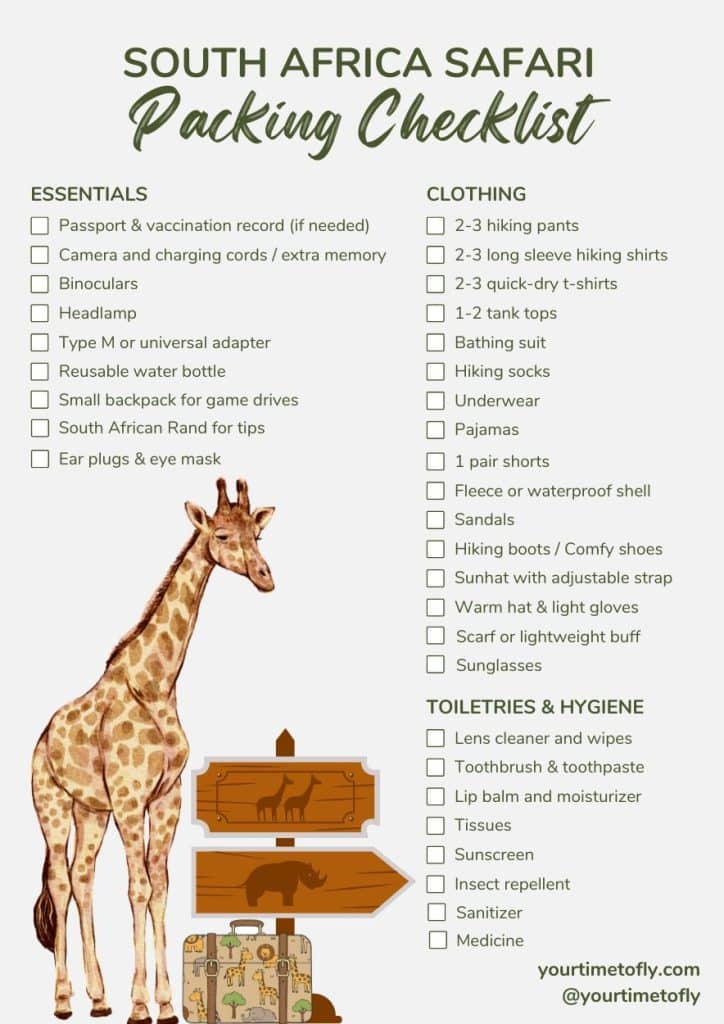
Download the South Africa Safari Packing List printable checklist PDF
Now, what should you pack this in? It all depends on your airline’s luggage requirements. Check with your tour provider or travel advisor for more information.
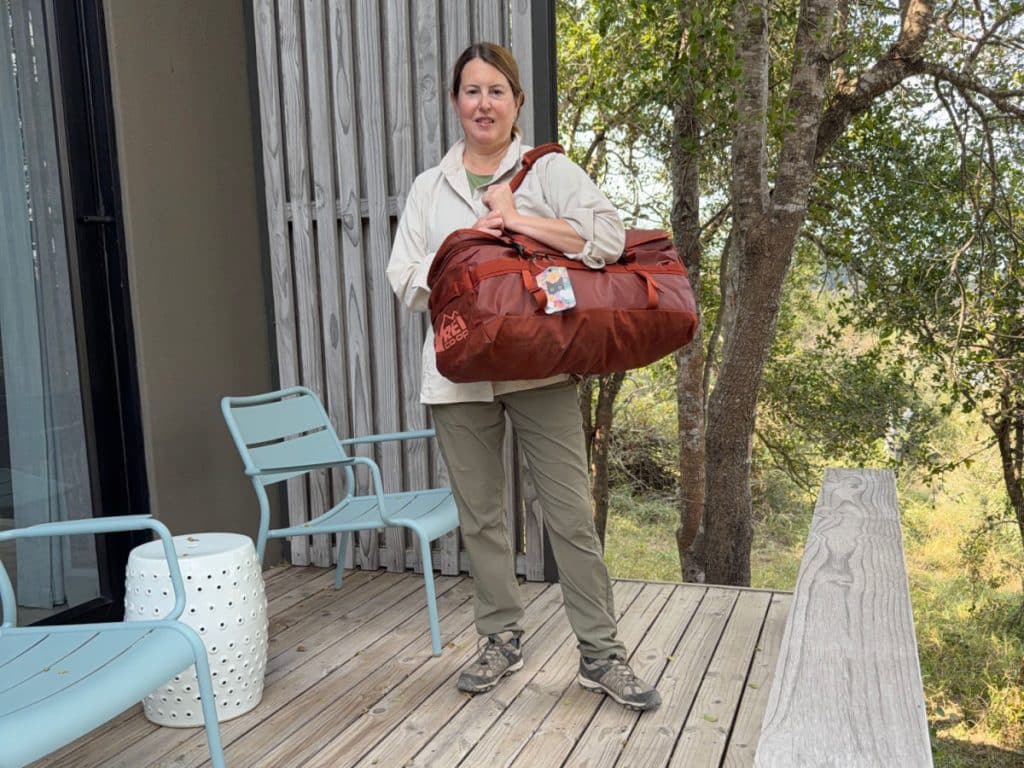
If flying in or out of Johannesburg, bags must have at least one flat surface with no round or irregular-shaped bags and no long straps allowed. If you are flying on any light aircraft flights such as lodge-to-lodge shuttles or charter flights, there is usually a weight limit of 20kg (44lbs) per person (including carry-on and camera gear). The bag size limit is 40cm (W) x 30cm (H) x 60cm (L) (or 16″ x 12″ x 24″). These should be soft-sided bags only with no hard-shell suitcases or rigid frames. Wheels are allowed only if they’re not part of a solid or structured base. It is easiest to use a duffel-style bag that’s completely soft-sided to ensure it fits into the aircraft’s luggage hold. I found the 50 Liter to be the best size but always double check requirements.
What if it Won’t Fit?
Having trouble getting everything you need for your South Africa trip to fit into one small duffel bag? I have a solution! The international airports offer luggage storage services, but that doesn’t help if you are flying into Capetown and out of Johannesburg or vice versa. So what I did was use a luggage shipping service called Ship & Play. I packaged my Winelands and Capetown clothes in a small carry-on bag, which I shipped back from Capetown and continued on with just the duffel bag with my safari clothes.
Ship & Play provided the shipping labels, which I printed in advance and brought with me. It was picked up on time and I was provided with email updates throughout my bag’s journey home.
Further Reading

Tamara Gruber is an award-winning travel writer and the founder of Your Time to Fly. With more than a decade of professional writing experience across two travel publications and hundreds of destination guides, she specializes in crafting practical, detailed itineraries that help travelers explore the world with confidence. Her work reflects years of on-the-ground research across the globe. Tamara is a member of SATW and serves on the Board of Directors of the Family Travel Association.
