
There are cities that are nice to visit, and then there are cities that everyone should experience once in a lifetime. Rome is the latter. It’s a place where you can stand on a street corner eating the world’s best gelato, look to your left, and find yourself staring at a 2,000-year-old temple. Where the “background scenery” of a casual lunch is a piazza that Baroque masters spent decades perfecting. Where the layers of history are so dense that it is often referred to as “lasagna.”
I’ve been to Italy seven times. I’ve planned dozens of trips there for families and couples. And no matter how much I customize the experience for each person, this five-day Rome itinerary is always my starting point. It hits every essential while leaving room to breathe, to wander, to get gloriously lost down a side street.
If you’ve never been, stop whatever else you’re planning and put it on the list. Few cities on earth deliver this kind of sensory richness, this depth of beauty and history and food and life, all in one place. Whether you’re a history buff, an art lover, a devoted Catholic, a foodie, or someone who simply wants to sit at an outdoor café and watch the world go by — Rome has you.
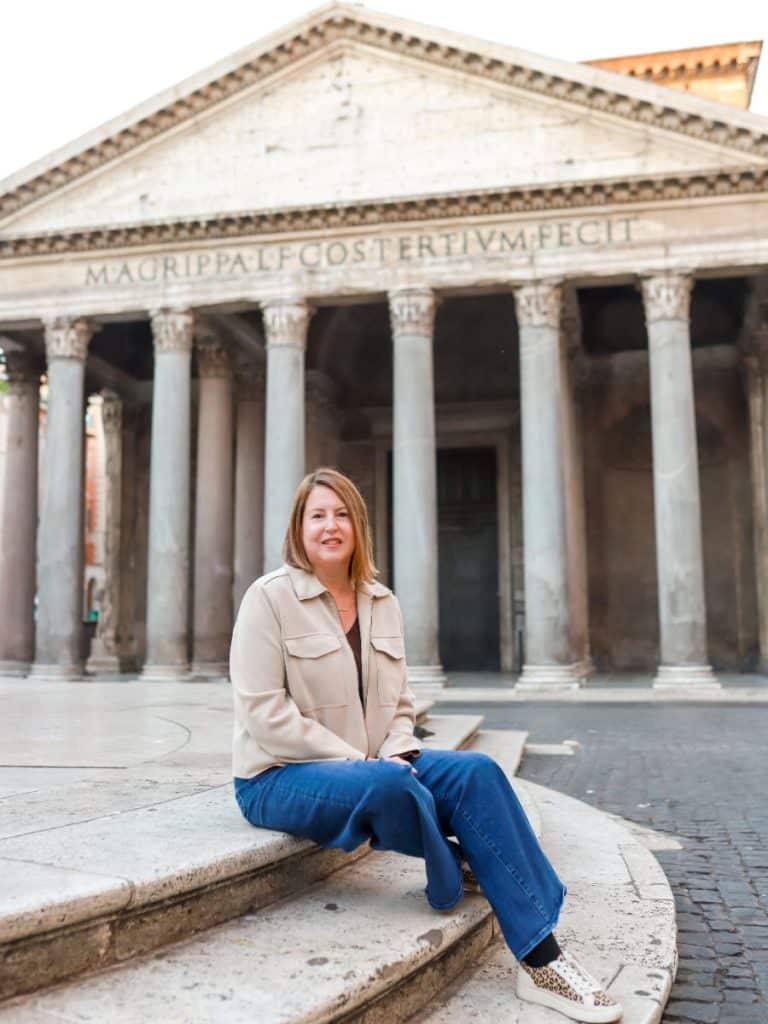
My Tried-and-True Rome Itinerary
What follows is my go-to, tried-and-tested five-day framework. I customize it for every traveler depending on their interests, mobility, and whether it’s their first visit or their fifth. But this is the core — the Rome that everyone deserves to see. Want help creating your perfect Rome itinerary? Let’s talk.
Note: This post contains affiliate links. If you click a link and make a purchase, I may receive a small commission at no cost to you.
Arrival Day: Your First Taste of the Eternal City
You’ve just landed. Your room may or may not be ready yet and your internal clock is somewhere over the Atlantic, but Rome is right outside. The temptation to crash is real but resist it and burn off some of your jet lag and ride that first-day excitement to get your first taste of Rome.
This is not the day for the Colosseum. This is the day for falling in love with Rome at a pace that won’t exhaust you before your trip has even started. My strongest recommendation is to book an introductory city tour — but not a walking tour.
After a transatlantic flight, you’ll be jet-lagged, probably sleep-deprived, and not ready to hit 20K steps. Instead, choose a tour shows you the city highlights in a fun and not strenuous way.

There’s a particular magic to cruising Rome’s streets tucked into a vintage Fiat 500, buzzing around on a motorcycle sidecar, or gliding through the historic center in a golf cart. You cover far more ground than on foot, you’re not exhausted by the end, and the novelty of the transport itself adds to the delight. These tours typically sweep you past all the major highlights — the Colosseum, the Forum, Piazza Navona, the Pantheon, the Trevi Fountain — while also detouring to panoramic viewpoints and hidden corners that most first-timers never find. You get the lay of the land, the geography clicks into place, and you finish the tour hungry for more rather than ready for a nap.
After your tour, keep the rest of the evening simple: find a neighborhood trattoria near your hotel, order the pasta, drink the house wine, and let the sounds of the city wash over you. Tomorrow, the ancient world awaits.
Day 2: Ancient Rome — The Colosseum, Roman Forum & Palatine Hill
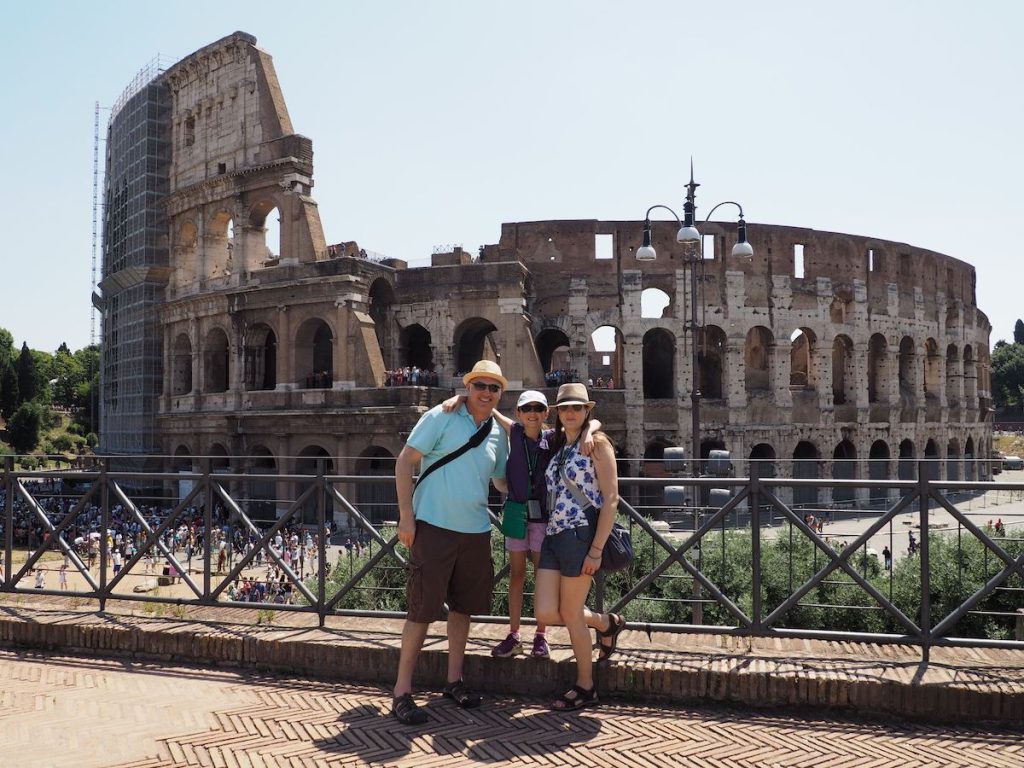
Today you go back two thousand years. The Colosseum and the Roman Forum are truly ancient wonders and experiencing them properly rewards every bit of planning you put in ahead of time.
There are many tours to choose from, ranging from small group guided experiences to private tours that include access to the arena floor. Whatever you choose, go with a reputable company. The Colosseum has been progressively making it harder for independent guides to obtain tickets on behalf of their clients, which means unlicensed or cut-rate operators increasingly either can’t deliver or resort to questionable workarounds. A reputable company will have this sorted.
If you prefer to go independently, then at the very minimum, reserve tickets online in advance. Walk-up queues at the Colosseum can stretch to several hours in peak season. There is no good reason to spend two hours of your Rome trip in a ticket line.
In summer, the Colosseum and Roman Forum are fully exposed to the sun with virtually no shade, and it gets ferociously hot by midday. Start as early as your tour allows, load up on sunscreen, and wear a hat. Also check the Colosseum’s current rules about what you can bring in — large bags and certain water bottle sizes may not be permitted, and the rules do change.
After the Colosseum: Piazza Venezia
From the Roman Forum, make your way toward Piazza Venezia, where two very different but equally rewarding experiences await side by side.
Vittorio Emanuele II Monument (Altar of the Fatherland)
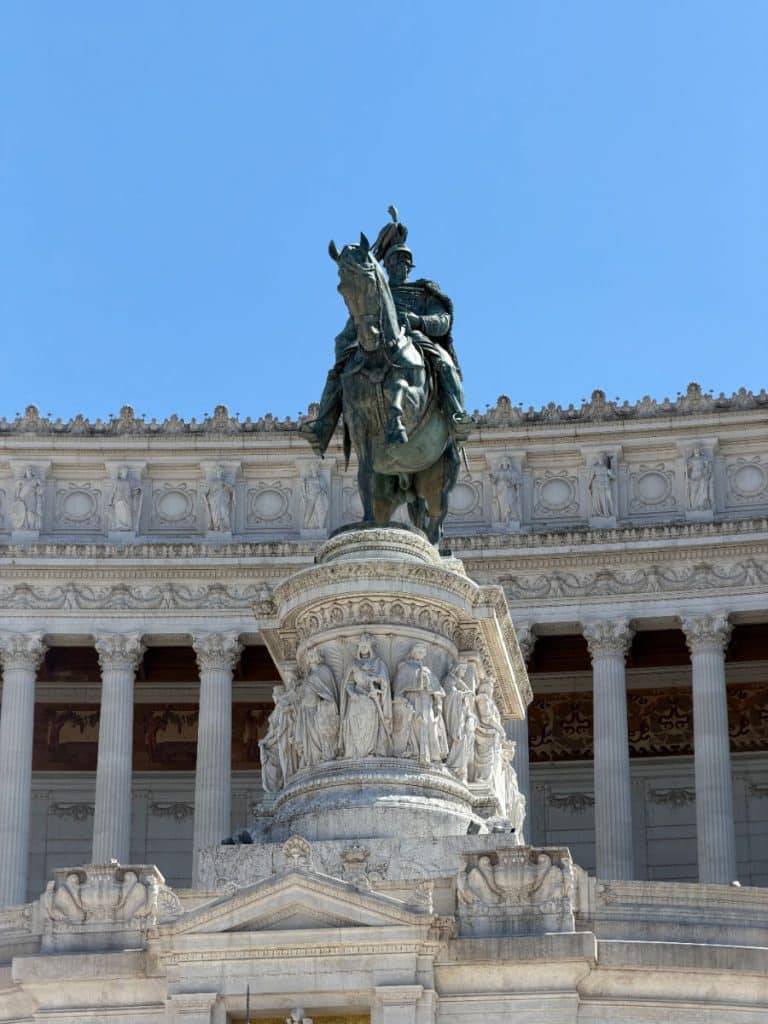
This enormous white marble monument — nicknamed “The Wedding Cake” or “The Typewriter” by Romans — is a tribute to the first king of unified Italy. Dramatically gleaming against the ancient surroundings, it provides one of the most striking visual contrasts in all of Rome.
The lower terraces are free to explore. At the rear, a glass elevator called Roma dal Cielo takes you to the Terrazza delle Quadrighe for a sweeping 360-degree view of the city. The changing of the guard at the eternal flame takes place every hour. Inside the base, the Central Museum of the Risorgimento is worth a look for anyone interested in 19th-century Italian unification history.
Capitoline Museums
Set on the Piazza del Campidoglio — a square designed by Michelangelo himself — the Capitoline Museums are widely considered the oldest public museums in the world. The collection is extraordinary. Must-see pieces include the original bronze Capitoline Wolf (the she-wolf nursing Romulus and Remus), the colossal head and hand of Constantine, and the original equestrian statue of Marcus Aurelius. An underground gallery connects the two main palace buildings and leads to the Tabularium, which offers one of the most famous elevated views directly over the Roman Forum — arguably the best angle you’ll find anywhere.
Traveler’s Tip: If you’re walking from the Roman Forum, exit near the Arch of Septimius Severus. You’ll find yourself at the foot of Capitoline Hill, from there it’s a short walk up to the museum entrance or around the corner to the front of the Vittorio Emanuele II Monument.
Where to Eat Near the Colosseum
- Terrazza Caffarelli — On the top floor of Palazzo Caffarelli (part of the Capitoline Museums complex), this terrace offers a sophisticated atmosphere with panoramic views across Rome’s skyline. A lovely spot for a coffee break or light Mediterranean lunch. You can access the terrace without a museum ticket via the Piazzale Caffarelli entrance.
- Taverna dei Fori Imperiali — A beloved family-run restaurant in the Monti neighborhood, known for honest, authentic Roman classics: Carbonara, Amatriciana, and the kind of cooking that feels like a family secret. Warm, welcoming, and consistently excellent. I’ve eaten here and loved it.
- Hostaria da Nerone — A long-standing trattoria with a terrace and views over the area. Dependable Roman staples in a classic setting.
- Trattoria Luzzi — An energetic, unpretentious neighborhood spot famous for its thin-crust pizza and classic Roman Carbonara.
Day 3: Catholic Rome — The Vatican Museums & St. Peter’s Basilica
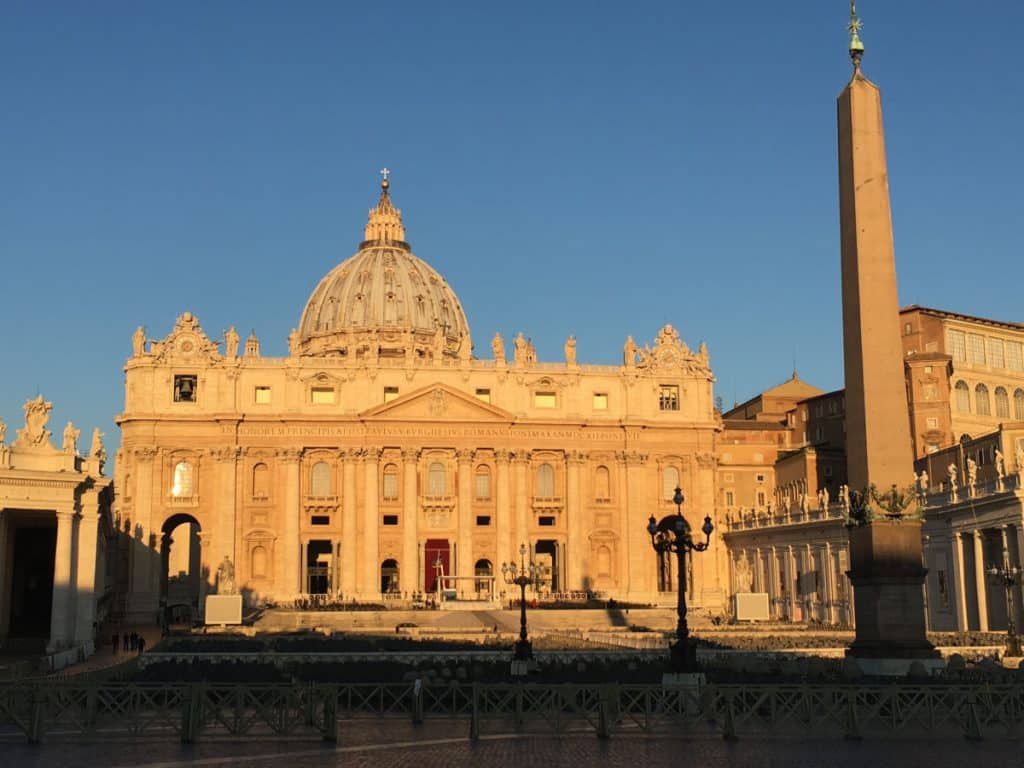
You don’t need to be Catholic to appreciate the sights on this day. The Vatican Museums rank among the greatest collections of art and history anywhere on earth, and St. Peter’s Basilica is, for many visitors, the single most overwhelming building they’ve ever set foot in.
The Vatican Museums are enormous and incredibly crowded. A guide is essential because without it, you will wander aimlessly and still miss the most important works. There are several types of tours to consider. Express tours focus on the highlights — Sistine Chapel, Raphael Rooms, Gallery of Maps — in two to three hours. Full tours go deeper into the collection and can last four to five hours. There are also dedicated family tours designed to engage children, which are wonderfully done. For the most manageable crowd experience, look for early-entry tours that get you into the museum before the general public.
One of the great advantages of booking a reputable guided tour is that your guide can often use a passage near the Sistine Chapel that connects directly into St. Peter’s Basilica — avoiding the long walk around the entire Vatican perimeter and the queue at the main entrance. This passage isn’t always open. On Wednesday mornings when the Pope delivers his Papal Address, the museums tend to be less crowded (a nice bonus), but the basilica typically remains closed until after the address. So if you’re going very early on a Wednesday, that connecting passage may not be accessible until later.
Dress code: Both the Vatican Museums and St. Peter’s Basilica are active places of worship. Shoulders and knees must be covered for entry — no exceptions. This applies to everyone regardless of age or religion. You will be turned away at the entrance without appropriate dress. Bring a scarf or light layer if needed.
After the Vatican: The Western Historic Center
You will likely need a nice rest break after all that walking and standing in the Museum and Basilica, especially if you climbed to the top of the Dome. Find a place to relax and have lunch and then you can continue your exploration or save the following for another day.
St. Peter’s Square (Piazza San Pietro)
Even if you’ve just come from inside the basilica, take a moment to stand in the middle of the piazza and look back. Bernini’s sweeping colonnade was designed to represent the “motherly arms of the church” reaching out to the faithful — and the spatial effect is overwhelming. The Egyptian obelisk at the center was brought to Rome in 37 AD and has stood witness to more than two thousand years of history.
Castel Sant’Angelo

Walk down the grand Via della Conciliazione toward the Tiber to reach this fortress-like building. Originally constructed as a mausoleum for Emperor Hadrian in 135 AD, it was later converted into a papal castle and prison — famously connected to the Vatican by a secret fortified corridor known as the Passetto di Borgo. The rooftop offers superb views of the river and city.
Ponte Sant’Angelo
Cross the Tiber on one of Rome’s most beautiful bridges, lined with ten monumental angels designed by Bernini, each carrying a different instrument of Christ’s Passion. The bridge provides one of the best photography angles of the castle against the river — particularly beautiful at golden hour.
Piazza del Popolo
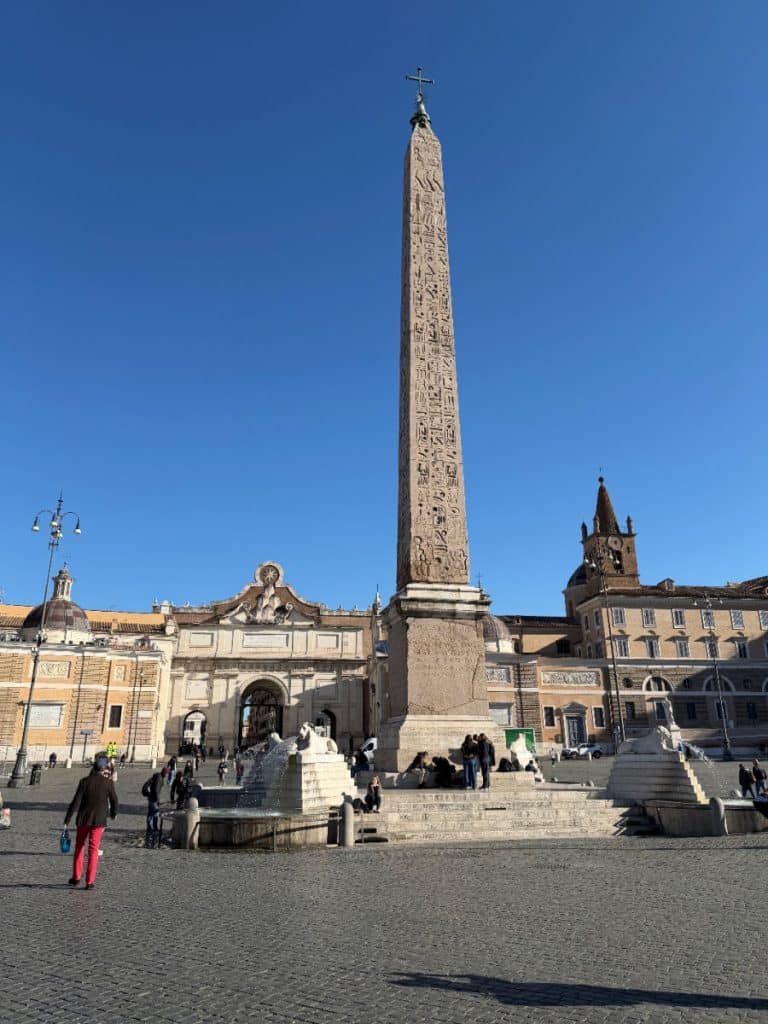
This grand oval piazza was the historic northern gateway to Rome — the first thing travelers arriving from the north would have seen. At its center stands a genuine 13th-century BC Egyptian obelisk, flanked by the twin churches of Santa Maria in Montesanto and Santa Maria dei Miracoli.
The Pincio Terrace & Borghese Gardens
Climb the stairs from Piazza del Popolo to the Pincio Terrace for what many consider the definitive panoramic view of Rome’s skyline, with the dome of St. Peter’s floating above it all. From there, wander into the Borghese Gardens — the city’s leafy green lung — with shaded avenues, a picturesque lake, and the world-class Galleria Borghese for serious art lovers. Note that the Borghese Gallery requires advance reservations and operates with strict timed entry.
The Spanish Steps (Piazza di Spagna)

One of Rome’s most iconic landmarks, the 135-step staircase was built in the 1720s to connect the Spanish Embassy at the bottom with the French church of Trinità dei Monti at the top. Today it remains the ultimate people-watching spot in Rome’s luxury fashion district. At the base, the Barcaccia fountain — designed by Pietro Bernini, father of Gian Lorenzo — is worth a close look.
Shopping on Via dei Condotti
As you descend the Spanish Steps, you’ll find yourself at the foot of Via dei Condotti, Rome’s most prestigious shopping street and the epicenter of Italian luxury since the 1950s.
Where to Eat Near the Spanish Steps
- La Matricianella — Traditional Roman cuisine in a neighborhood setting.
- Hostaria Da Pietro — Conveniently located between Piazza del Popolo and the Spanish Steps. A casual eatery that draws both locals and tourists with a traditional menu catering to all ages. Well-priced, great service, excellent wine list. Reservations recommended.
- Babette — Near the Hotel de Russie, with a quiet courtyard for outdoor dining in good weather. Fresh, simple food in a lovely setting. One of the few restaurants where service is not included in the bill.
- Osteria Margutta — Creative Roman-Italian cuisine on one of Rome’s prettiest, quietest streets.
- Il Brillo Parlante — A solid pizzeria for a casual meal.
Day 4: Rome Essentials & a Night in Trastevere
Today is perhaps the most quintessentially Roman day of the entire trip — a morning market, a 2,000-year-old temple, the most flamboyant piazza in the city, and the world’s most famous fountain. Finish with dinner in Rome’s most atmospheric neighborhood.
Morning: Campo de’ Fiori Market

Campo de’ Fiori — “Field of Flowers” — was once a meadow outside the city walls and today hosts Rome’s most famous open-air market by day. The market runs Monday through Saturday, typically 7:00 AM to 2:00 PM. Arrive between 8:30 and 10:30 AM to see the stalls at their fullest.
You’ll find seasonal Italian produce (artichokes in spring, porcini in autumn), fresh flowers, hand-pressed olive oils, balsamic vinegars, and spice blends. Bring cash — smaller vendors strongly prefer it. And keep your bag zipped and in front of you; like all major tourist areas in Rome, this is a prime spot for pickpockets.
Don’t leave without stopping at Forno Campo de’ Fiori, right on the corner of the square. Their pizza bianca — a simple, salty flatbread — is widely considered the best in the city. Their sandwiches are excellent too. Highly recommended.
Mid-Morning: The Pantheon
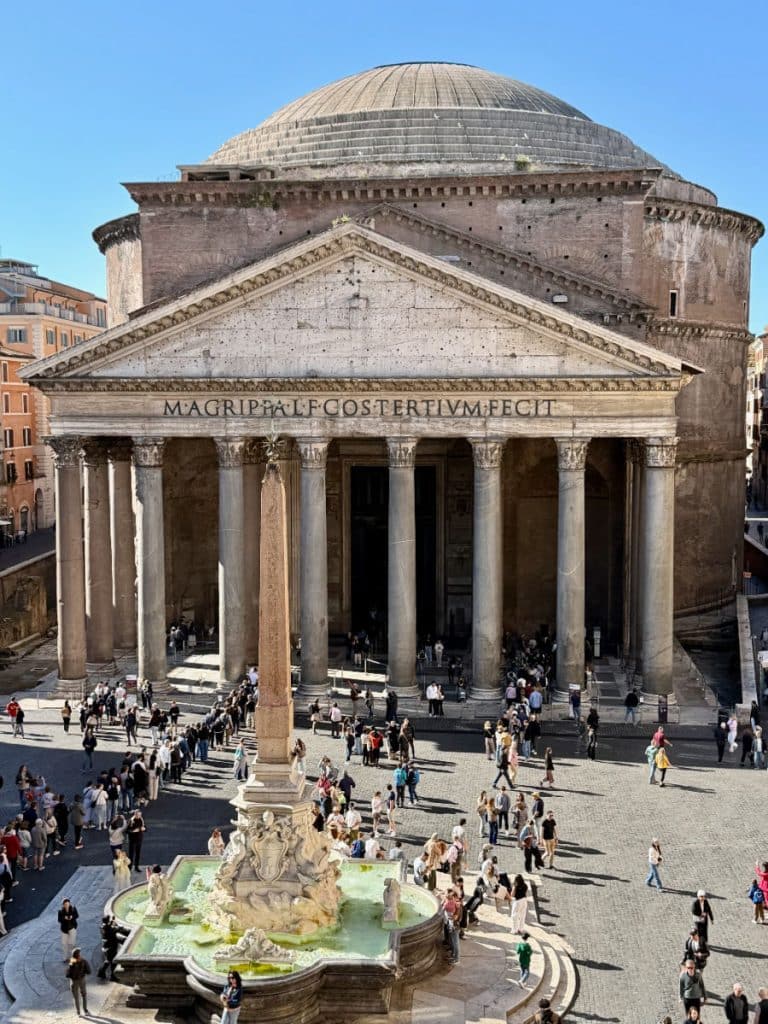
The Pantheon may be the most perfectly preserved ancient building on earth. Built around 125 AD under Emperor Hadrian, its massive unreinforced concrete dome remains the largest of its kind ever constructed — wider even than the dome of St. Peter’s Basilica. At its crown sits the oculus: an 8.8-metre circular opening to the sky and the building’s only source of light. As the sun moves, a column of light sweeps dramatically across the coffered dome and marble interior like a slow-motion sundial. When it rains, the water falls straight through — and the ancient floor drainage system, slightly sloped toward hidden channels, still carries it away exactly as the Romans designed it to.
Tickets are €7 for adults. Book online at portale.museiitaliani.it — the only official source. Do not buy from street sellers in Piazza della Rotonda offering “skip-the-line” access; they resell the official ticket at up to three times the price.
Hours: Monday–Saturday 9:00 AM–7:00 PM, Sunday 9:00 AM–6:00 PM. Last entry 30 minutes before closing. Closed January 1, May 1, and December 25. Free entry on the first Sunday of every month, though queues can be long.
The best times to visit are 9:00–11:00 AM before large tour groups arrive, or 4:00–6:00 PM as crowds thin. Weekdays and October through March are notably calmer. Visit on a sunny day if possible — on sunny summer days, a beam of light projects dramatically through the oculus between noon and 1:00 PM. On April 21 (Rome’s founding anniversary), the sun aligns perfectly with the main doorway at midday. On rainy days, watching rain fall through the oculus is a surprisingly spectacular sight.
Large backpacks and umbrellas are not permitted inside — travel light, as storage is available nearby. Modest dress required (shoulders and knees covered), as it is an active church. Saturday Mass is at 5:00 PM and Sunday Mass at 10:30 AM; tourist entry pauses during services.
Midday: Piazza Navona

A five-minute walk from the Pantheon brings you to one of Rome’s most theatrical spaces. The piazza’s long oval shape is no accident — it was built directly over the foundations of the 1st-century AD Stadium of Domitian, which once hosted athletic competitions for 30,000 spectators. Today it’s a hub of street performers, portrait artists, and some of the finest Baroque monuments in the world.
The centerpiece is the Fontana dei Quattro Fiumi (Fountain of the Four Rivers) — Bernini’s 1651 masterpiece featuring four colossal river gods representing Africa (the Nile), Asia (the Ganges), Europe (the Danube), and the Americas (the Río de la Plata), with an ancient Egyptian-style obelisk rising dramatically from the center. The river god shielding his eyes is said to be avoiding the facade of rival architect Borromini’s church across the way — a good story, even if the fountain predates the church facade. The piazza is flanked by the Fontana del Moro at the south and the Fontana del Nettuno at the north. At the northern end, you can descend underground to see the archaeological remains of the Stadium of Domitian itself.
Where to Eat Near Piazza Navona:
- Osteria da Fortunata — Famous for its sfogline (pasta makers) who hand-roll fresh dough in the window. The Carbonara is legendary. Touristy but genuinely good.
- La Pace del Palato — A short walk from the square, with charming exposed brick and arches. Excellent Roman classics and creative dishes. Try the ravioli with cacio e pepe and artichokes, or the signature meatballs with potato purée.
- Sant’Eustachio Caffè — Just behind the piazza, this coffee institution has been roasting its own beans since 1938 and is widely cited as serving the best espresso in Rome. Try the Gran Caffè — a sugar-sweetened espresso with remarkable creaminess. Stand at the bar like a local. And remember: Italians don’t order cappuccino after noon.
Afternoon: The Trevi Fountain
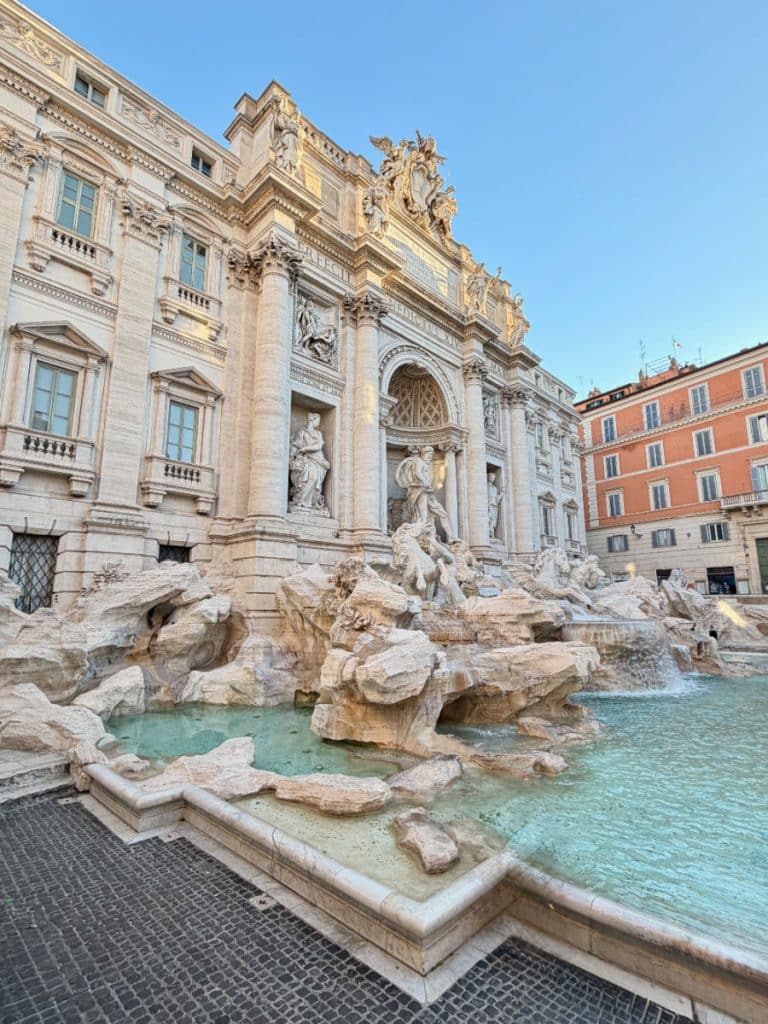
No first visit to Rome is complete without the Trevi Fountain. Designed by Nicola Salvi and completed in 1762, it depicts Neptune taming the waters, flanked by two Tritons with contrasting horses — one calm, one restless — representing the moods of the sea. Seeing it for the first time, turning a corner and suddenly finding it there, is a genuine jolt of beauty.
The coin toss: toss one coin to guarantee your return to Rome; two to return and find love; three to return, find love, and marry. The method matters — stand with your back to the fountain, hold the coin in your right hand, and toss it over your left shoulder.
As of February 2026, the city has introduced a €2 ticket to access the lower basin area (the steps directly surrounding the water) during peak hours. The surrounding piazza remains free — you can still view and photograph the fountain from the upper level without paying. Tickets are available online at fontanaditrevi.roma.it or at the on-site booth on Via della Stamperia (card only). The ticketed system operates daily 9:00 AM–10:00 PM, starting later at 11:30 AM on Mondays and Fridays while city workers collect coins from the fountain floor. Arrive before 9:00 AM or after 10:00 PM for free, unrestricted access.
This is a prime pickpocket area. Keep bags zipped and in front of you. Be wary of strangers offering to take your photo or handing you “free” flowers or bracelets.
Where to Eat Near the Trevi Fountain
- Pane e Salame — A hip spot a few minutes away specializing in high-quality sandwiches and charcuterie boards. Perfect for a quick gourmet lunch.
- Piccolo Buco — A wood-fired, slow-leavened pizzeria with distinctive thick-crust pizza. Remains a top recommendation despite its popularity.
- Il Ristoro dal Patriota — Hidden in a quiet courtyard steps from the fountain, this restaurant offers a peaceful escape with fair prices and a charming historic atmosphere. Often features a live harpist.
Evening: A Food Tour in Trastevere

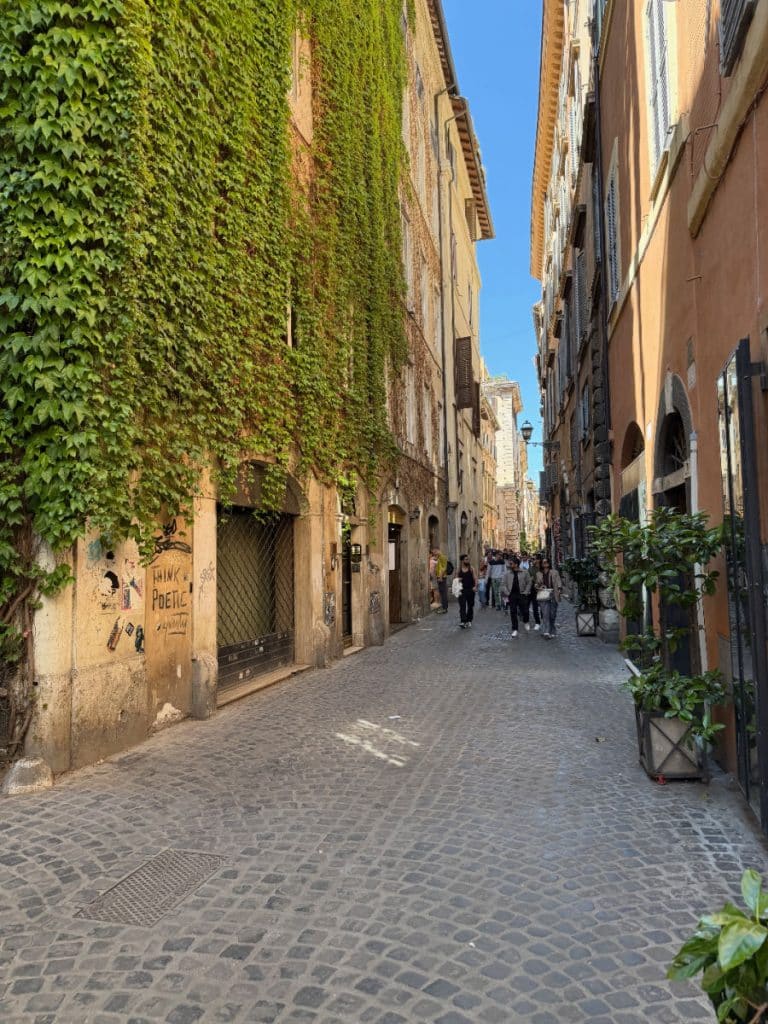
End the day in Trastevere — arguably Rome’s most atmospheric neighborhood. Cobblestone streets, ivy-draped medieval buildings, the smell of wood smoke from trattorias, and the particular golden light that Rome reserves for evening. A food tour here is one of the best ways to experience the neighborhood: you’ll sample suppli (fried rice balls), local wines, artisan cheeses, and Roman street food while walking through streets that feel utterly unchanged by the centuries.
Day 5: Your Day, Your Rome
I always keep the final day deliberately unstructured. You’ve seen the essential Rome — now do what calls to you. Here are the some options depending on your group and interests:
Shopping: Rome has everything from luxury boutiques on Via dei Condotti to the Porta Portese vintage market (Sunday mornings) and artisan leather goods throughout the historic center.
Cooking Class: Learn to make fresh pasta, suppli, or a classic Roman dessert. A hands-on cooking class is one of the most memorable souvenirs you’ll bring home from Italy.
Gladiator School: Fantastic for families with children — a dedicated school where kids (and willing adults) learn the basics of Roman gladiatorial combat in full costume.
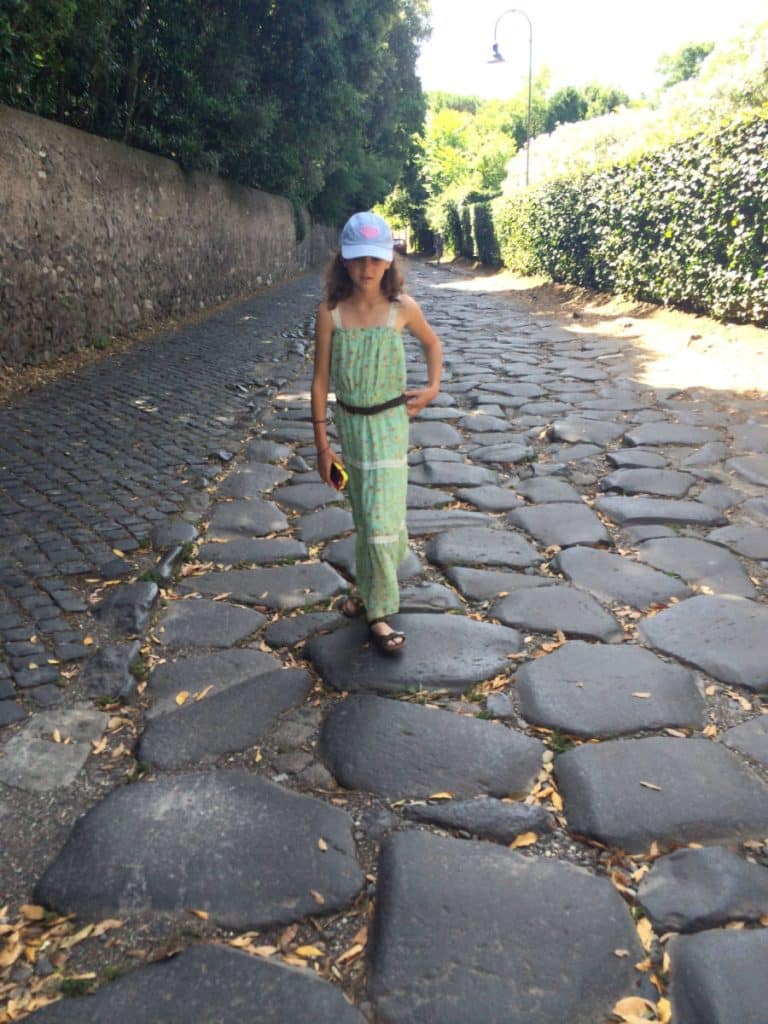
Bike Ride Along the Appian Way: Rent a bike and ride along the Via Appia Antica — the ancient road that once connected Rome to the southern empire, lined with ruins, catacombs, and open countryside.
Day Trip to Ostia Antica: Rome’s ancient harbor city, largely intact and far less crowded than Pompeii. A 30-minute train ride from the city center — an entire Roman town frozen in time, and genuinely extraordinary.
Galleria Borghese: For serious art lovers, the Borghese Gallery houses one of the most breathtaking collections of Baroque sculpture in existence, including several early Bernini masterworks. Timed entry required — book well in advance, as walk-up entry is not permitted.
A Slow Morning and a Wander: Sometimes the best last day is a leisurely breakfast, a long walk through neighborhoods you haven’t explored, and gelato eaten without an agenda. Rome rewards wandering.
Essential Tips for Visiting Rome
When to Go
April, May, September, and October are the sweet spots: warm but not brutal, crowds manageable, and the city at its most beautiful. July and August are ferociously hot and crowded — if you must go in summer, plan all major sightseeing for early mornings and take a long midday break. November through March is quieter and more affordable, though some sites have reduced hours. Just keep in mind that if you are visiting in April, it will be busier around Easter, Liberation Day, and May Day.
Holidays to Be Aware Of
Many Roman sites close or have reduced hours on major Italian public holidays: January 1 (New Year’s Day), January 6 (Epiphany), Easter Sunday and Monday, April 25 (Liberation Day), May 1 (Labor Day), June 2 (Republic Day), November 1 (All Saints’ Day), December 8 (Immaculate Conception), and December 25–26.
Ferragosto (August 15) deserves special mention. Much of Rome effectively shuts down, with local restaurants, shops, and many businesses closing entirely for days or even weeks. The city can feel like a ghost town — which some travelers love and others find deeply inconvenient. Plan accordingly.
Book Everything in Advance
I cannot overstate this. The Colosseum, Vatican Museums, Borghese Gallery, and Pantheon all require advance booking. The Borghese Gallery allows no walk-up entry whatsoever. In peak season (April through October), popular time slots sell out days or weeks ahead. Book as soon as your travel dates are confirmed.
Wear Good Shoes
Rome’s beautiful cobblestone streets (sampietrini) are utterly unforgiving on feet. Comfortable, broken-in walking shoes are non-negotiable. Leave the fashionable but impractical footwear at home — you’ll be grateful by Day 2.
Drink from the Nasoni
Rome has over 2,500 public drinking fountains — the little iron “big-noses” (nasoni) found all over the city. The water is cold, clean, and potable. Carry a refillable bottle and use them freely. It’s one of the great small pleasures of Rome and will save you a small fortune on bottled water.
Dress Codes at Churches
Shoulders and knees must be covered to enter any Catholic church in Rome — not just the Vatican. This applies to all visitors regardless of faith. Carry a light scarf or layer in your bag as a simple solution.
Eating Like a Roman

Cappuccino is a breakfast drink only — ordering one after a meal will earn you a bemused look. Standing at a café bar is cheaper than sitting at a table. Lunch is typically the main meal; dinner is eaten late (8:00 PM is early by Roman standards). Tip modestly if service isn’t included — around 10% is generous. And please: walk five to ten minutes away from the major monuments before choosing a restaurant. The quality difference is significant and immediate.
Avoid Tourist Traps
Street sellers around the Trevi Fountain and Colosseum offering “skip-the-line” tickets are reselling official tickets at marked-up prices — or in some cases selling fakes. Buy directly from official websites only. Restaurants that aggressively solicit you from the doorway and have menus with photos of every dish are almost universally overpriced and underwhelming. When in doubt, look for a place full of locals speaking Italian.
Getting Around
Rome’s historic center is walkable for most of the highlights in this itinerary. For longer distances, use the Metro (Lines A and B), buses, or taxis. Always validate your transit tickets. For taxis, use official white cabs or the official apps (itTaxi, FREE NOW) and avoid unlicensed drivers who approach you at the airport or train stations.
Ready to Plan Your Trip?
Do you need help planning your trip? If you are feeling overwhelmed and don’t have the time or resources to wade through tons of information and question your decisions, I help clients plan a custom itinerary, tailored to your interests and travel style. Learn more about my Travel Advisor and trip planning services.
Visiting Italy? You May Also be Interested In:
- Italy travel dupes
- 5 days in Piemonte
- Visiting Italy’s Food Valley
- Why to visit Italy’s Cilento Coast

Tamara Gruber is an award-winning travel writer and the founder of Your Time to Fly. With more than a decade of professional writing experience across two travel publications and hundreds of destination guides, she specializes in crafting practical, detailed itineraries that help travelers explore the world with confidence. Her work reflects years of on-the-ground research across the globe. Tamara is a member of SATW and serves on the Board of Directors of the Family Travel Association.
